%20scale(.87)'%3e%3cg%20transform='rotate(-3%2032%2034)'%3e%3cpath%20d='M10.5%2019.5c7.65-2.35%2014.8-.45%2021.5%205.7%206.7-6.15%2013.85-8.05%2021.5-5.7v27.2c-7.65-2.15-14.8-.45-21.5%205.1-6.7-5.55-13.85-7.25-21.5-5.1V19.5Z'%20fill='%23fff'%20stroke='%23171528'%20stroke-width='4.5'%20stroke-linejoin='round'/%3e%3cpath%20d='M32%2025.2v26.6'%20stroke='%23171528'%20stroke-width='4'%20stroke-linecap='round'/%3e%3cpath%20d='M17.5%2034.5h9M22%2030v9'%20stroke='%23171528'%20stroke-width='3.75'%20stroke-linecap='round'/%3e%3ccircle%20cx='41.5'%20cy='32.5'%20r='2.5'%20fill='%23171528'/%3e%3ccircle%20cx='46.5'%20cy='38'%20r='2.5'%20fill='%23171528'/%3e%3c/g%3e%3c/g%3e%3c/svg%3e)
The quick answer
What is the story of Abraham and Sarah?
Abraham and Sarah were first called Abram and Sarai. God called Abram to leave his country, and he departed from Haran with Sarai at the age of seventy-five. They traveled to Canaan. God promised to make Abraham a great nation, give land to his offspring, and bless all the families of the earth through him. Yet Sarah had no child, and the promised future seemed increasingly impossible as they grew older.
God made a covenant with Abraham, changed their names, and promised that Sarah herself would bear a son. Before Isaac’s birth, Abraham had a son, Ishmael, by Hagar. God promised to bless Ishmael, but said the covenant would continue through Isaac. Sarah laughed at the promise of a child in her old age; when Isaac was born, she spoke of laughter others would share. Abraham was then one hundred.
Read the story
A Journey Shaped by Promise and Waiting
God calls Abram to leave home
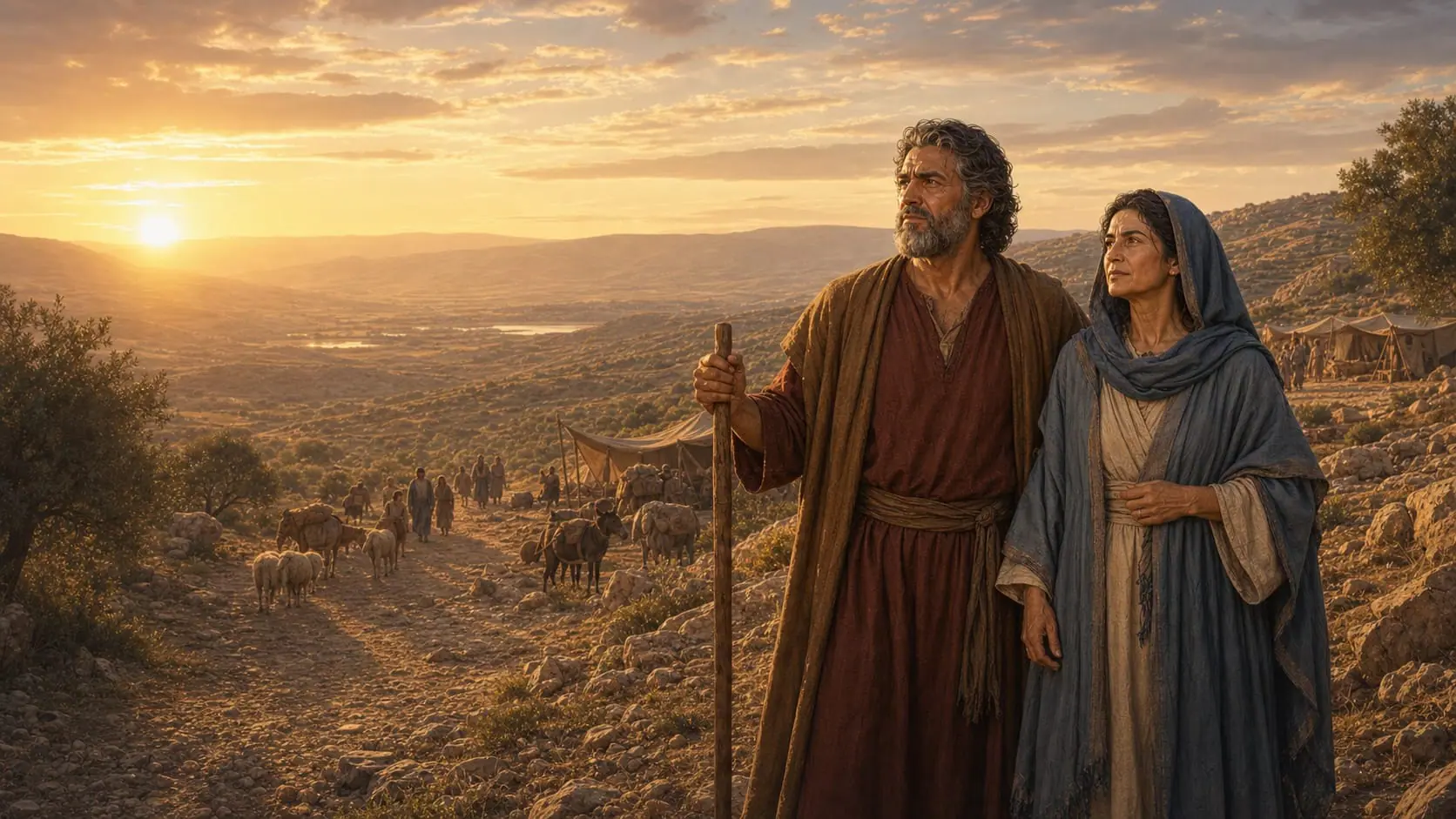
God told Abram to leave his country, relatives, and father’s house for a land that God would show him. The call came with a promise: Abram would become a great nation, receive blessing, and become a blessing through whom all the families of the earth would be blessed.
Abram went as God had told him. At seventy-five, he left Haran with Sarai, Lot, their possessions, and the people of their household. They entered Canaan without yet possessing the land or having the child on whom the promise appeared to depend. Genesis 12:1–5
Their journey had begun before Haran: Terah had taken the family from Ur of the Chaldees and settled there. In Acts, Stephen says God appeared to Abraham before he lived in Haran. Seventy-five is his age at departure from Haran, not a stated age for that earlier appearance. Genesis 11:31; Acts 7:2–4
Now Yahweh said to Abram, ‘Leave your country, and your relatives, and your father’s house, and go to the land that I will show you. I will make of you a great nation. I will bless you and make your name great. You will be a blessing. I will bless those who bless you, and I will curse him who treats you with contempt. All the families of the earth will be blessed through you.’
They enter Canaan—and face danger
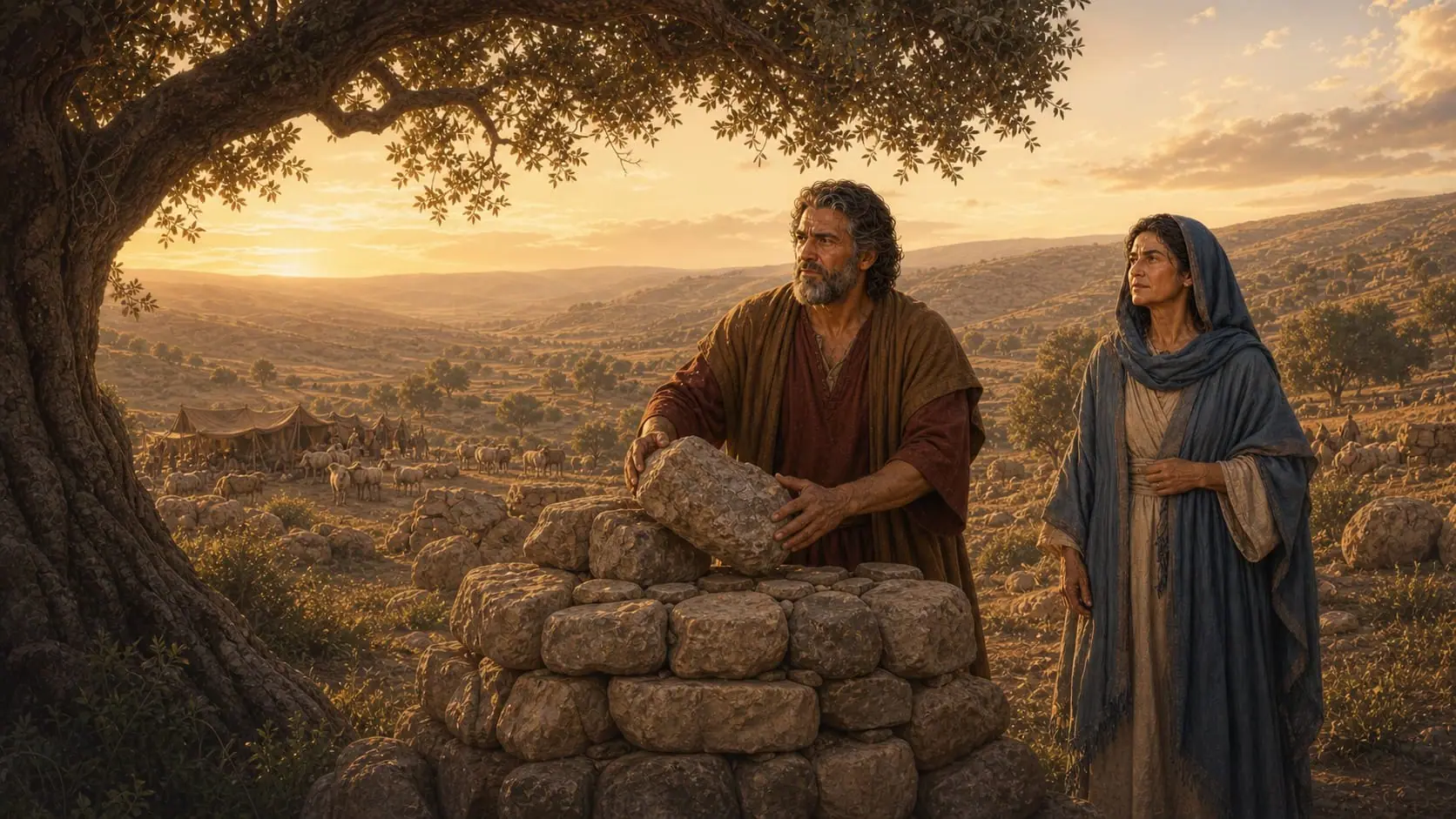
Near Shechem, God promised the land to Abram’s offspring, and Abram built an altar. A severe famine later drove the household to Egypt. Afraid for his life, Abram asked Sarai to say she was his sister. Pharaoh took her into his house, but God afflicted Pharaoh’s household, and Sarai was returned.
Pharaoh confronted Abram for not telling him that Sarai was his wife. He ordered Abram to take her and leave, and his men escorted them away with their possessions. Genesis 12:6–20
The central question
What Did God Promise Abraham?
The promise unfolds across several encounters. God promised Abraham a great name and nation, land for his offspring, descendants beyond counting, a continuing relationship with God, kings among his line, and blessing that would reach all the families of the earth.
The promise was not only about Abraham. Sarah was named as the mother of the promised son, and God said that she would become a mother of nations. Isaac would carry the covenant line, while Ishmael also received a promise of blessing and a great nation. Genesis 12:1–3; 15:1–6; 17:4–21
“So your offspring will be”
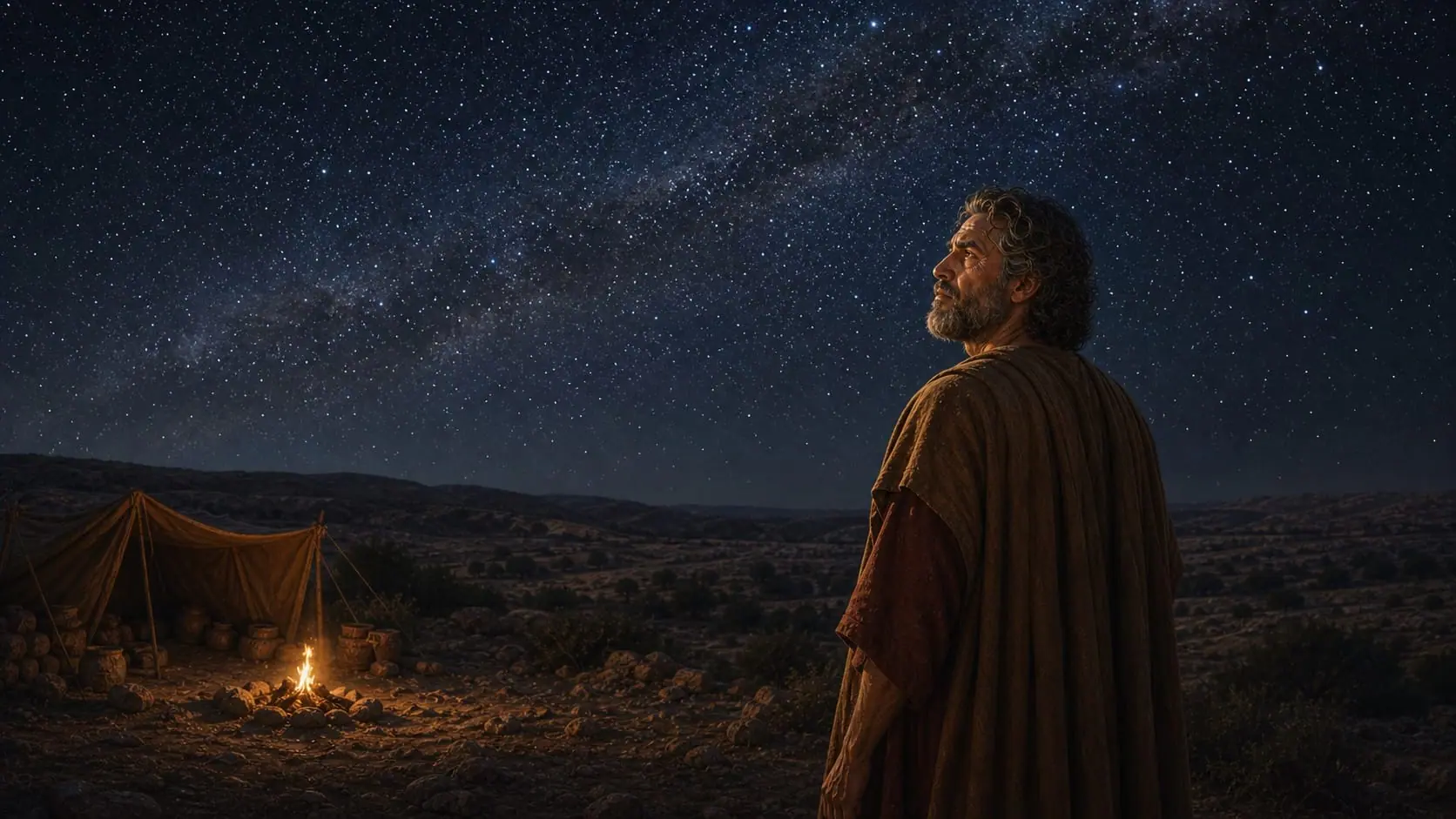
Abram still had no child. He asked God what the promise meant while he remained childless. God brought him outside, told him to look toward the sky, and invited him to count the stars. “So your offspring will be,” God said.
Abram believed God, and it was credited to him for righteousness. The chapter then describes a solemn covenant ceremony in which God pledged the land to Abram’s offspring. Genesis 15:1–18
Yahweh brought him outside, and said, ‘Look now toward the sky, and count the stars, if you are able to count them.’ He said to Abram, ‘So your offspring will be.’ He believed in Yahweh, who credited it to him for righteousness.
Hagar becomes the mother of Ishmael
After ten years in Canaan, Sarai gave her enslaved Egyptian servant Hagar to Abram as a wife, hoping to have children through her. Hagar conceived and began to despise Sarai. When Sarai complained, Abram told her to do as she wished with Hagar. Sarai treated Hagar harshly, and Hagar fled.
Yahweh’s angel found Hagar by a spring in the wilderness. He told her to return and promised her many descendants. She was to have a son named Ishmael, because Yahweh had heard her affliction. Hagar called Yahweh “a God who sees.” Abram was eighty-six when she bore Ishmael. Genesis 16
God’s covenant with Abraham
New Names and a Covenant Sign
When Abram was ninety-nine, God reaffirmed the covenant. Abram became Abraham, connected in the passage with his calling as father of a multitude of nations. Circumcision was given as the sign of the covenant for the males of Abraham’s household and future generations.
Sarai also received a new name: Sarah. God promised to bless her and give Abraham a son through her. She would be a mother of nations, and kings would come from her. The covenant would continue through the son named Isaac. Genesis 17:1–21
God said to Abraham, ‘As for Sarai your wife, you shall not call her name Sarai, but her name shall be Sarah. I will bless her, and moreover I will give you a son by her. Yes, I will bless her, and she will be a mother of nations. Kings of peoples will come from her.’
A question readers ask
Why Did Sarah Laugh?
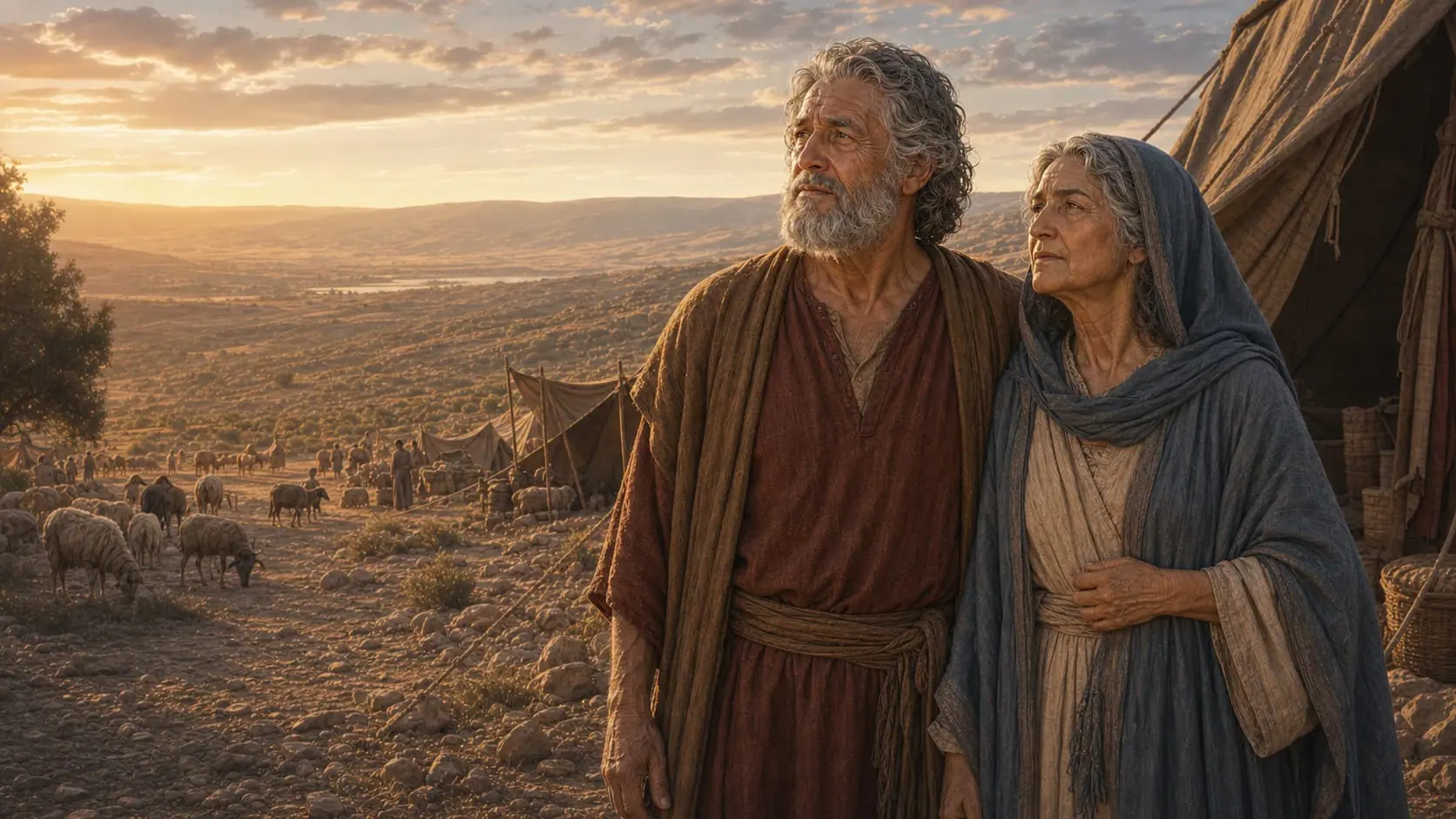
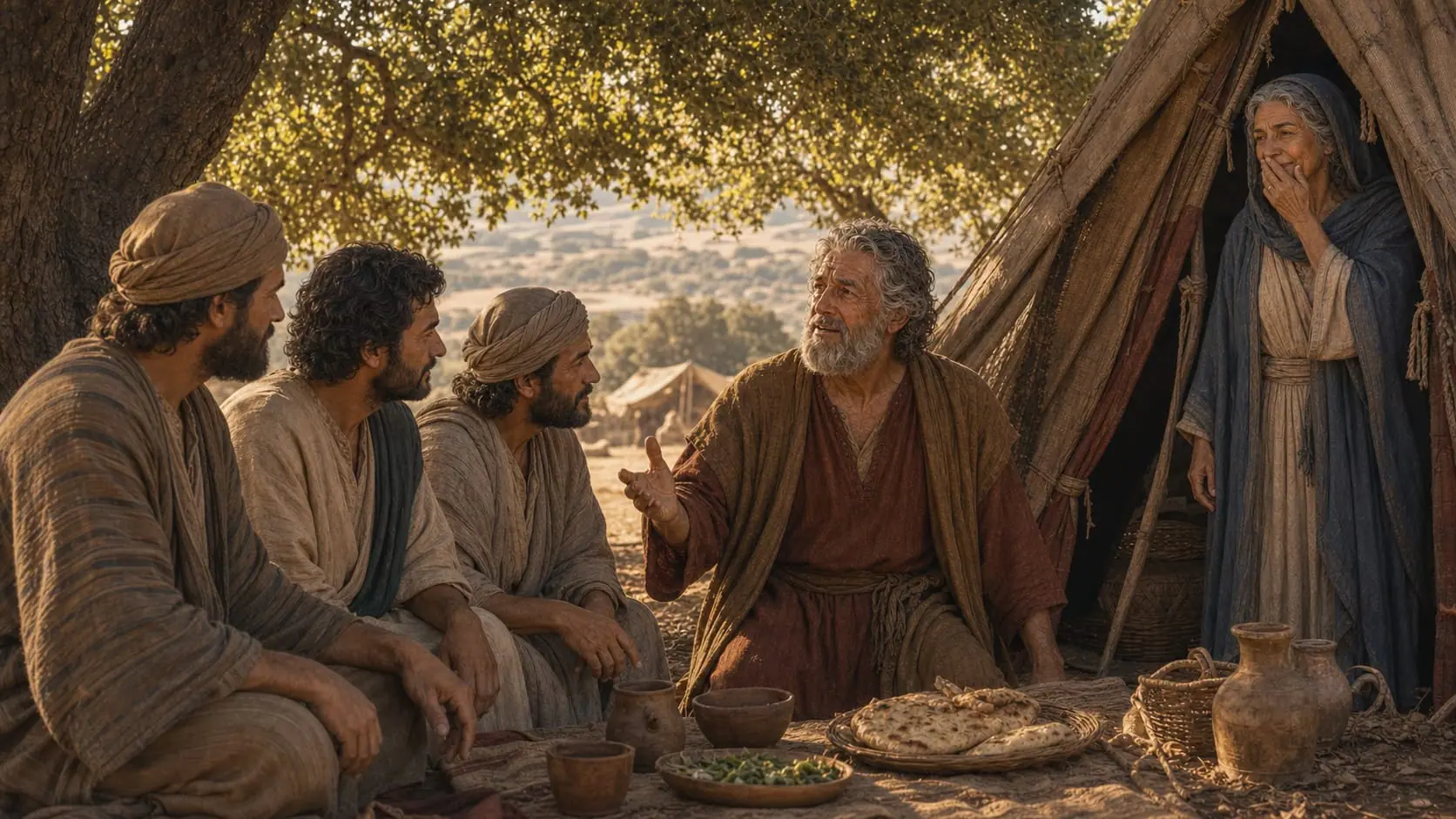
At Mamre, Abraham welcomed three visitors. While Sarah listened from the tent, one announced that she would have a son at the appointed time. Sarah laughed within herself because she and Abraham were old and she had passed the ordinary age of childbearing.
God confronted the laughter with a question: “Is anything too hard for Yahweh?” Sarah denied laughing because she was afraid. The scene ends with God’s reply: “No, but you did laugh.” Abraham himself had laughed earlier, asking whether a man of one hundred and a woman of ninety could have a child. Genesis 17:17; 18:1–15
Yahweh said to Abraham, ‘Why did Sarah laugh, saying, “Will I really bear a child when I am old?” Is anything too hard for Yahweh? At the set time I will return to you, when the season comes around, and Sarah will have a son.’
Sarah is taken into Abimelech’s household
Before Isaac’s birth, Abraham and Sarah lived in Gerar. Abraham again called Sarah his sister, and King Abimelech took her. God warned Abimelech in a dream that she was married; he had not touched her. Abimelech challenged Abraham about the danger his concealment had caused.
Abraham explained that Sarah was his half-sister as well as his wife, and that he had feared being killed because of her. Abimelech returned Sarah. Abraham prayed, and God healed Abimelech’s household. Genesis 20
Isaac is born at the appointed time
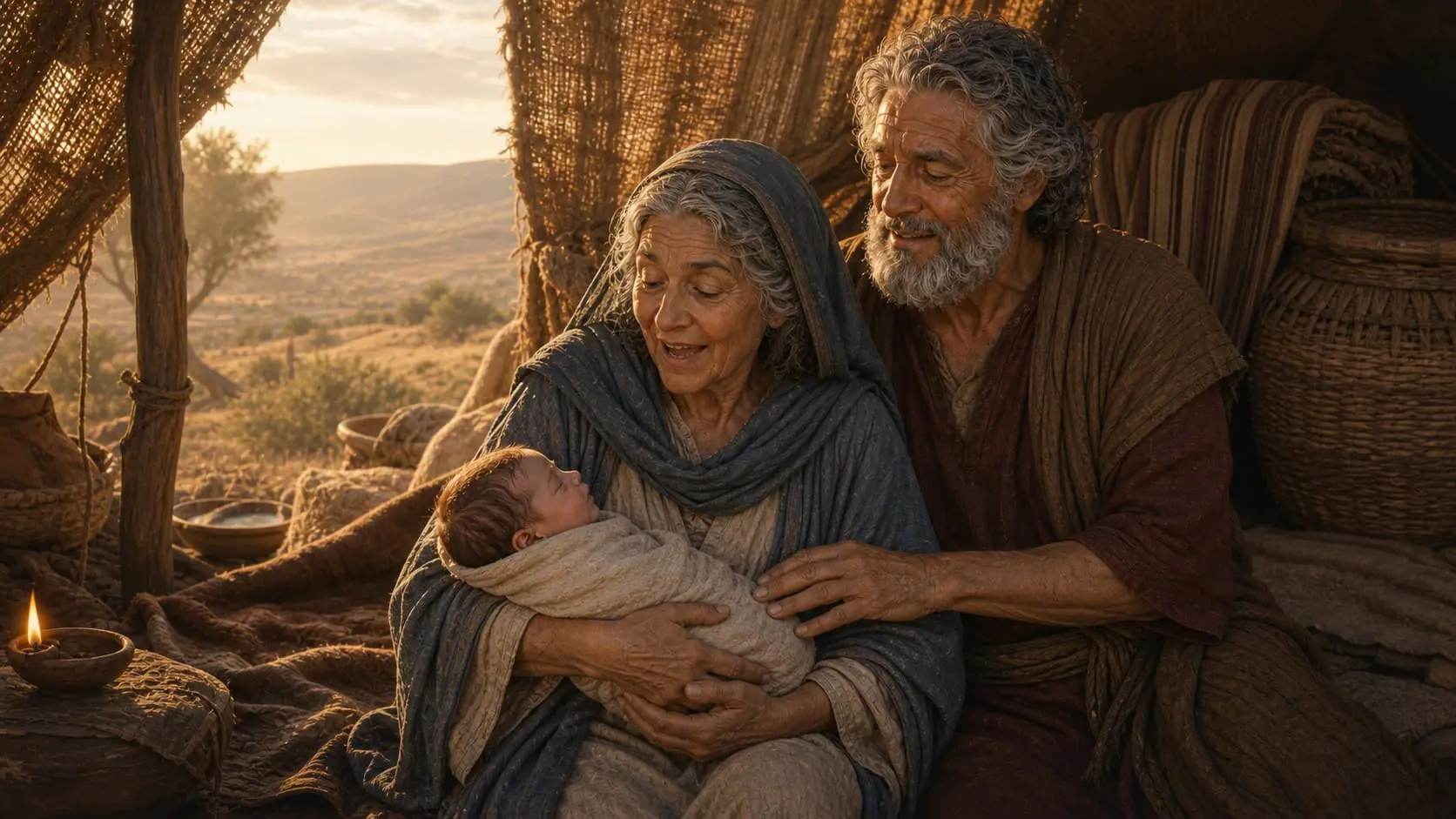
God did for Sarah as he had promised. She conceived and bore Abraham a son in his old age at the appointed time. Abraham named him Isaac, meaning “he laughs,” and circumcised him when he was eight days old as God had commanded.
Abraham was one hundred when Isaac was born, twenty-five years after leaving Haran. Sarah was ninety—the age anticipated in Abraham’s question in Genesis 17:17. Sarah said that God had made her laugh and that everyone who heard would laugh with her. The laughter that once expressed disbelief now became the language of joy. Genesis 21:1–7
Yahweh visited Sarah as he had said, and Yahweh did to Sarah as he had spoken. Sarah conceived, and bore Abraham a son in his old age, at the set time of which God had spoken to him. Abraham called his son who was born to him, whom Sarah bore to him, Isaac. … Abraham was one hundred years old when his son, Isaac, was born to him. Sarah said, “God has made me laugh. Everyone who hears will laugh with me.”
The family’s story continues
Isaac’s birth did not end the household’s conflict. After he was weaned, Sarah demanded that Hagar and Ishmael be sent away so that Ishmael would not share Isaac’s inheritance. Abraham was distressed, but God told him to listen to Sarah and promised to make a nation of Ishmael too. In the wilderness, God heard the boy and showed Hagar a well. Genesis 21:8–21
The next major test involving Isaac is told in the Binding of Isaac story. For Sarah’s later death and burial at Machpelah, continue with Sarah’s life in Genesis.