%20scale(.87)'%3e%3cg%20transform='rotate(-3%2032%2034)'%3e%3cpath%20d='M10.5%2019.5c7.65-2.35%2014.8-.45%2021.5%205.7%206.7-6.15%2013.85-8.05%2021.5-5.7v27.2c-7.65-2.15-14.8-.45-21.5%205.1-6.7-5.55-13.85-7.25-21.5-5.1V19.5Z'%20fill='%23fff'%20stroke='%23171528'%20stroke-width='4.5'%20stroke-linejoin='round'/%3e%3cpath%20d='M32%2025.2v26.6'%20stroke='%23171528'%20stroke-width='4'%20stroke-linecap='round'/%3e%3cpath%20d='M17.5%2034.5h9M22%2030v9'%20stroke='%23171528'%20stroke-width='3.75'%20stroke-linecap='round'/%3e%3ccircle%20cx='41.5'%20cy='32.5'%20r='2.5'%20fill='%23171528'/%3e%3ccircle%20cx='46.5'%20cy='38'%20r='2.5'%20fill='%23171528'/%3e%3c/g%3e%3c/g%3e%3c/svg%3e)
The quick answer
What is the story of Noah’s Ark?
Genesis describes a world filled with corruption and violence. Noah, however, found favor with God and is described as righteous, blameless among the people of his time, and one who walked with God. God warned Noah of a coming flood and told him to build a large wooden ark for his family and representatives of the land animals and birds.
Noah obeyed. The flood came, the ark carried its passengers safely, and the waters eventually receded. After the ark rested on the mountains of Ararat, Noah sent out a raven and then a dove to learn whether the ground had dried. When Noah and his family left the ark, God established a covenant with them and every living creature, giving the rainbow as its sign.
The full story
Noah, the Ark, and the Great Flood
Why God chose Noah
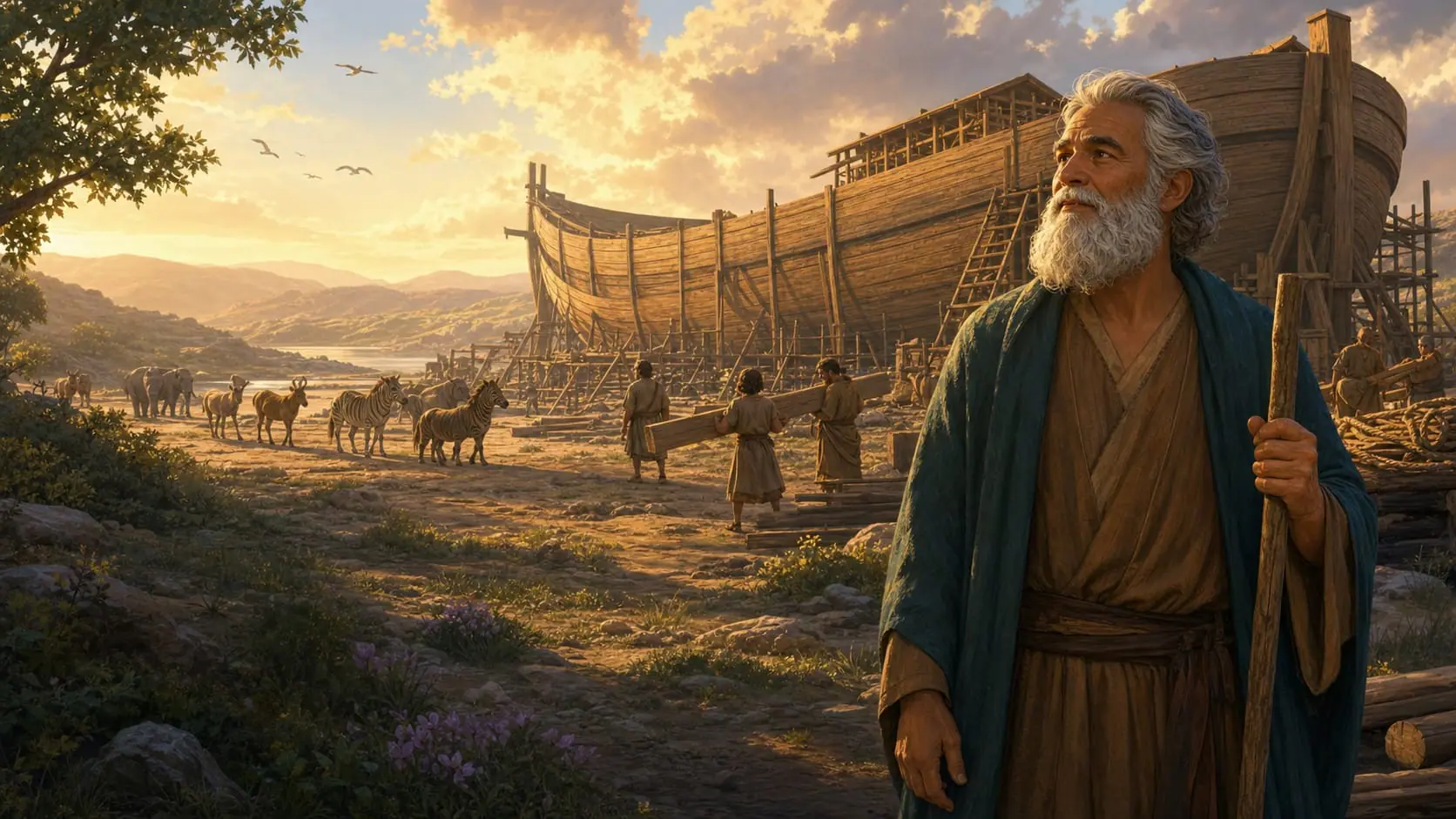
Genesis 6 portrays human wickedness as widespread and the earth as corrupt and filled with violence. Against that background, Noah found favor with God. The text calls him righteous and blameless among his contemporaries and says that he walked with God.
God announced a flood that would destroy life on the earth in judgment against this violence, but promised to establish a covenant with Noah. He, his wife, their three sons, and their sons’ wives would enter the ark. Genesis 6:5–18
When God later called Noah’s household into the ark, he referred to Noah’s righteousness in that generation. Hebrews 11:7 describes his preparation of the ark as an act of faith. Genesis 7:1
But Noah found favor in Yahweh’s eyes. This is the history of the generations of Noah: Noah was a righteous man, blameless among the people of his time. Noah walked with God.
Noah builds the ark
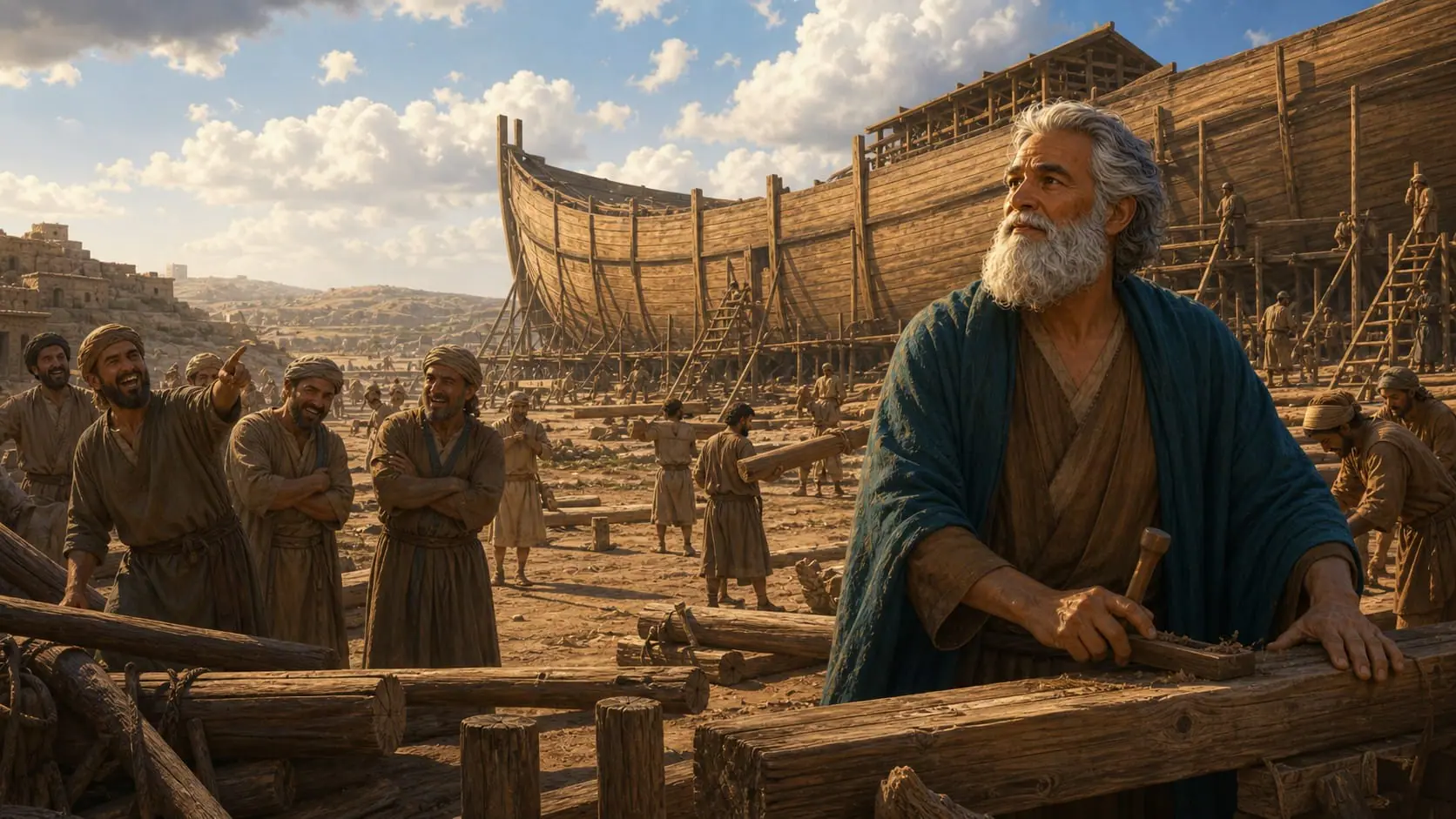
God instructed Noah to build an ark from the wood called “gopher wood” in many English translations, although the precise species is uncertain. The ark was to have rooms, a covering of pitch inside and outside, three levels, a roof, and a door in its side. Genesis 8:6 also mentions a window Noah had made.
Its stated dimensions were 300 cubits long, 50 cubits wide, and 30 cubits high. Because the length of a cubit varied, modern measurements are estimates. Genesis closes the instructions by saying that Noah did everything God commanded him. Genesis 6:14–22
Thus Noah did. He did all that God commanded him.
A common question
How Long Did Noah Take to Build the Ark?
The Bible never states the number of years Noah spent building the ark. Some readers connect the 120 years mentioned in Genesis 6:3 with the construction period, but the verse itself does not say that Noah built for 120 years.
Genesis gives Noah’s age when the flood began—600 years old—but does not give his age when construction started. We therefore cannot calculate the building time from those ages. Genesis 6:3, 6:14–22; 7:6
Who and what entered Noah’s Ark?
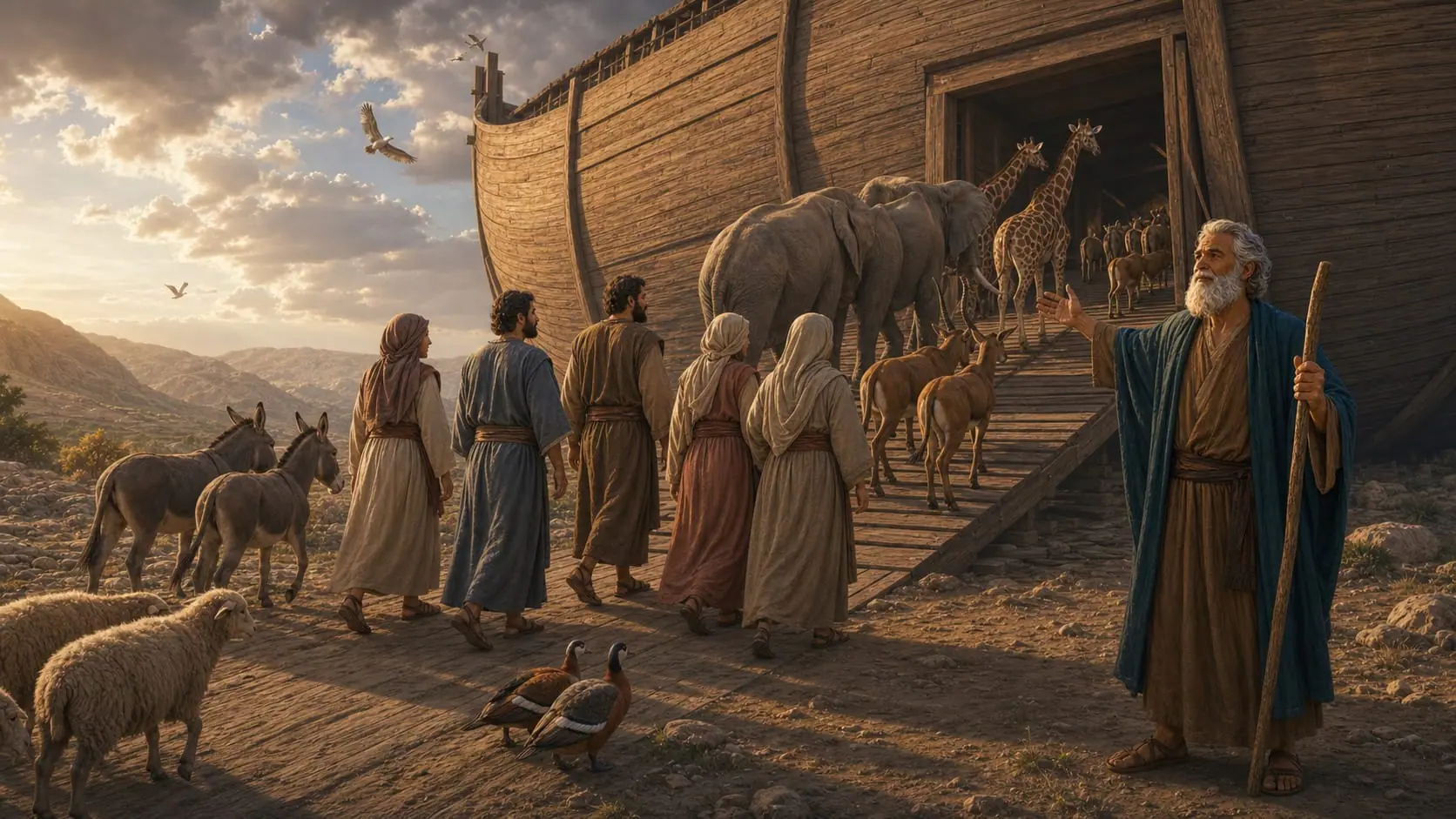
Eight people entered: Noah, his wife, their sons Shem, Ham, and Japheth, and the three sons’ wives. Genesis 6 first describes a male and female from every kind coming into the ark. Genesis 7 then distinguishes additional clean animals and birds from each pair of unclean animals. In the World English Bible, the instruction for clean animals is translated as seven pairs, not just one pair of every animal.
The text never gives a total number of animals or equates a biblical “kind” with a modern species count. Its focus is that the creatures Noah was commanded to preserve entered with his family before God shut the door. Genesis 6:19–21; 7:1–16
For a hands-on activity after reading about the animals entering, the Noah’s Ark Game offers six boarding puzzles. Choose matching animals at the front of the queues; later levels add waiting spots so you can free the animals behind them. Pairing identical pictures is a simplified game rule, not a reconstruction of the male-and-female pairs, clean-animal distinctions, or animal kinds described in Genesis. After playing, compare that simplification with what the passage actually says.
The flood begins
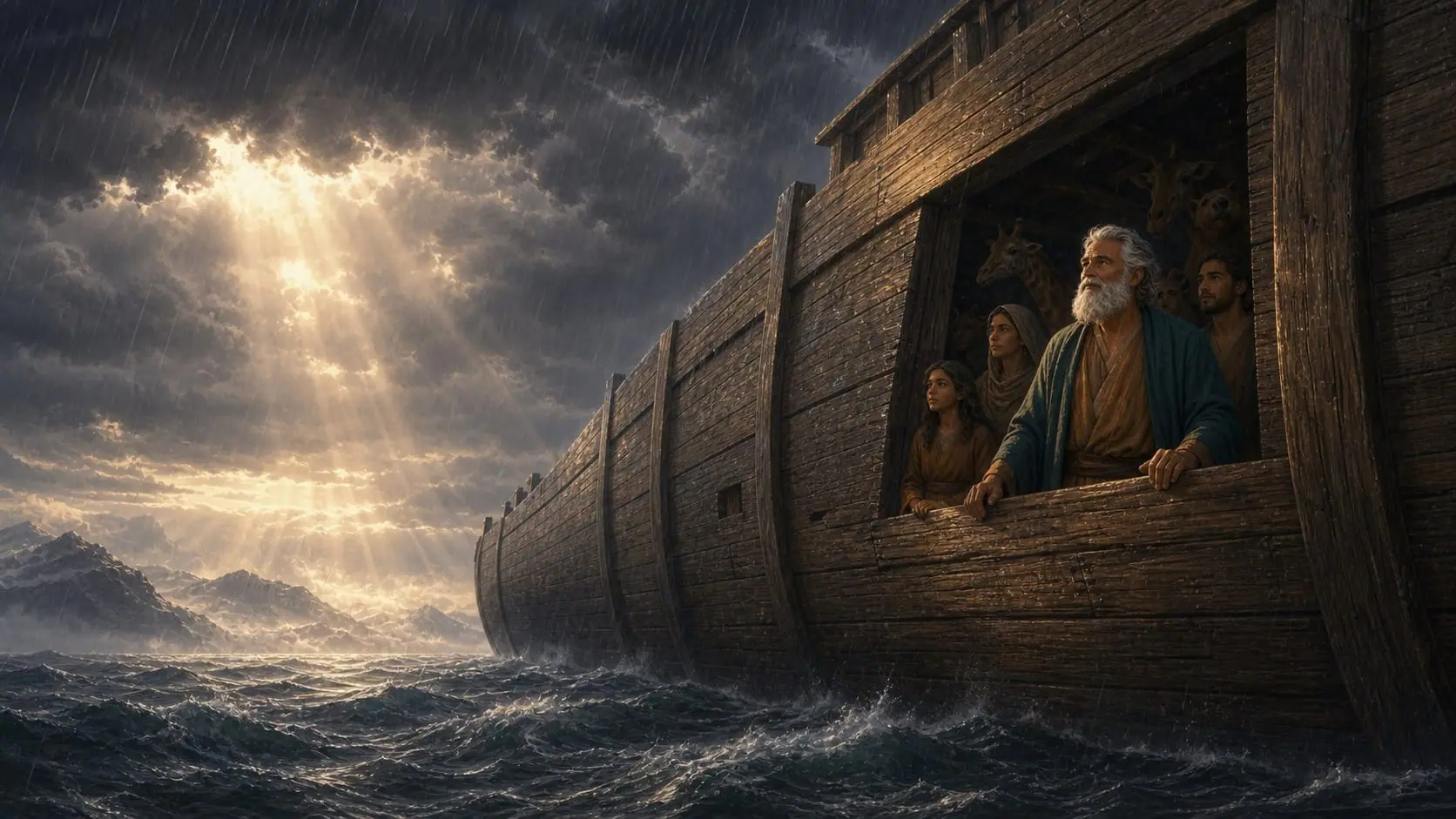
Noah was 600 when the flood began. Genesis describes the fountains of the deep bursting open and the sky’s windows opening; rain fell for forty days and forty nights. The waters lifted the ark and covered even the high mountains. Genesis 7:21–23 says that people and animals on dry land outside the ark died; Noah and those with him survived.
The waters prevailed for 150 days. Genesis then says God remembered Noah and the creatures with him. This introduces God’s action on their behalf, not a statement that he had forgotten them: he sent a wind over the earth. The waters began to recede, and the ark rested on the mountains of Ararat. Genesis 7:6–24; 8:1–5
Those who went in, went in male and female of all flesh, as God commanded him; then Yahweh shut him in. The flood was forty days on the earth. The waters increased, and lifted up the ship, and it was lifted up above the earth.
The flood timeline
How Long Was Noah on the Ark?
Genesis dates the start of the flood to the seventeenth day of the second month of Noah’s 600th year. Genesis 8:14 dates the dry earth to the twenty-seventh day of the second month of his 601st year; God’s command to leave follows in verses 15–19. The dated events span one calendar year and ten days—not just forty days.
Genesis 7:4 gives seven days’ warning, and 7:10 says the flood came after those days. But 7:13 places the family’s entry on the day the flood began. The warning is not a basis for simply adding seven extra days to their time aboard. Genesis 7:4–13
The ark rested on Ararat’s mountains on day 17 of month 7, five months after the flood began. The 150-day period in Genesis 7:24 and 8:3 reaches that stage of the story; it should not be added to the forty days of rain as though the two were consecutive periods. Mountain tops became visible on day 1 of month 10, and further waiting followed. Genesis 8:3–14
The raven, the dove, and the olive leaf
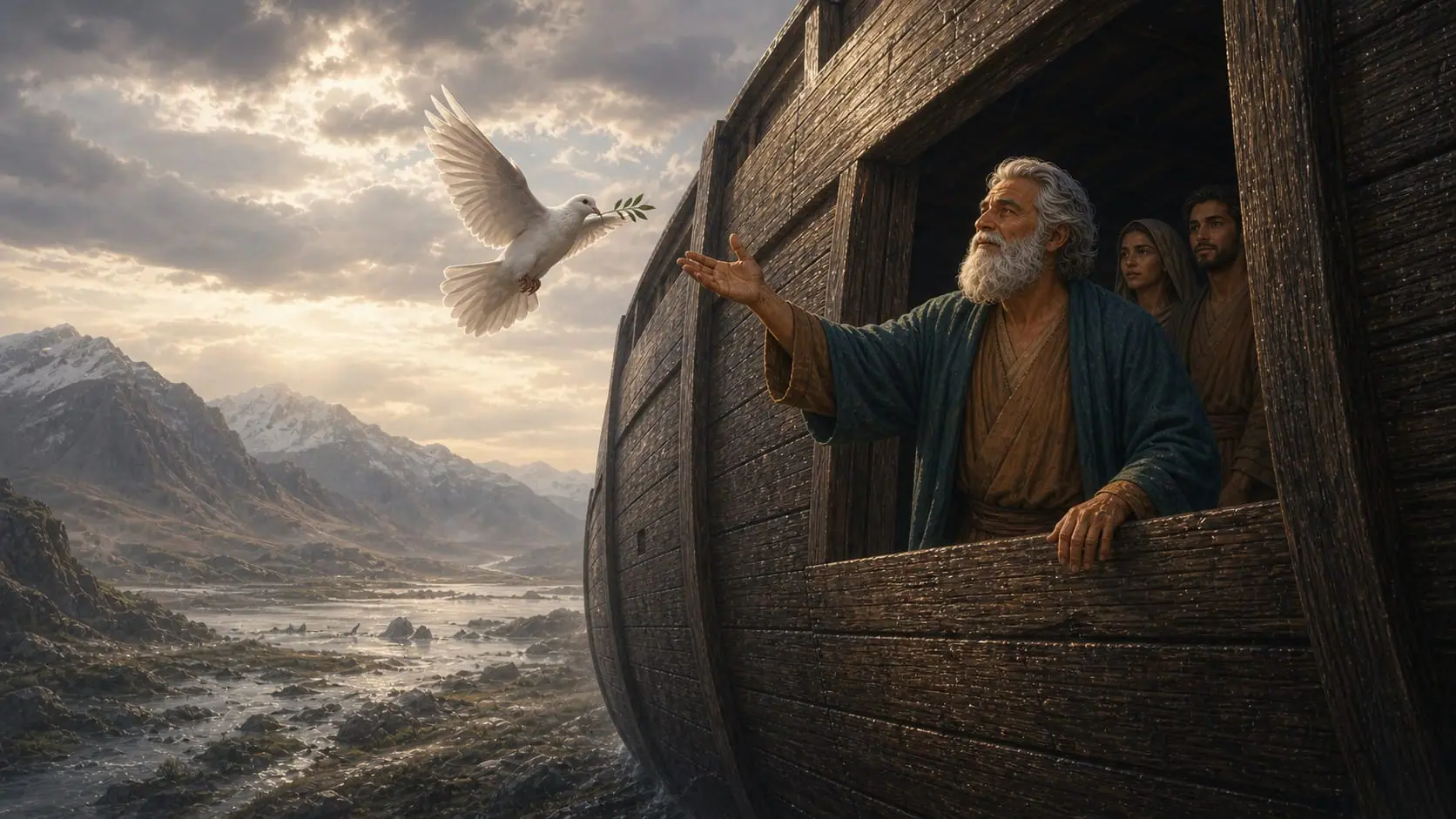
Forty days after the mountain tops became visible, Noah opened a window and sent out a raven, which flew back and forth. He also sent a dove, but it found nowhere to rest and returned. Seven days later, Noah sent the dove again. It returned in the evening carrying a freshly plucked olive leaf, showing that the waters had gone down from the earth.
After another seven days, Noah sent the dove a third time, and it did not return. On day 1 of month 1 in his 601st year, he removed the ark’s covering and saw that the ground’s surface was dry. The later date for the dry earth and God’s command to leave come next; seeing dry ground did not immediately mean departure. Genesis 8:6–19
The dove came back to him at evening and, behold, in her mouth was a freshly plucked olive leaf. So Noah knew that the waters were abated from the earth.
Noah leaves the ark and builds an altar
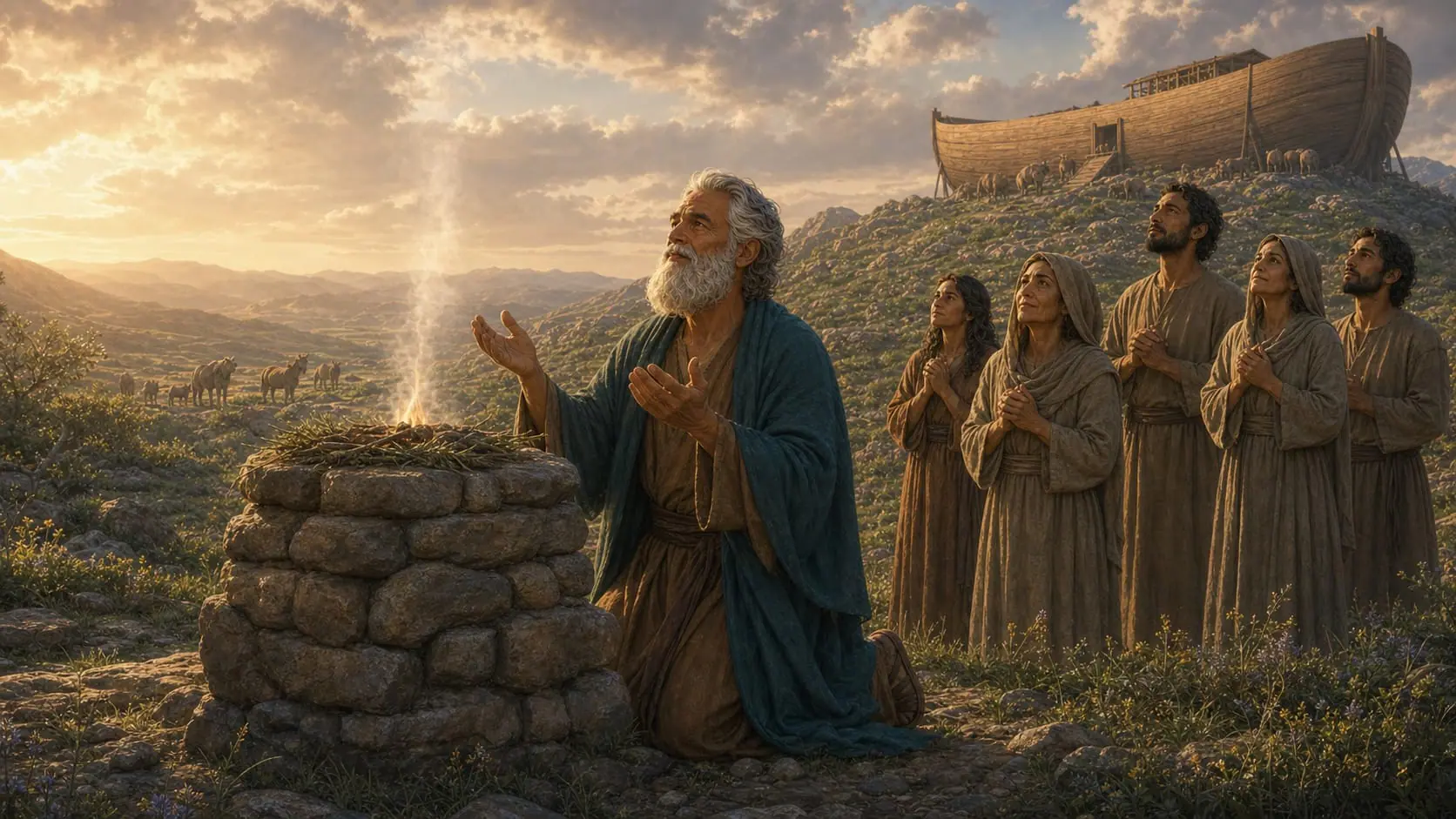
When the earth was dry, God told Noah to leave the ark with his family and all the living creatures. Noah came out, built an altar, and offered burnt offerings from the clean animals and birds.
Building the altar is Noah’s first recorded act after leaving the ark. God then resolved not to strike down every living thing again as he had done, even though the human heart remained inclined to evil. He promised the continuance of seedtime and harvest, seasons, day and night while the earth remains. Genesis 8:15–22
God’s covenant with Noah and the rainbow
God blessed Noah and his sons and established a covenant with them, their descendants, and every living creature. The promise was that never again would all flesh be cut off by the waters of a flood. This is not a promise that local floods will never happen. Before announcing the covenant, God also forbade eating flesh with its lifeblood and called people to account for shedding human blood, because humans are made in God’s image. Genesis 9:1–11
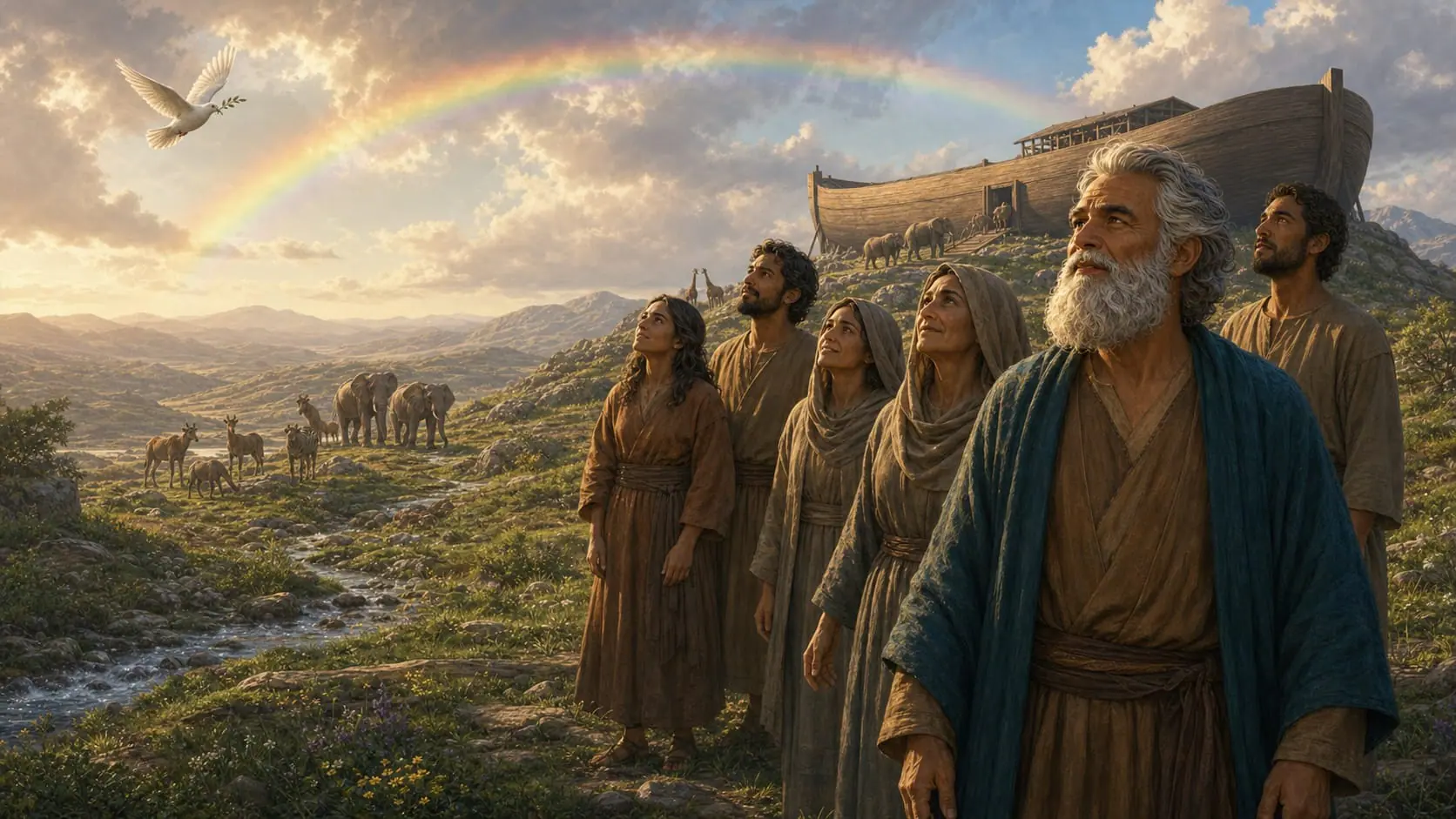
God placed the rainbow in the clouds as the sign of this covenant. In the story, the rainbow is not merely a general symbol of hope; it is tied specifically to God’s covenant with Noah, future generations, and the living creatures of the earth. Genesis 9:1–17
I set my rainbow in the cloud, and it will be a sign of a covenant between me and the earth.
Noah’s life after the flood
Noah’s life did not end with the covenant. Genesis 9:18–29 continues with his vineyard, drunkenness, and a troubling family episode. The Noah character profile explains that later account, including why Noah’s curse is directed at Canaan, not at an entire race of people.