%20scale(.87)'%3e%3cg%20transform='rotate(-3%2032%2034)'%3e%3cpath%20d='M10.5%2019.5c7.65-2.35%2014.8-.45%2021.5%205.7%206.7-6.15%2013.85-8.05%2021.5-5.7v27.2c-7.65-2.15-14.8-.45-21.5%205.1-6.7-5.55-13.85-7.25-21.5-5.1V19.5Z'%20fill='%23fff'%20stroke='%23171528'%20stroke-width='4.5'%20stroke-linejoin='round'/%3e%3cpath%20d='M32%2025.2v26.6'%20stroke='%23171528'%20stroke-width='4'%20stroke-linecap='round'/%3e%3cpath%20d='M17.5%2034.5h9M22%2030v9'%20stroke='%23171528'%20stroke-width='3.75'%20stroke-linecap='round'/%3e%3ccircle%20cx='41.5'%20cy='32.5'%20r='2.5'%20fill='%23171528'/%3e%3ccircle%20cx='46.5'%20cy='38'%20r='2.5'%20fill='%23171528'/%3e%3c/g%3e%3c/g%3e%3c/svg%3e)
The quick answer
What happened at the Tower of Babel?
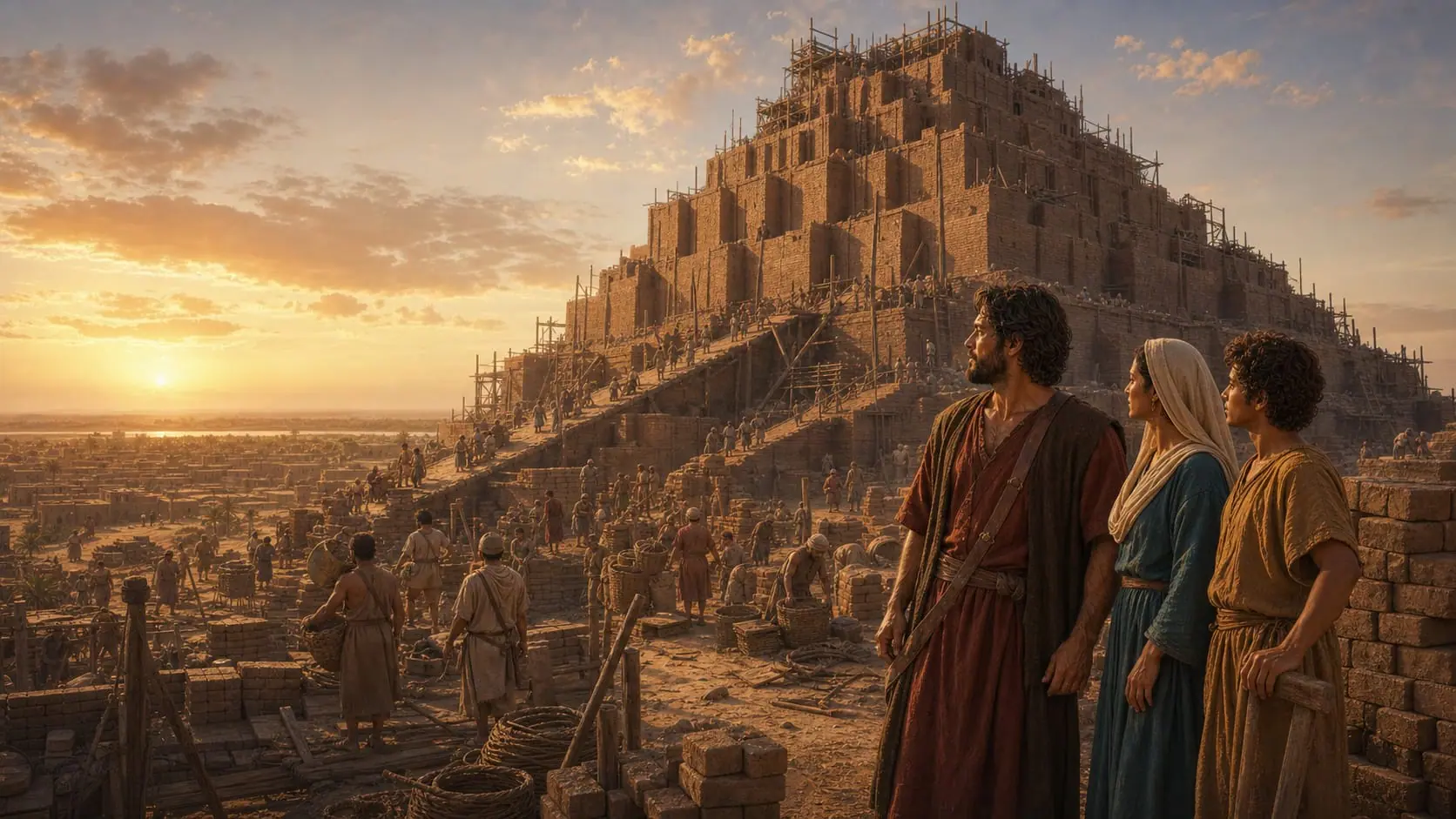
Genesis 11 describes people who shared one language and settled on a plain in the land of Shinar. They made fired bricks and used tar for mortar, then began building a city and a tower reaching toward the sky. Their stated goal was to make a name for themselves and avoid being scattered across the earth.
God came down to see the city and tower, observed the power of their shared language, and confused their speech. Unable to understand one another, the people stopped building the city and were scattered over the earth. The place was called Babel. The Bible does not say that God physically destroyed the tower.
The full story
The City, the Tower, and the Confusion of Languages
One language and one speech
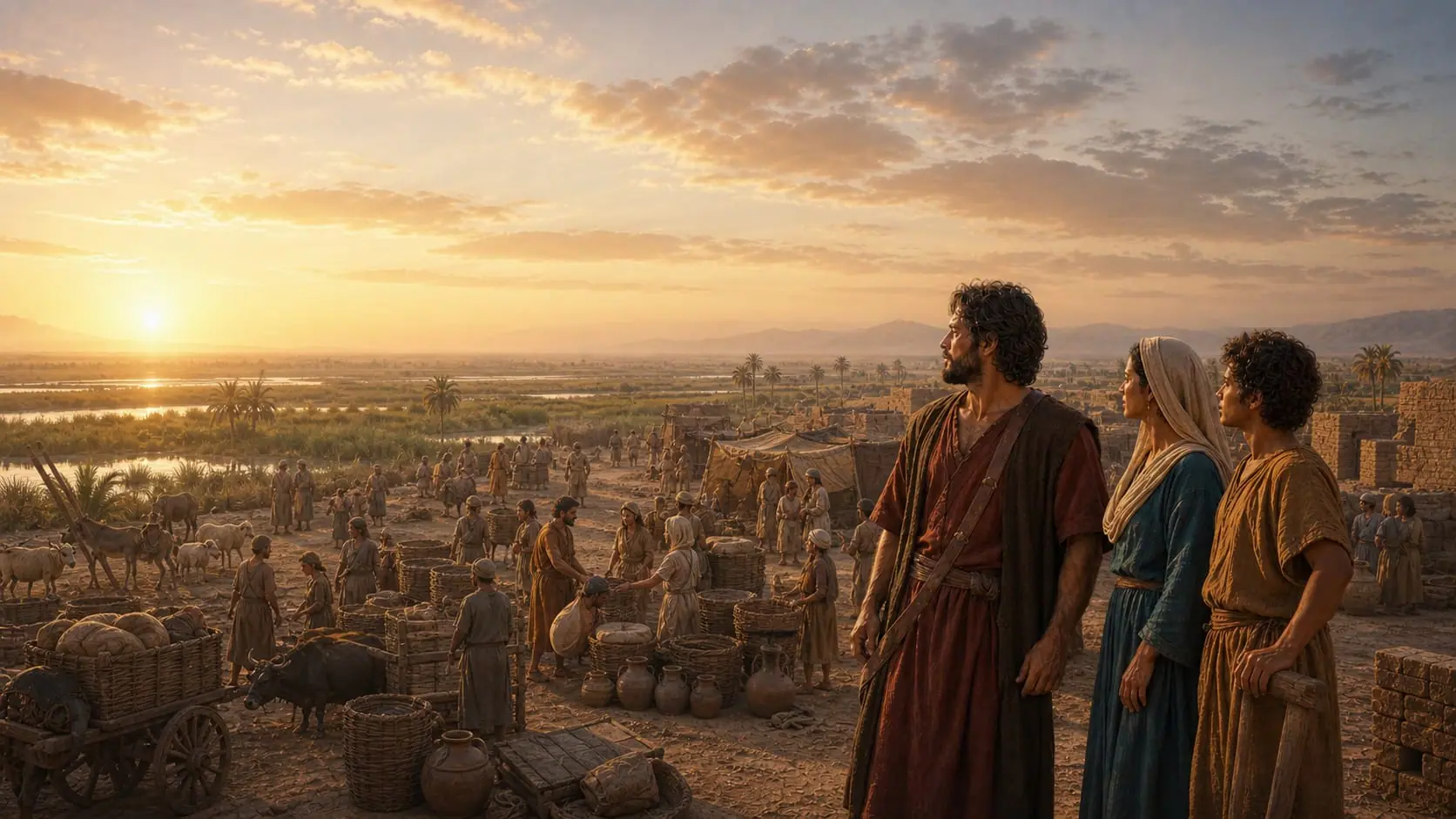
The story opens with the whole earth sharing a language. On their journey, the people found a plain in the land of Shinar and settled there. Genesis does not name a king, architect, or individual leader in this scene.
Genesis 10 has already listed Noah’s descendants by their lands and languages. Chapter 11 steps back to describe the scattering from a community with one language; it is not a second list of nations formed after the first. Genesis 10:5, 20, 31–32; 11:1–2
The whole earth was of one language and of one speech. As they traveled east, they found a plain in the land of Shinar, and they lived there.
They make bricks and use tar for mortar
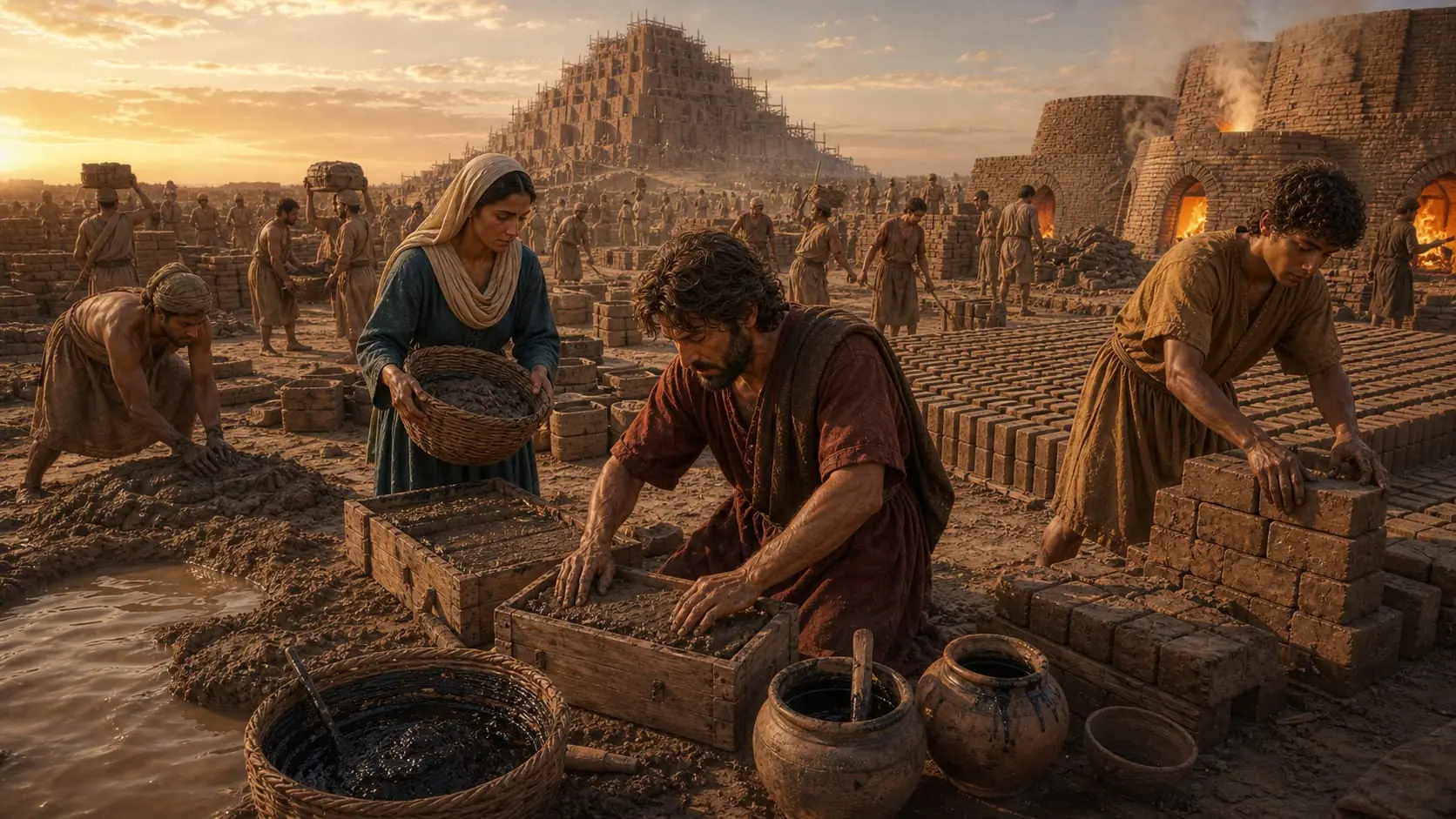
The settlers said to one another, “Come, let’s make bricks, and burn them thoroughly.” Fired brick took the place of stone, and tar held the bricks together as mortar.
Genesis briefly describes the technology before turning to its purpose. Their materials and cooperation allowed the community to attempt a monumental city and tower. Genesis 11:3
They build a city and a tower
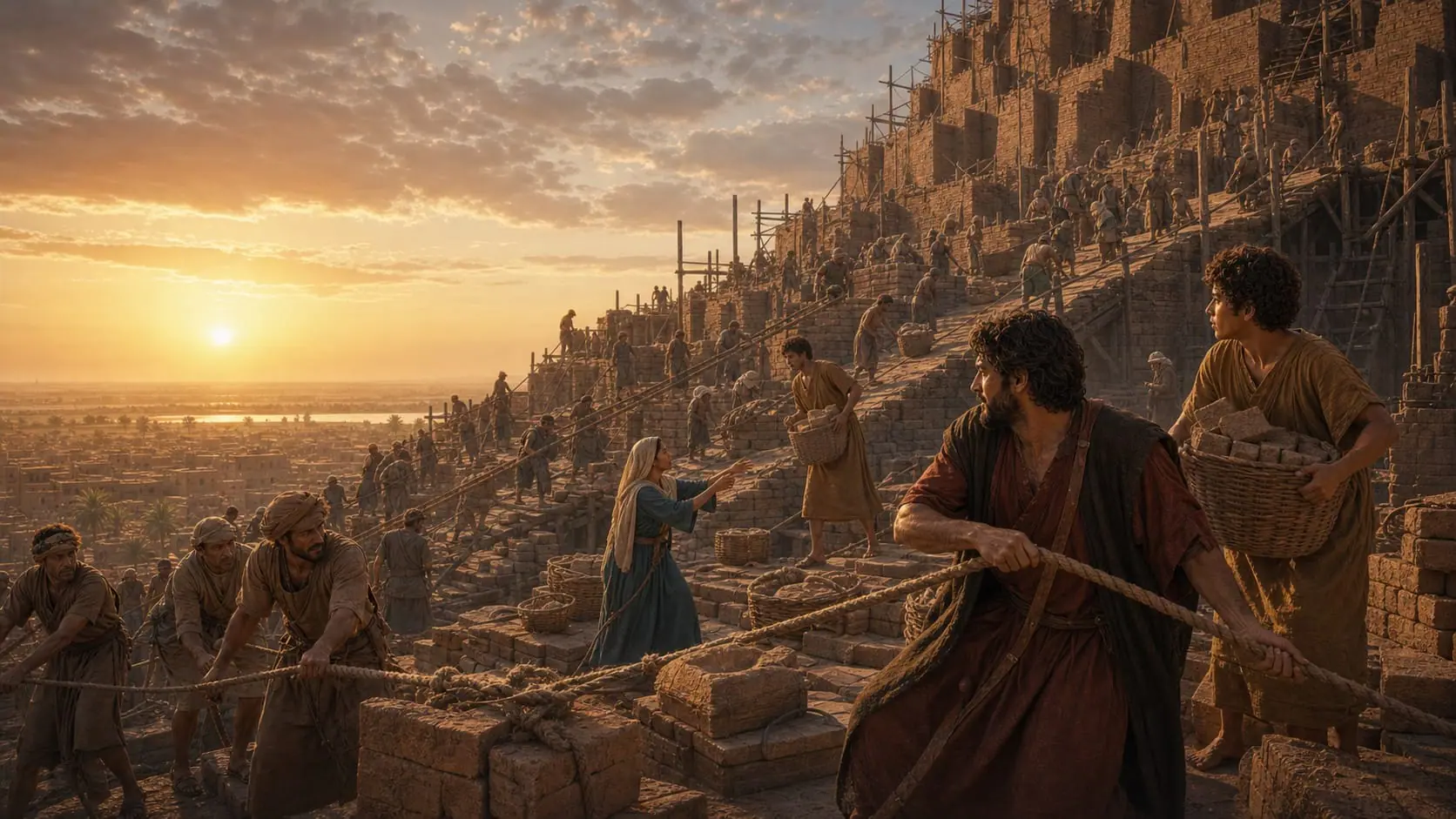
The people proposed a city and a tower whose top would reach to the sky. They explained their purpose in two parts: they wanted to make a name for themselves and prevent themselves from being scattered over the surface of the whole earth.
The passage does not record the tower’s measurements or say that the builders expected to survive another flood. It focuses on their name, desire to remain together, and determination not to scatter. Genesis 11:4
They said to one another, ‘Come, let’s make bricks, and burn them thoroughly.’ They had brick for stone, and they used tar for mortar. They said, ‘Come, let’s build ourselves a city, and a tower whose top reaches to the sky, and let’s make a name for ourselves, lest we be scattered abroad on the surface of the whole earth.’
A common question
Who Built the Tower of Babel?
Genesis 11 never names one builder. The subjects are plural: “they” settle, make bricks, and propose the city and tower. The story presents a collective human project rather than the achievement of a named king.
Nimrod is frequently named in later explanations because Genesis 10:8–10 associates the beginning of his kingdom with Babel in Shinar. But the Bible does not explicitly say that Nimrod designed, ordered, or built the tower. The Nimrod profile compares the short account in Genesis with the tower story later told by Josephus. Genesis 10:8–10; 11:1–4
What the text does not say
How Tall Was the Tower of Babel?
Genesis gives no height, width, number of levels, or construction timeline. The builders described a tower whose top reached to the sky, language that expresses the scale of their ambition but does not provide a measurement.
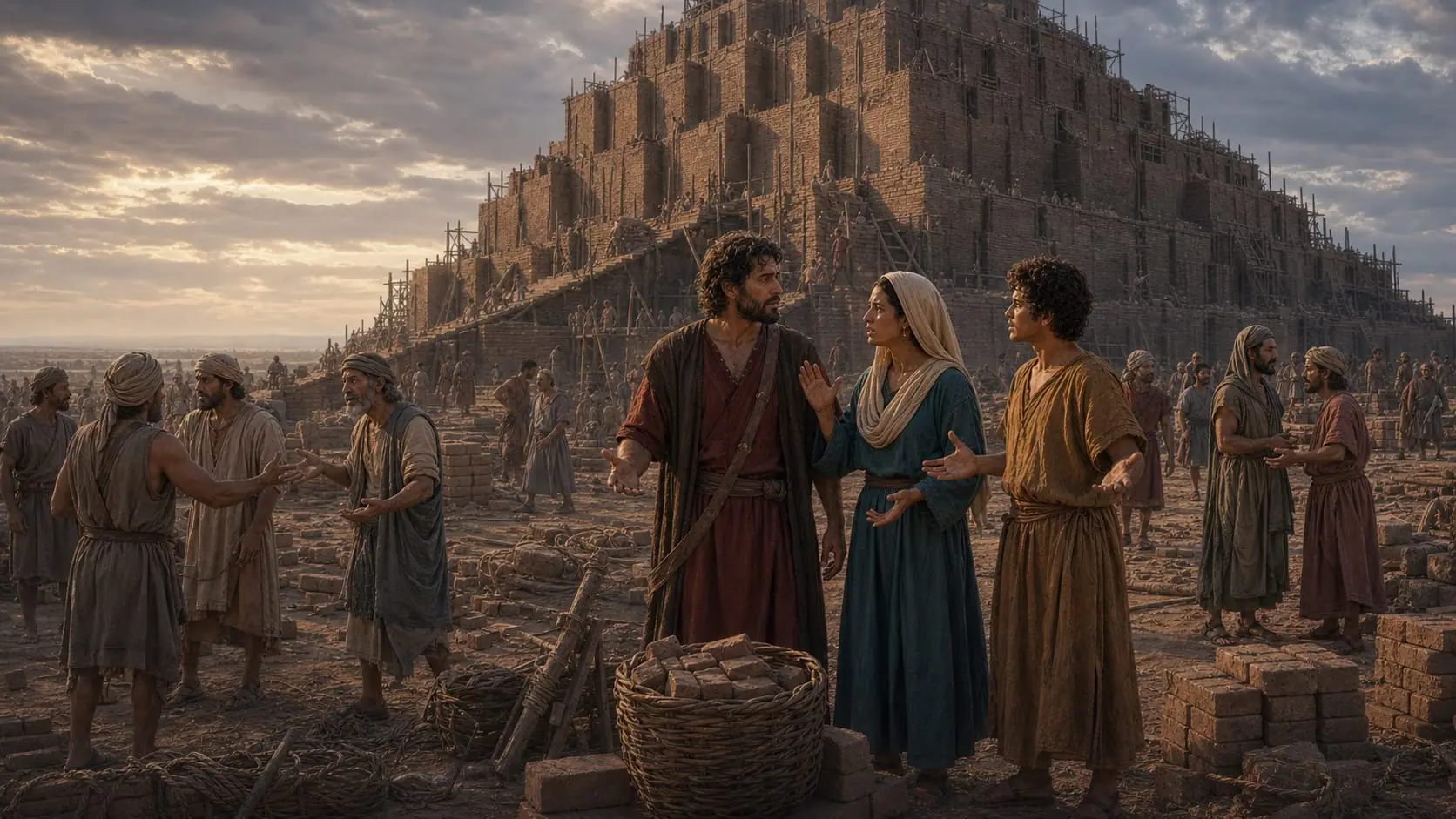
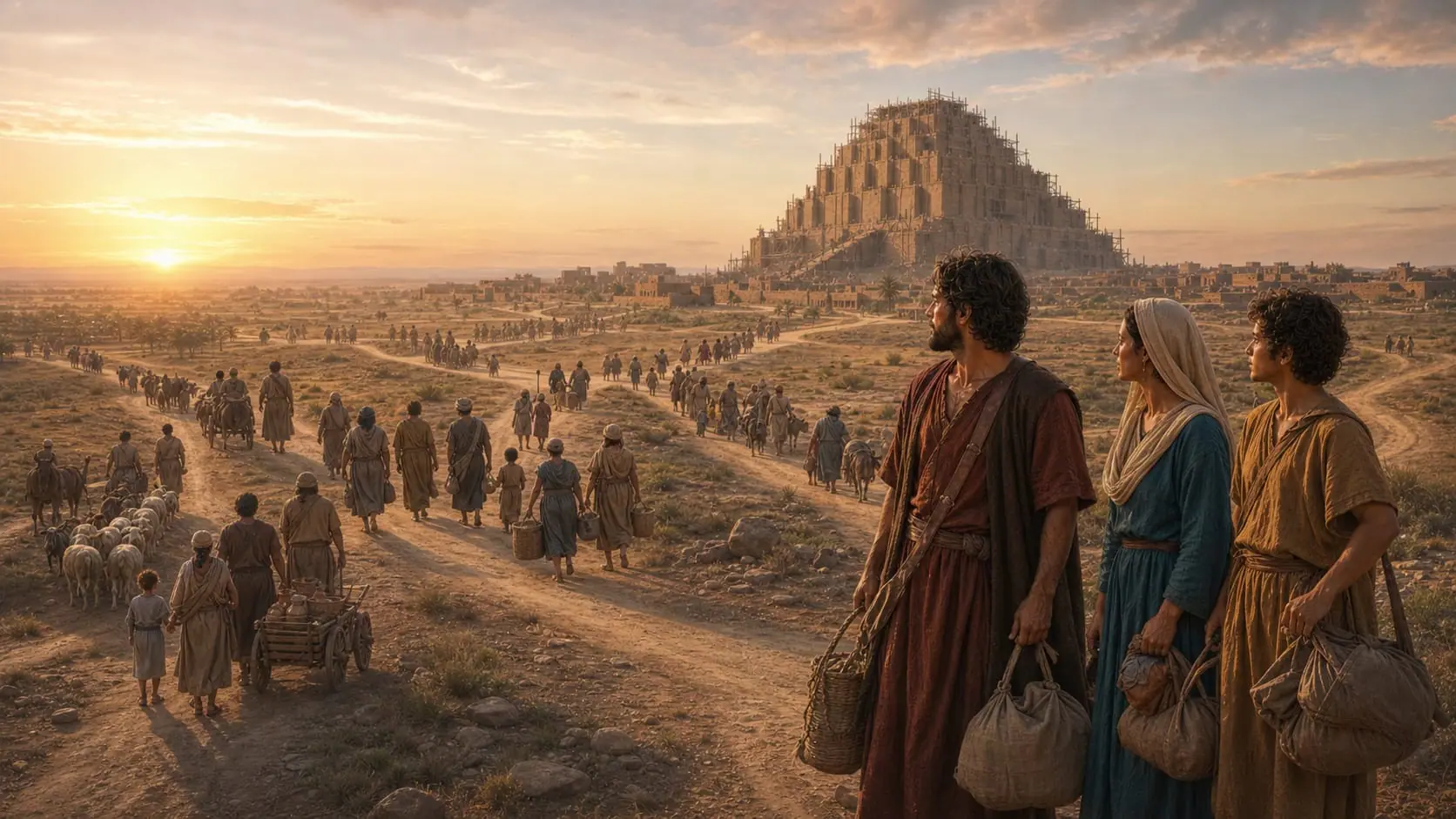
Artistic reconstructions often resemble Mesopotamian stepped temples, but its height and final design are unknown. The stepped tower shown in these illustrations is an artistic reconstruction, not a measured plan preserved in Genesis. Genesis 11:4
God comes down to see the city and tower
Genesis says that Yahweh came down to see what the people had built. What appeared to the builders to reach the sky still had to be viewed by God from above—a literary contrast between human ambition and divine perspective.
God observed that they were one people with one language and that this was only the beginning of what they intended to do. He then declared that their language would be confused so they could no longer understand one another’s speech. Genesis 11:5–7
Yahweh came down to see the city and the tower, which the children of men built. Yahweh said, ‘Behold, they are one people, and they all have one language, and this is what they begin to do. Now nothing will be withheld from them, which they intend to do. Come, let’s go down, and there confuse their language, that they may not understand one another’s speech.’
Why God confused the languages
The text connects the confusion with a united population using its shared speech to pursue the city, tower, and a name for itself while resisting dispersal. Confusing their language interrupted that concentrated power and made the project impossible to continue.
The desire to make a name for themselves is often read as pride, though Genesis 11 does not use that word. Their determination not to scatter also contrasts with God’s earlier instruction to Noah’s family to multiply and fill the earth. God’s response reverses what they sought to secure. Genesis 9:1, 7; 11:4–8
The people scatter and the building stops
God scattered the people from Babel over the surface of the earth. As the community dispersed, they stopped building the city. The narrative does not describe the tower collapsing, burning, or being struck down.
The city was called Babel because there God confused the language of all the earth. The story closes with the scattering the builders had tried to prevent. Genesis 11:8–9
So Yahweh scattered them abroad from there on the surface of all the earth. They stopped building the city. Therefore its name was called Babel, because there Yahweh confused the language of all the earth. From there, Yahweh scattered them abroad on the surface of all the earth.
The land of Shinar
Where Was the Tower of Babel?
Genesis places the settlement on a plain in the land of Shinar. Shinar is commonly associated with southern Mesopotamia, and the biblical name Babel is associated with Babylon. This provides a broad regional setting rather than exact coordinates.
Ancient Mesopotamia contained monumental stepped brick structures, so many readers compare the story with Babylonian ziggurats. Genesis, however, does not identify a surviving ruin as the Tower of Babel. The broad setting is not proof that any particular excavated structure is this tower. Genesis 10:10; 11:2, 11:9