%20scale(.87)'%3e%3cg%20transform='rotate(-3%2032%2034)'%3e%3cpath%20d='M10.5%2019.5c7.65-2.35%2014.8-.45%2021.5%205.7%206.7-6.15%2013.85-8.05%2021.5-5.7v27.2c-7.65-2.15-14.8-.45-21.5%205.1-6.7-5.55-13.85-7.25-21.5-5.1V19.5Z'%20fill='%23fff'%20stroke='%23171528'%20stroke-width='4.5'%20stroke-linejoin='round'/%3e%3cpath%20d='M32%2025.2v26.6'%20stroke='%23171528'%20stroke-width='4'%20stroke-linecap='round'/%3e%3cpath%20d='M17.5%2034.5h9M22%2030v9'%20stroke='%23171528'%20stroke-width='3.75'%20stroke-linecap='round'/%3e%3ccircle%20cx='41.5'%20cy='32.5'%20r='2.5'%20fill='%23171528'/%3e%3ccircle%20cx='46.5'%20cy='38'%20r='2.5'%20fill='%23171528'/%3e%3c/g%3e%3c/g%3e%3c/svg%3e)
The quick answer
What happened in the Parable of the Prodigal Son?
A younger son asked his father for his share of the property, left for a far country, and wasted everything. When famine left him hungry and feeding pigs, he came to himself and decided to return home, confess his sin, and ask to become a hired servant.
His father saw him from far away, ran to embrace him, and restored him with a robe, ring, sandals, and a feast. The older son became angry and refused to enter the celebration. His father came outside and appealed to him, but Jesus ended the story without telling whether the older brother entered.
The full story
Luke 15:11–32: A Father and His Two Sons
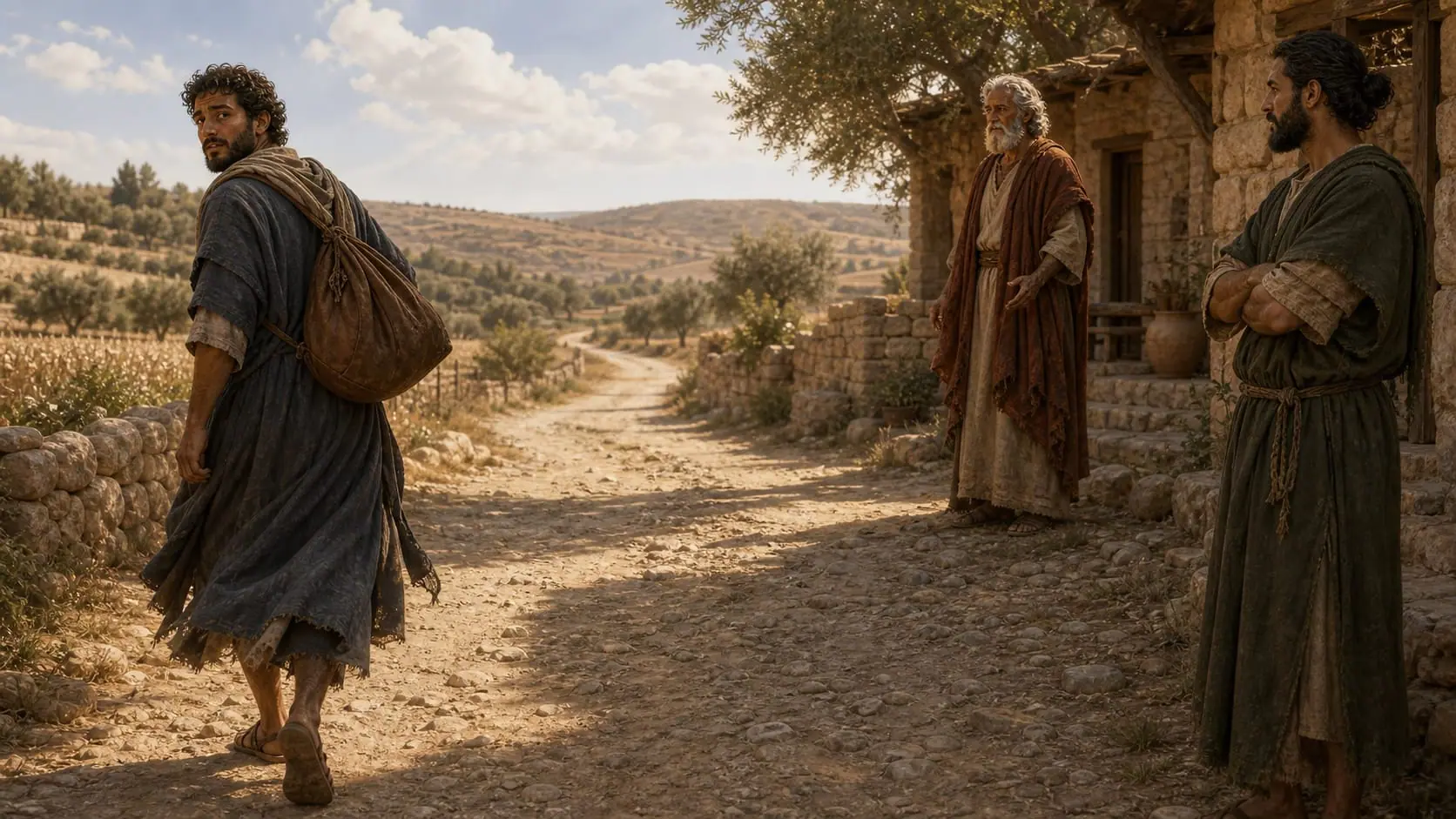
Jesus tells the story of a man with two sons
The parable begins with a father and two sons. The younger son asked for his share of the property before his father’s death. The father divided his livelihood between both sons, not just the younger one. Later, he tells the older son that everything he has is his (Luke 15:31). Jesus does not describe a second division of the estate when the younger son returns.
Not many days later, the younger son gathered everything and traveled into a far country. There he wasted his property in reckless living. The text describes his waste but does not provide a detailed list of everything he did. Luke 15:11–13
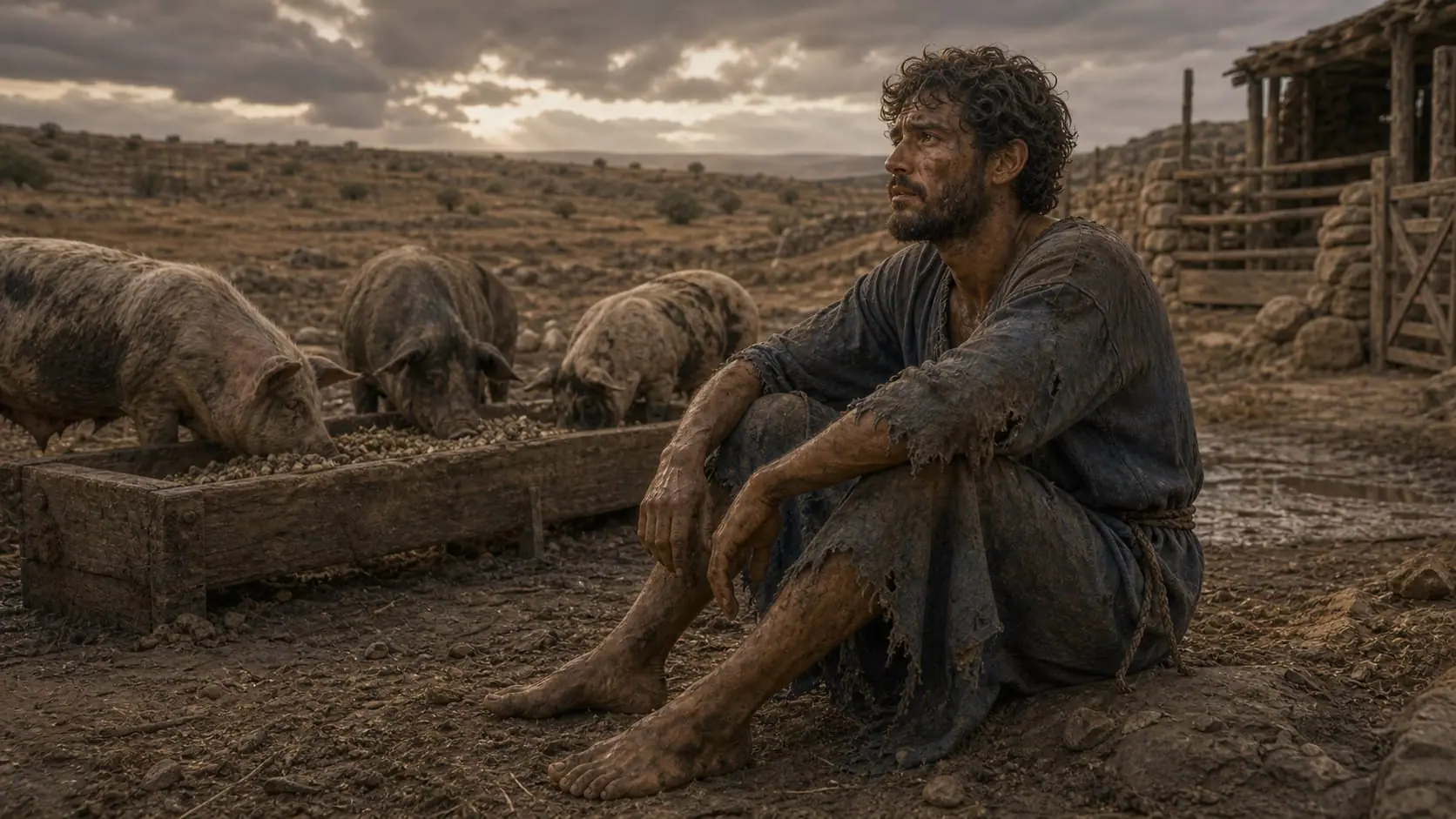
Famine leaves the younger son feeding pigs
After the son had spent everything, a severe famine struck that country. He went to work for one of its citizens, who sent him into the fields to feed pigs. He longed to fill himself with the pods the pigs ate, but no one gave him any.
Pigs were unclean under Israel’s food laws (Leviticus 11:7–8), making this work a striking detail for Jesus’ Jewish hearers. The son who had left with wealth was now hungry while feeding someone else’s animals. Luke 15:14–16
The son comes to himself and prepares to return
The turning point is described simply: “he came to himself.” He remembered that his father’s hired servants had more than enough bread while he was dying of hunger. He decided to go home, confess that he had sinned against heaven and his father, admit that he was no longer worthy to be called a son, and ask to become a hired servant.
He planned to ask for work, not another share of the property. His words acknowledge wrongdoing against his father and against God: “heaven” is a way of referring to God here. Then he got up and went home. Luke 15:17–20
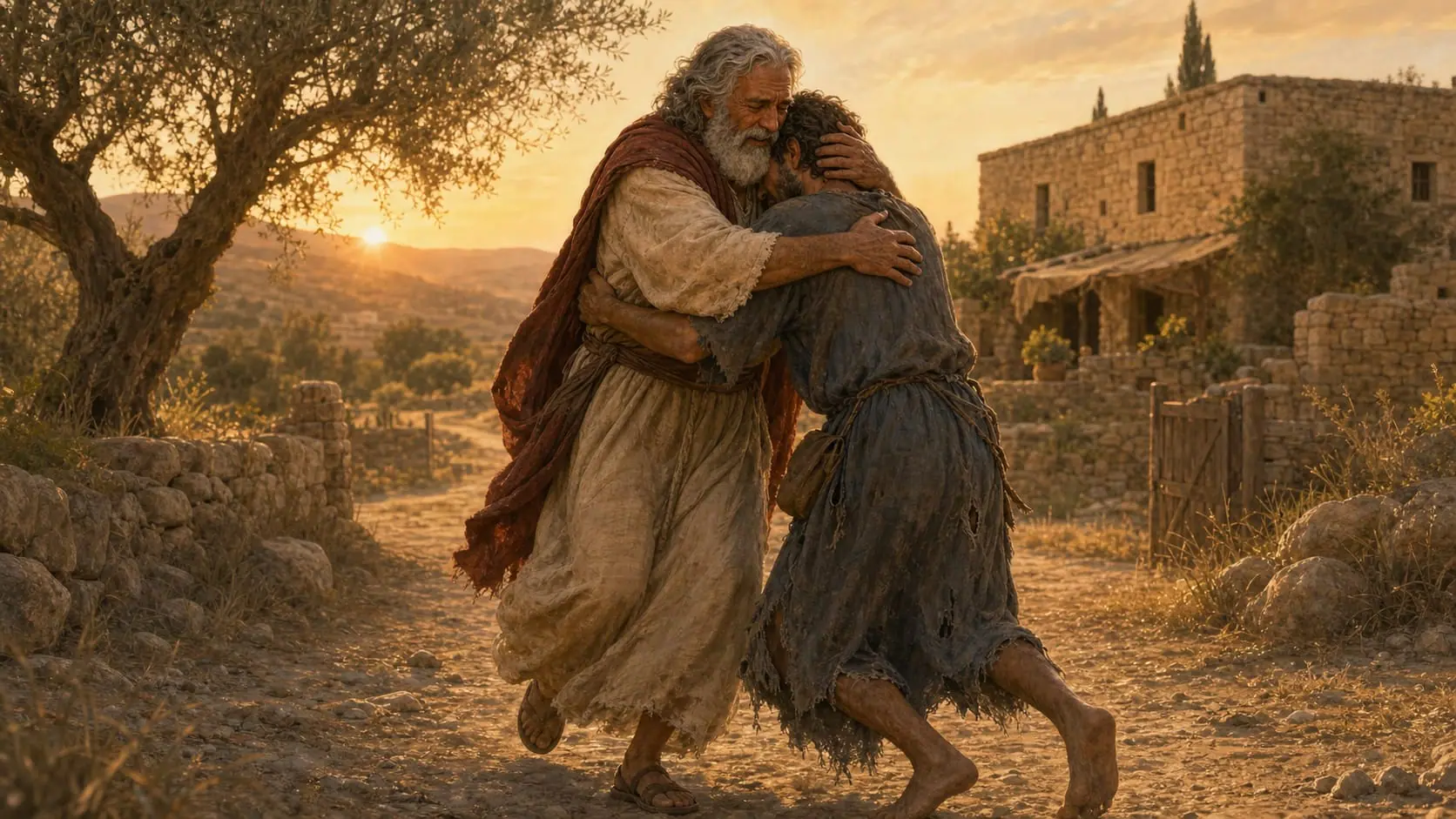
The father sees him far away and runs
While the son was still far off, his father saw him and was moved with compassion. He ran to embrace and kiss him before the son began his confession.
The son confessed that he had sinned against heaven and before his father and was no longer worthy to be called his son. In the WEB and KJV, his spoken confession does not include the request for work that he had planned. This does not tell us whether the father interrupted him. What the story does show is the father welcoming him as his son. Luke 15:20–22
“He arose and came to his father. But while he was still far off, his father saw him and was moved with compassion, and ran, fell on his neck, and kissed him. The son said to him, ‘Father, I have sinned against heaven and in your sight. I am no longer worthy to be called your son.’
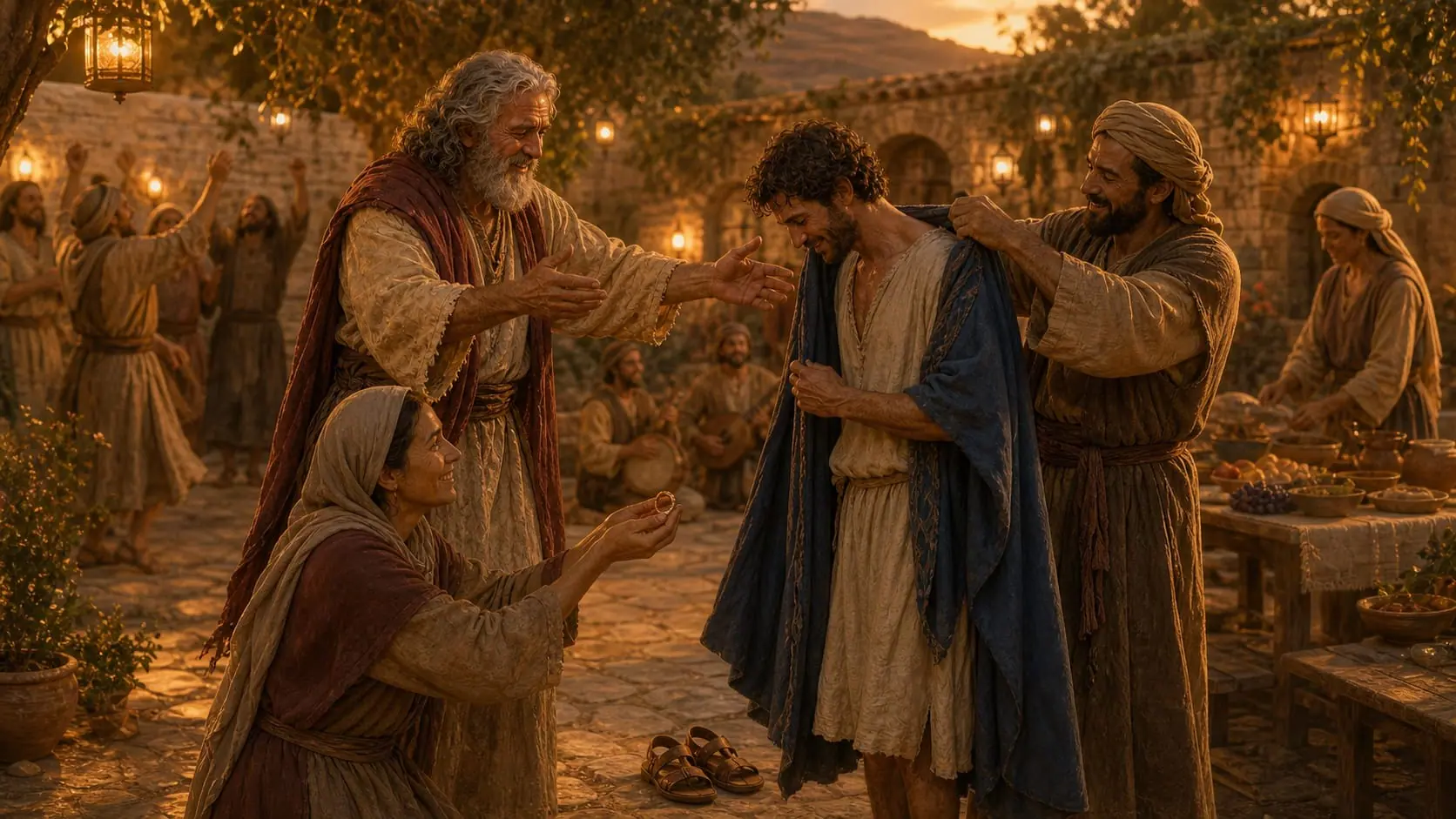
The father restores him as a son
The father ordered his servants to bring the best robe, put a ring on his hand, and place sandals on his feet. These actions publicly welcomed him into the household rather than assigning him the status of a hired servant.
The father called for the fattened calf and began a celebration. His explanation centered on restoration: the son who was as good as dead was alive again; the one who was lost had been found. Luke 15:22–24
“But the father said to his servants, ‘Bring out the best robe and put it on him. Put a ring on his hand and sandals on his feet. Bring the fattened calf, kill it, and let’s eat and celebrate; for this, my son, was dead and is alive again. He was lost and is found.’ Then they began to celebrate.
The older brother refuses to enter the celebration
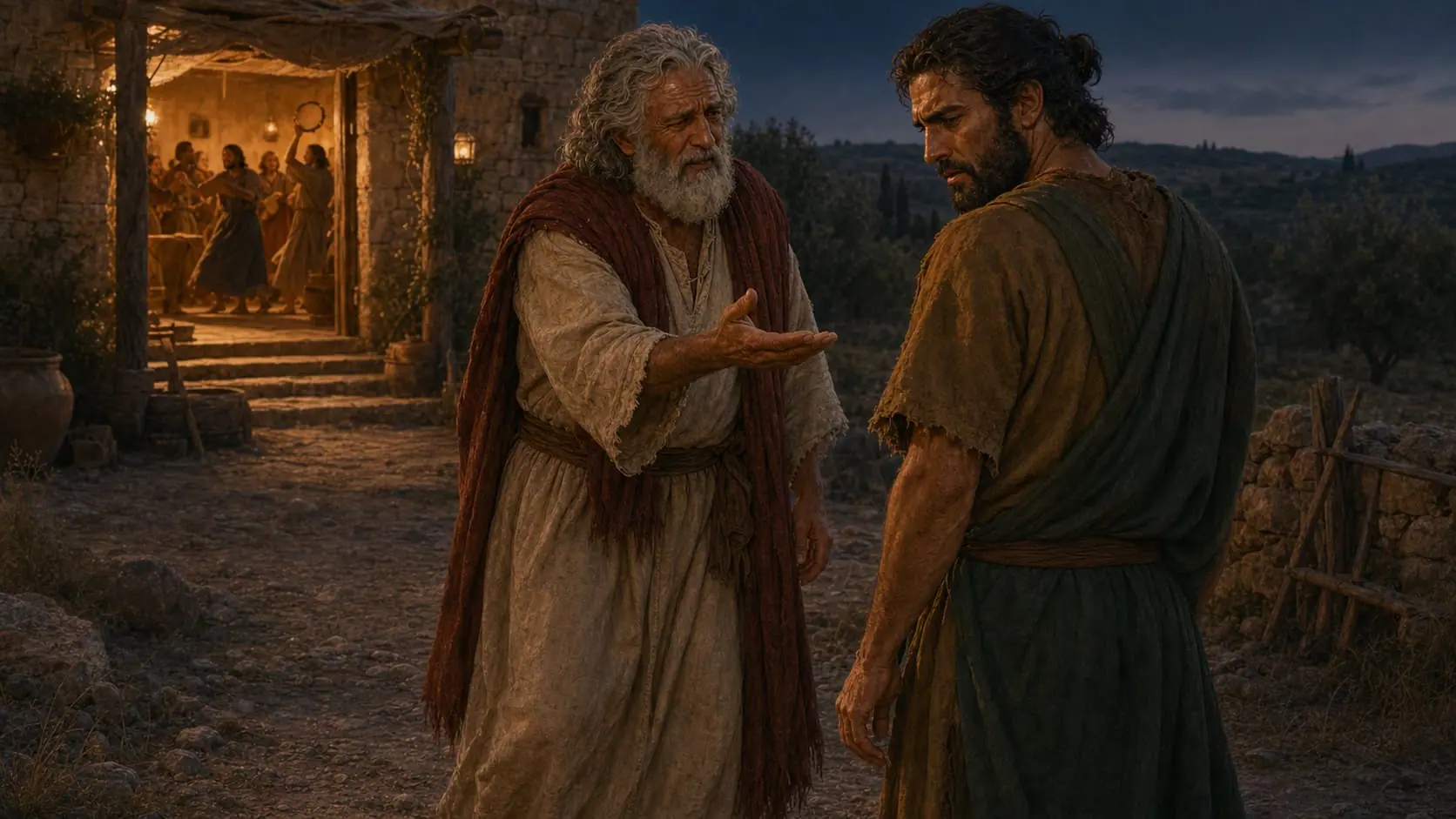
The elder son returned from the field, heard music and dancing, and learned that his brother had come home safely. He became angry and would not enter. Just as the father had gone out to meet the younger son, he now came outside to plead with the older one.
The older son said that he had served for years and never disobeyed a command. This is his own claim, not a separate statement by the narrator. He complained that he had never received even a young goat for a celebration with friends, yet the fattened calf had been killed for “this son of yours.” His accusation about prostitutes also comes from the older brother; the narrator had only said “riotous living.” Luke 15:25–30
But he was angry and would not go in. Therefore his father came out and begged him. But he answered his father, ‘Behold, these many years I have served you, and I never disobeyed a commandment of yours, but you never gave me a goat, that I might celebrate with my friends. But when this your son came, who has devoured your living with prostitutes, you killed the fattened calf for him.’
The parable ends with an invitation
The father assured the older son that he was always with him and that everything the father had was his. Yet celebration was fitting because his brother had been dead and was alive, lost and found. Where the older son says “this son of yours,” the father says “your brother,” reminding him of their relationship.
Jesus ends there. We are not told whether the older son entered. The unresolved ending turns toward the hearers—especially those complaining that Jesus welcomed sinners—and asks whether they will share the father’s joy. Luke 15:31–32
“He said to him, ‘Son, you are always with me, and all that is mine is yours. But it was appropriate to celebrate and be glad, for this, your brother, was dead, and is alive again. He was lost, and is found.’”
The traditional title
What Does Prodigal Son Mean?
Prodigal means wastefully extravagant or recklessly lavish. The familiar title describes the younger son because he wasted his property in a far country. “Prodigal Son” is a traditional heading, not a name Jesus gives the character in Luke 15.
It is also called the Parable of the Lost Son. Neither title covers the whole story: the father goes out to both sons, and the ending concerns the older brother. These are characters in a parable, not named people whose later lives Luke goes on to report.
Why Jesus told the story
Luke 15 and the Three Stories of the Lost
Luke 15 opens with tax collectors and sinners coming to hear Jesus while Pharisees and scribes complain that he welcomes sinners and eats with them. Jesus responds with the lost sheep, the lost coin, and finally the father with two sons.
The lost sheep and coin stories end with joy over a sinner who repents (Luke 15:7, 10). The father’s welcome continues that theme, while the older brother’s refusal to celebrate recalls the complaint against Jesus. Read more about Jesus’ life and teaching for the wider Gospel setting.
The unfinished question
What Does the Older Brother Represent?
The older brother has stayed home and describes himself as obedient, but he resents the celebration. He speaks about his service and his friends; the father speaks about their shared life and reminds him that the returning son is his brother.
His complaint echoes the Pharisees and scribes in Luke 15:1–2 who object to Jesus welcoming sinners. That connection does not make him a stand-in for every Jewish person. The challenge also reaches any reader who finds it difficult to welcome someone who has repented. The father appeals to him rather than rejecting him, and Jesus does not tell us his final response.
For another of Jesus’ stories about mercy, read the Good Samaritan, where care reaches across a social divide. You can also read Bible verses about forgiveness or try Jesus Trivia to recall this parable alongside other events and teachings in the Gospels.