BibleGamesHub

Bible Verses About Forgiveness

Read 23 passages about God’s forgiveness, confession, forgiving others, and reconciliation. Explore their settings and important translation differences, then try optional word practice or a five-question quiz.

Start With These Bible Verses About Forgiveness

Choose a passage, then open the reader to explore its words and setting at your own pace.

Ephesians 4:32

WEB

God’s forgiveness in Christ becomes a pattern for a church’s kindness and care.

Read passage
Preview passage
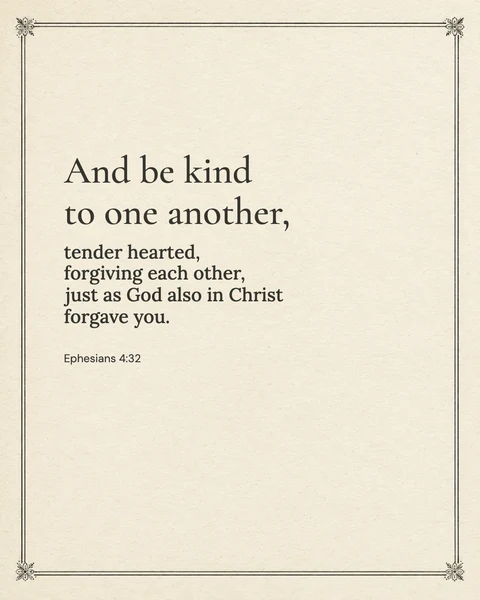
And be kind to one another, tender hearted, forgiving each other, just as God also in Christ forgave you.

Context: Paul has told the church to put away falsehood, destructive speech, bitterness, and malice (Ephesians 4:25–31). Kindness and forgiveness belong to that changed way of treating one another, with God’s forgiveness in Christ as the pattern.

Matthew 6:14–15

WEB

Jesus gives both an assurance and a warning about forgiveness after the Lord’s Prayer.

Read passage
Preview passage
“For if you forgive men their trespasses, your heavenly Father will also forgive you. But if you don’t forgive men their trespasses, neither will your Father forgive your trespasses.

Context: Jesus speaks immediately after the Lord’s Prayer, including its request for forgiveness of debts (Matthew 6:12). He gives both an assurance and a serious warning about forgiving others; neither half should be omitted.

Bible verse wallpapers about forgiveness and mercy

Keep a reminder of forgiveness, kindness, and God’s mercy. Choose a design to personalize, download, or share.

Browse all wallpapers

Forgiveness in Scripture

What does the Bible say about forgiveness?

Ephesians 1:3–10 speaks of redemption and forgiveness in Christ. 1 John 1:5–10 contrasts confession with denying sin. Jesus’ teaching in Matthew 6:9–15 joins a prayer for forgiveness with a serious warning about refusing to forgive others.

These passages should be read alongside Luke 17:3–4, which names rebuke and repentance, and Romans 12:17–21, which rejects revenge while recognizing limits to what one person can do. Forgiveness does not make wrongdoing harmless or automatically repair a relationship. Christian traditions explain some of these relationships differently; no single checklist replaces the passages.

MercyConfessionRepentanceForgivenessComfortReconciliation

Luke 23:34 · WEB

“Father, Forgive Them” Verse

The WEB includes Jesus’ prayer to the Father at the crucifixion. Some ancient manuscripts omit this prayer; the NIV footnote notes the difference. In either case, the surrounding account describes the injustice of his death, not harmless behavior that readers should dismiss.

Read Luke 23:34 in context
01At the crucifixionLuke 23:33 places Jesus between two criminals. Verse 34 also describes the division of his clothing.
02A prayer to the FatherIn the WEB, Jesus asks the Father to forgive. The text does not say that the violence is acceptable.
03Read the following versesMockery continues in verses 35–39. One criminal then acknowledges his own guilt and Jesus’ innocence.
04A promise to a criminalIn verses 42–43, the criminal asks Jesus to remember him, and Jesus promises that he will be with him in Paradise.

A life beyond keeping score

Seventy Times Seven—or Seventy-Seven?

The WEB reads “seventy times seven.” The NIV reads “seventy-seven times” and notes the alternative. This is a translation difference, not a reason to treat someone using the other wording as wrong.

Read Jesus’ answer with the unforgiving servant’s story in Matthew 18:21–35. A servant receives cancellation of an enormous debt, then refuses mercy to a fellow servant. Jesus ends with a warning to forgive from the heart, not permission to stop at a numerical limit.

Peter’s question about repeated forgiveness leads into the unforgiving servant’s story.

Read Matthew 18:21–22

Grace that meets honest confession

Bible Verses About Forgiveness of Sins

Ephesians speaks of redemption through Christ; Psalm 32 describes confession and forgiven sin; Isaiah confronts wrongdoing in Judah. Their contexts matter as much as their shared language of forgiveness.

Ephesians 1:7

WEB

Forgiveness is described through redemption in Christ and the riches of grace.

Read passage
Preview passage
In him we have our redemption through his blood, the forgiveness of our trespasses, according to the riches of his grace

Context: This is part of the letter’s opening praise for God’s blessings in Christ (Ephesians 1:3–14). Forgiveness is tied to redemption through Christ’s blood and the riches of grace, not presented as something purchased by personal achievement.

Psalm 32:1–2

WEB

A psalm of forgiven sin moves from the weight of silence toward honest confession.

Read passage
Preview passage
By David. A contemplative psalm. Blessed is he whose disobedience is forgiven, whose sin is covered. Blessed is the man to whom Yahweh doesn’t impute iniquity, in whose spirit there is no deceit.

Context: After these opening lines, the speaker describes the weight of keeping silent, then acknowledges sin and receives forgiveness (Psalm 32:3–5). The WEB includes the psalm heading in this selection. The poem does not name a specific offense.

Isaiah 1:18

WEB

A promise of cleansing stands beside Judah’s call to justice and a warning about rebellion.

Read passage
Preview passage
“Come now, and let’s reason together,” says Yahweh: “Though your sins are as scarlet, they shall be as white as snow. Though they are red like crimson, they shall be as wool.

Context: Isaiah addresses Judah and Jerusalem, confronting worship offered alongside wrongdoing. The preceding commands include seeking justice and defending the fatherless and widow; verses 19–20 set obedience beside a warning about rebellion.

Acts 10:43

WEB

Peter speaks of forgiveness through Jesus as Cornelius’s household hears the gospel.

Read passage
Preview passage
All the prophets testify about him, that through his name everyone who believes in him will receive remission of sins.”

Context: Peter is speaking in Caesarea to Cornelius, who has gathered relatives and close friends (Acts 10:24). As Peter speaks about Jesus, the Holy Spirit falls on the listeners; the Jewish believers are amazed that Gentiles receive the gift too (10:44–48).

Mercy rooted in God’s character

Bible Verses About God’s Forgiveness

Micah recalls God’s promises to the fathers, Jeremiah announces a new covenant with Israel and Judah, and Psalm 86 asks for help. These are distinct settings for the appeal to God’s mercy.

Micah 7:18–19

WEB

Micah’s closing praise celebrates mercy and recalls God’s faithfulness to his people.

Read passage
Preview passage
Who is a God like you, who pardons iniquity, and passes over the disobedience of the remnant of his heritage? He doesn’t retain his anger forever, because he delights in loving kindness. He will again have compassion on us. He will tread our iniquities under foot. You will cast all their sins into the depths of the sea.

Context: Micah’s closing praise speaks of pardon for the remnant of God’s people. Verse 20 looks back to God’s faithfulness to Jacob and loving kindness to Abraham, as sworn to the fathers. The sea image expresses the removal of sins, not a new literal event.

Jeremiah 31:34

WEB

Forgiveness belongs within the promised new covenant with Israel and Judah.

Read passage
Preview passage
They will no longer each teach his neighbor, and every man teach his brother, saying, ‘Know Yahweh;’ for they will all know me, from their least to their greatest,” says Yahweh, “for I will forgive their iniquity, and I will remember their sin no more.”

Context: God promises a new covenant with the house of Israel and the house of Judah, with his law written on their hearts (Jeremiah 31:31–34). Remembering sin no more describes God’s forgiveness in this promise; it is not an instruction for a harmed person to erase memories.

Mercy practiced in real relationships

Bible Verses About Forgiving Others

Jesus teaches about forgiveness in prayer, answers Peter’s question about repeated offenses, and prays at the cross. Read the different situations without turning them into permission to conceal wrongdoing.

Mark 11:25

WEB

Jesus connects the disciples’ prayer with their treatment of other people.

Read passage
Preview passage
Whenever you stand praying, forgive, if you have anything against anyone; so that your Father, who is in heaven, may also forgive you your transgressions.

Context: Following the temple episode and the withered fig tree, Jesus teaches the disciples about faith, prayer, and forgiveness (Mark 11:20–25). This command concerns their treatment of others while praying, not just the requests they make.

Luke 6:37

WEB

Mercy and release are taught alongside loving enemies and resisting hypocritical judgment.

Read passage
Preview passage
Don’t judge, and you won’t be judged. Don’t condemn, and you won’t be condemned. Set free, and you will be set free.

Context: Jesus has told his listeners to love enemies and be merciful as their Father is merciful (Luke 6:27–36). The WEB uses “Set free” here, where some translations use “forgive.” The following teaching also warns against hypocritical correction of others.

Luke 23:34

WEB

A prayer at the crucifixion includes an important note about the manuscript difference.

Read passage
Preview passage
Jesus said, “Father, forgive them, for they don’t know what they are doing.” Dividing his garments among them, they cast lots.

Context: In the WEB text, Jesus prays to the Father as he is crucified and his clothing is divided. Some ancient manuscripts omit the prayer, a difference noted in editions such as the NIV. The surrounding account still describes crucifixion, mockery, and the two criminals.

Matthew 18:21–22

WEB

Peter’s question about repeated forgiveness leads into the unforgiving servant’s story.

Read passage
Preview passage
Then Peter came and said to him, “Lord, how often shall my brother sin against me, and I forgive him? Until seven times?” Jesus said to him, “I don’t tell you until seven times, but, until seventy times seven.

Context: Peter asks how often to forgive a brother. The WEB reads “seventy times seven”; some editions read “seventy-seven times.” Jesus follows this answer with the unforgiving servant’s enormous canceled debt and a warning to forgive from the heart (Matthew 18:23–35).

1 Corinthians 13:5

WEB

Love rejects resentment while the following verse insists on truth rather than wrongdoing.

Read passage
Preview passage
doesn’t behave itself inappropriately, doesn’t seek its own way, is not provoked, takes no account of evil;

Context: This verse continues Paul’s description of love in a discussion of the church’s gifts and shared life. The next verse says love does not rejoice in unrighteousness but rejoices with truth. It is not an instruction to conceal harm or destroy evidence of wrongdoing.

Comfort, confession, and prayer

Bible Verses About Forgiveness and Healing

Paul asks a church to comfort someone who has been disciplined; James asks believers to confess and pray for one another. Neither passage makes a person’s recovery a test of whether they have forgiven enough.

2 Corinthians 2:7–8

WEB

A church is urged to comfort and reaffirm love after discipline has been sufficient.

Read passage
Preview passage
so that, on the contrary, you should rather forgive him and comfort him, lest by any means such a one should be swallowed up with his excessive sorrow. Therefore I beg you to confirm your love toward him.

Context: Paul says the punishment imposed by the majority is sufficient, then urges forgiveness, comfort, and reaffirmed love (2 Corinthians 2:5–11). This paragraph does not name the offender or describe the offense, so an exact identification is uncertain.

James 5:16

WEB

Mutual confession and prayer appear within a passage about care for the sick.

Read passage
Preview passage
Confess your sins to one another and pray for one another, that you may be healed. The insistent prayer of a righteous person is powerfully effective.

Context: James has instructed the sick to call the church’s elders for prayer and anointing (5:14–15), then calls for mutual confession and prayer. Verse 15 says “if” the sick person has committed sins; it does not say every illness is caused by personal sin.

Repair requires more than one person

Bible Verses About Forgiveness and Reconciliation

Jesus speaks explicitly of rebuke, repentance, and repeated forgiveness in Luke 17. Romans 12 tells believers to pursue peace while acknowledging the limits of what depends on them.

Luke 17:3–4

WEB

Rebuke, repentance, and repeated forgiveness are all named in Jesus’ instruction.

Read passage
Preview passage
Be careful. If your brother sins against you, rebuke him. If he repents, forgive him. If he sins against you seven times in the day, and seven times returns, saying, ‘I repent,’ you shall forgive him.”

Context: Jesus tells his disciples to rebuke wrongdoing and forgive a brother who repents, even repeatedly in one day. Both the rebuke and the repentance are explicit; this passage should not be reduced to pretending no wrong occurred.

Owning harm without self-protection

Bible Verses About Asking for Forgiveness

Proverbs pairs confession with renouncing wrongdoing. Jesus’ altar illustration gives taking a grievance seriously priority over continuing a religious act. An apology should not pressure the other person to restore trust immediately.

Matthew 5:23–24

WEB

Jesus gives taking another person’s grievance seriously an urgent place in worship.

Read passage
Preview passage
“If therefore you are offering your gift at the altar, and there remember that your brother has anything against you, leave your gift there before the altar, and go your way. First be reconciled to your brother, and then come and offer your gift.

Context: Jesus has been teaching about anger and insulting a brother (Matthew 5:21–22). His altar illustration gives reconciliation urgency when someone has a grievance against the worshiper; it does not promise that every attempt will be accepted.

Short lines to carry with you

Short Bible Verses About Forgiveness

Read the surrounding passage when you can, then return to one short line as a prayer, confession, or reminder of mercy.

A verse for this moment

Where do you need forgiveness today?

Choose the situation that feels closest. We’ll suggest three passages to read slowly and in context.

Right now…

Prayer that makes room for truth

How to Pray About Forgiveness

Forgiveness is often a process. Let Scripture help you tell the truth, remember mercy, release revenge, and choose a wise next step.

  1. 01
    Tell the truth

    Name what happened and how it affected you without minimizing the wrong or rehearsing it for revenge.

  2. 02
    Read a passage about mercy

    Read the surrounding paragraph as well as the selected verse. You can bring questions and difficulty forgiving into your prayer.

  3. 03
    Pray for help not to retaliate

    Ask God for help responding without personal revenge. Reporting harm and seeking protection are not the same as retaliation.

  4. 04
    Choose a wise next step

    That step might be prayer, an apology, restitution, a truthful conversation, time, counsel, or a protective boundary.

  5. 05
    Leave room for healing

    Forgiveness can be sincere while grief, trust, and reconciliation still require patient work.

An optional reading sequence

A 7-Day Forgiveness Reading Plan

Read the surrounding paragraphs, note who is speaking, and consider the response each passage calls for. Seven days is a reading schedule, not a deadline for resolving pain or restoring a relationship.
Day 11 John 1:9Honest confession is set against denial of sin, with forgiveness and cleansing from God.Read passage Day 2Psalm 103:12The distance between east and west pictures God’s mercy toward those who fear him.Read passage Day 3Ephesians 4:32God’s forgiveness in Christ becomes a pattern for a church’s kindness and care.Read passage Day 4Matthew 18:21–22Peter’s question about repeated forgiveness leads into the unforgiving servant’s story.Read passage Day 5Luke 23:34A prayer at the crucifixion includes an important note about the manuscript difference.Read passage Day 62 Corinthians 2:7–8A church is urged to comfort and reaffirm love after discipline has been sufficient.Read passage Day 7Romans 12:18Peace is pursued without pretending one person can control every response.Read passage

Carry one sentence forward

Practice a forgiveness verse

Choose a passage here and fill in one missing word. The Bible Memory Game has its own verse library; it does not automatically open the verse you select on this page.

Explore the Bible Memory Game
Fill the missing wordEphesians 4:32

And be _____ to one another, tender hearted, forgiving each other, just as God also in Christ forgave you.

Paul has told the church to put away falsehood, destructive speech, bitterness, and malice (Ephesians 4:25–31). Kindness and forgiveness belong to that changed way of treating one another, with God’s forgiveness in Christ as the pattern. Read the passage (WEB)

Fill in the one missing word. Capitalization does not matter.

5 quick questions

Forgiveness Verse Quiz

1 / 5

In the WEB text of Luke 23:34, who prays, “Father, forgive them”?

An example prayer, not a Scripture quotation

A Short Prayer for Forgiveness

Merciful God, bring me into the light of your truth and the freedom of your grace. Forgive the sins I confess, soften the resentment I still carry, and give me courage to own the harm I have caused. Help me release revenge without denying what happened. Give me wise boundaries, patient healing, and humility to pursue repair and reconciliation where it is truthful and safe. Teach me to forgive as I have been forgiven in Christ. Amen.

Questions & context

Bible Verses About Forgiveness FAQ

What is the best Bible verse about forgiveness?

Ephesians 4:32 is a strong starting point because it joins God’s forgiveness in Christ with kindness, compassion, and forgiving others. 1 John 1:9 is especially direct about confession and forgiveness of sins.

What does the Bible say about forgiveness?

Ephesians 1:7 speaks of forgiveness through Christ’s redemption, and 1 John 1:9 connects forgiveness with confession. Jesus also gives serious teaching about forgiving others in Matthew 6:14–15 and about rebuke, repentance, and repeated forgiveness in Luke 17:3–4. Read these together rather than reducing them to a rule that wrongdoing no longer matters.

Does forgiveness mean forgetting?

Jeremiah 31:34 promises that God will forgive his people and remember their sin no more. It is not a command for a harmed person to lose memory or pretend nothing happened. First Corinthians 13:6 also says love rejoices with truth, not unrighteousness.

Is forgiveness the same as reconciliation?

They are related, but forgiving an offense does not by itself repair a relationship. Matthew 5:23–24 urges reconciliation, while Luke 17:3–4 names rebuke and repentance. Romans 12:18 recognizes limits to what one person can accomplish. Restored trust should not be assumed without regard for what has changed or whether contact is safe.

Do I have to trust someone again?

Forgiveness can be offered without immediately restoring access or trust. Trust is relational and may need to be rebuilt through consistent changed behavior over time.

How many times should I forgive?

The WEB translates Matthew 18:22 as “seventy times seven”; the NIV main text reads “seventy-seven times” and notes the alternative. Jesus then tells the parable of the unforgiving servant and calls for forgiveness from the heart. The passage is not permission to stop showing mercy after a set number of offenses.

Can I forgive someone who never apologized?

Romans 12:19–21 rejects personal revenge without making that command depend on an apology. Luke 17:3–4 explicitly speaks of rebuke and repentance. Christians differ in how they describe forgiveness before repentance, but neither passage requires pretending the wrong was harmless or forcing restored trust.

Does forgiveness require staying in an unsafe relationship?

No. Forgiveness does not require denying danger, removing consequences, avoiding authorities, or giving someone continued access. Seek immediate local help if you or someone else is unsafe.

What about the unforgivable sin?

Matthew 12:22–37 and Mark 3:20–30 place Jesus’ warning about blasphemy against the Holy Spirit in a dispute over the source of his power. His opponents attribute his work to the ruler of demons; Mark explicitly connects the warning with their saying he had an unclean spirit. This is a serious warning, not a basis for this page or its quiz to declare an individual beyond forgiveness. Read the full accounts, alongside passages such as 1 John 1:9–2:2.

Which Bible translation is used here?

The Scripture selections use the World English Bible (WEB), a public-domain translation. Some verse ranges begin or end within longer sentences or speeches. We note important wording or manuscript differences and provide passage links. Context notes, quiz explanations, and the example prayer are our own writing, not additional Scripture.