%20scale(.87)'%3e%3cg%20transform='rotate(-3%2032%2034)'%3e%3cpath%20d='M10.5%2019.5c7.65-2.35%2014.8-.45%2021.5%205.7%206.7-6.15%2013.85-8.05%2021.5-5.7v27.2c-7.65-2.15-14.8-.45-21.5%205.1-6.7-5.55-13.85-7.25-21.5-5.1V19.5Z'%20fill='%23fff'%20stroke='%23171528'%20stroke-width='4.5'%20stroke-linejoin='round'/%3e%3cpath%20d='M32%2025.2v26.6'%20stroke='%23171528'%20stroke-width='4'%20stroke-linecap='round'/%3e%3cpath%20d='M17.5%2034.5h9M22%2030v9'%20stroke='%23171528'%20stroke-width='3.75'%20stroke-linecap='round'/%3e%3ccircle%20cx='41.5'%20cy='32.5'%20r='2.5'%20fill='%23171528'/%3e%3ccircle%20cx='46.5'%20cy='38'%20r='2.5'%20fill='%23171528'/%3e%3c/g%3e%3c/g%3e%3c/svg%3e)
The quick answer
What happened in the Queen Esther Bible story?
Esther, a Jewish orphan raised by her cousin Mordecai, became queen of Persia without initially revealing her Jewish identity. When the royal official Haman arranged a decree to destroy the Jews, Mordecai urged Esther to use her position rather than remain silent.
Esther requested a three-day fast and went to the king on the third day. She gained his favor, exposed Haman at the second of two banquets, and helped secure a new decree allowing the Jews to defend themselves. Their survival after the conflict became the basis of Purim, a yearly remembrance marked by feasting, shared food, and gifts to the needy.
This retelling follows the ten-chapter Hebrew form of Esther. Catholic and Orthodox Bibles also include Greek passages, including Esther’s and Mordecai’s prayers; see the explanation of the different forms of the book.
The full story
Esther 1–10: From Hidden Identity to Courageous Queen
Vashti loses her royal position
King Ahasuerus displayed his wealth for 180 days, then held a seven-day feast in Susa. On its last day, after drinking wine, he ordered Queen Vashti to appear wearing her crown so his guests could see her beauty. She refused. Memucan, one of the king’s advisers, argued that other wives would hear of her refusal and treat their husbands with contempt.
A royal order barred Vashti from coming before the king and called for another woman to receive her position. The Bible does not say that Vashti was executed. Esther 1
Hadassah becomes Queen Esther
Esther’s Hebrew name was Hadassah. She was the daughter of Abihail and the younger cousin of Mordecai, who had raised her as his own daughter after her parents died. Esther was taken into the royal women’s quarters under Hegai’s care. The account describes twelve months of preparation before a woman’s turn with the king; it does not describe a voluntary modern beauty contest. Esther gained favor but followed Mordecai’s instruction not to reveal her people.
Ahasuerus loved Esther more than the other women and made her queen in Vashti’s place, in the seventh year of his reign. Her age is not given. Later, Mordecai discovered that Bigthan and Teresh were plotting against the king. He told Esther, and she reported it in Mordecai’s name. The plot was investigated and recorded in the royal chronicles, but Mordecai was not yet rewarded. Esther 2; 6:1–3
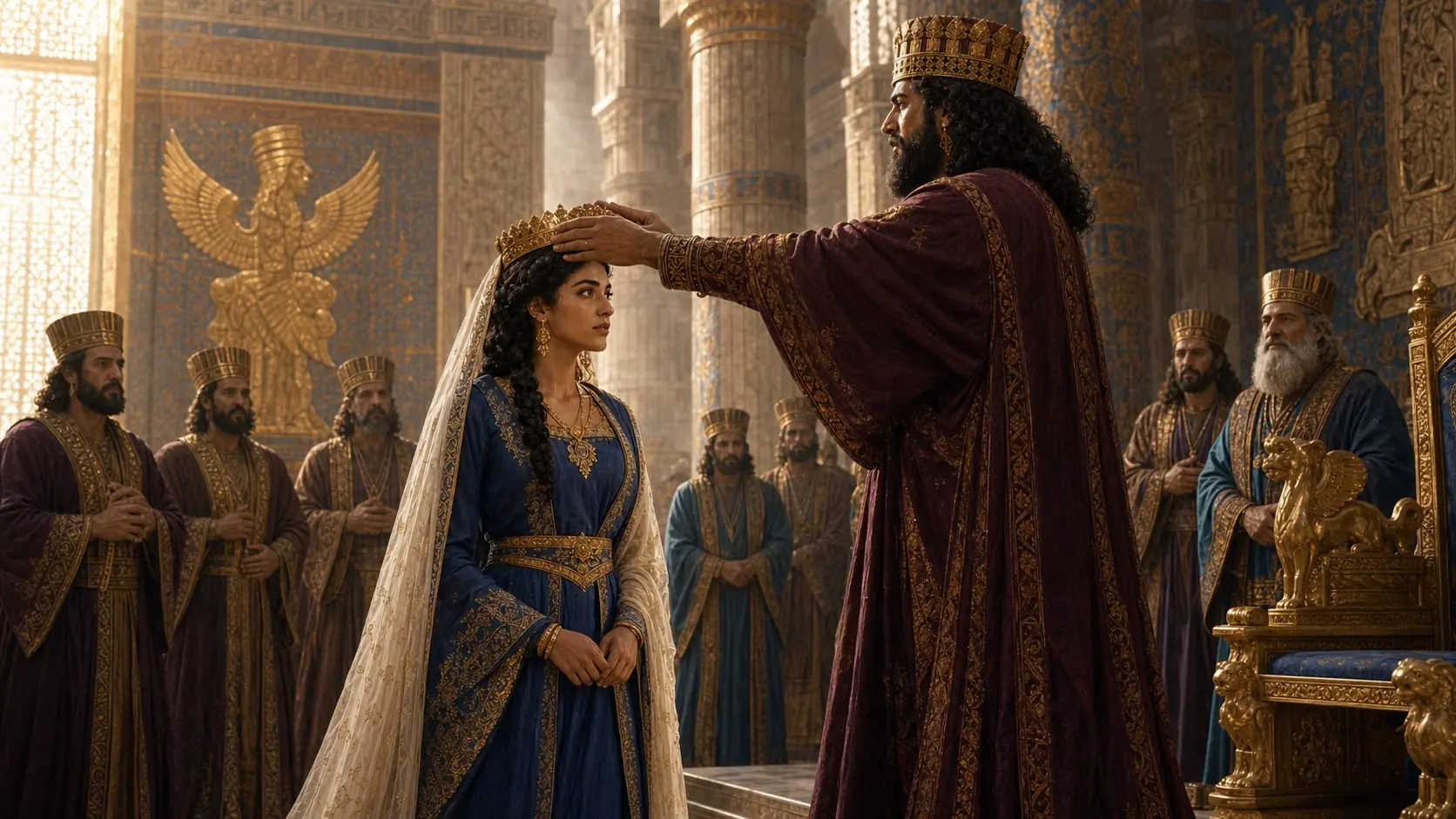
The king loved Esther more than all the women, and she obtained favor and kindness in his sight more than all the virgins; so that he set the royal crown on her head, and made her queen instead of Vashti.
Haman plots against Mordecai’s people
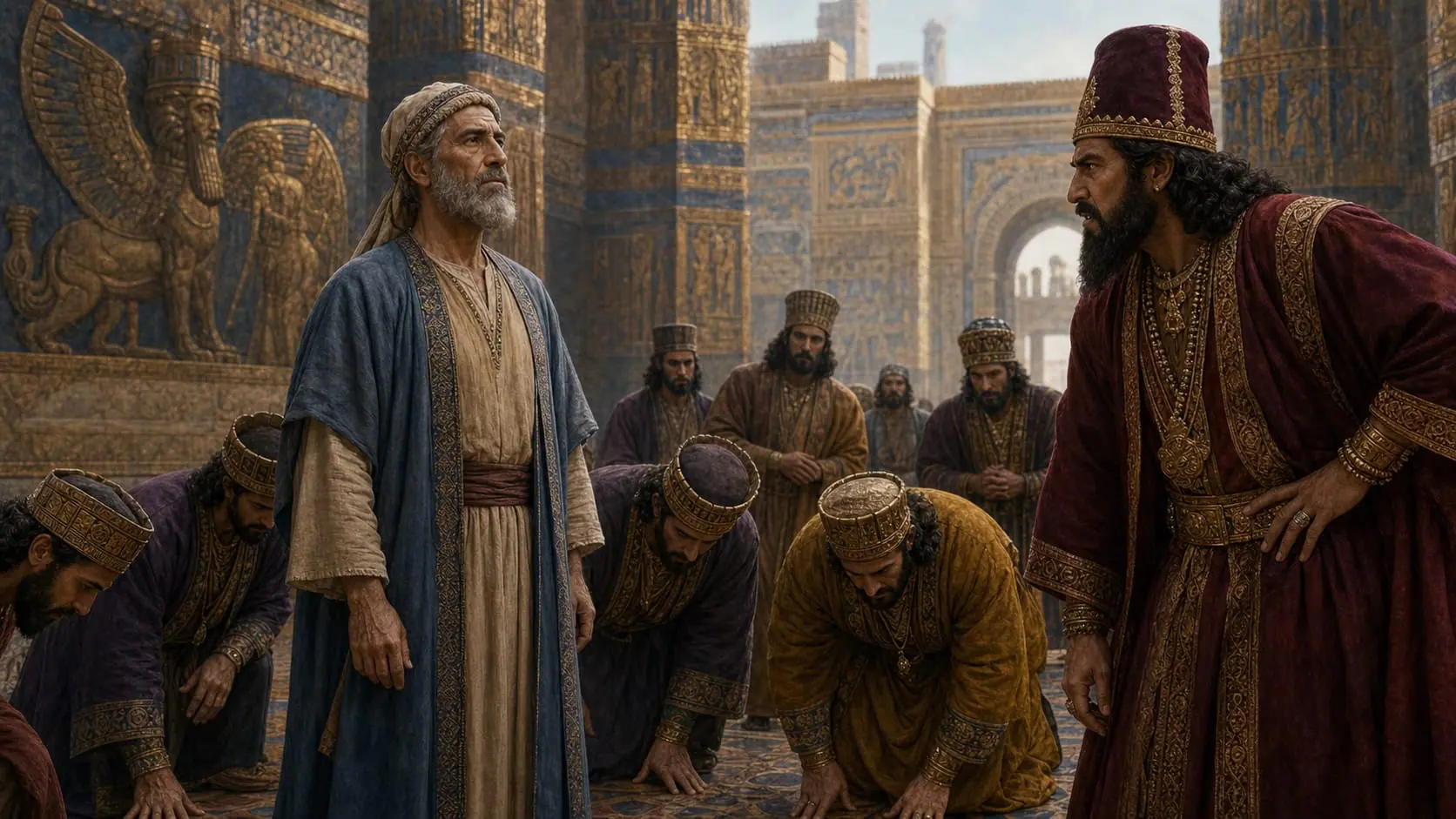
The king promoted Haman, and the servants at the palace gate bowed before him. Mordecai refused to bow or pay homage. When Haman learned that Mordecai was Jewish, he decided not merely to punish one man but to destroy all the Jews throughout the empire.
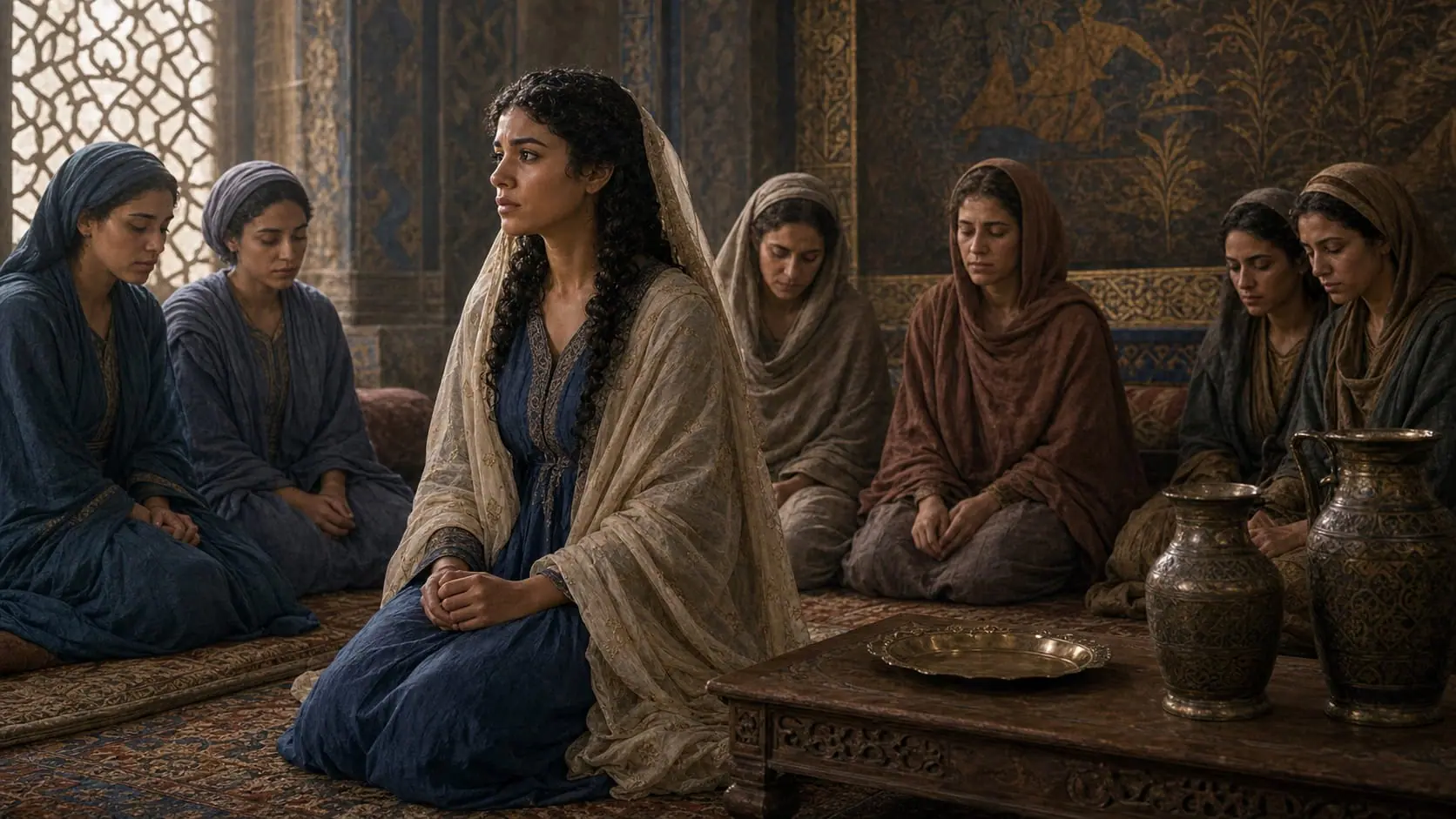
In the king’s twelfth year, the Pur—the lot—was cast before Haman to choose a date. Haman portrayed the Jews as disobedient and obtained the king’s authority for a decree ordering all Jews, young and old, women and children, to be killed on the thirteenth of Adar. Their possessions could be plundered. The decree plunged Jewish communities into mourning, fasting, weeping, and lamentation. Esther 3:1–4:3
Mordecai challenges Esther to act
Mordecai sent Esther a copy of the decree and asked her to plead with the king. Esther replied that entering the inner court without an invitation could mean death unless the king extended his golden scepter.
Mordecai warned her not to assume that the palace would protect her. Esther then asked the Jews in Susa to fast for three days, night and day. She and her attendants would fast too, after which she would go to the king despite the law. Esther 4:4–17
Mordecai’s message includes a warning as well as the familiar question about Esther’s place in the palace:
Then Mordecai asked them to return this answer to Esther: “Don’t think to yourself that you will escape in the king’s house any more than all the Jews. For if you remain silent now, then relief and deliverance will come to the Jews from another place, but you and your father’s house will perish. Who knows if you haven’t come to the kingdom for such a time as this?”
The king extends the golden scepter
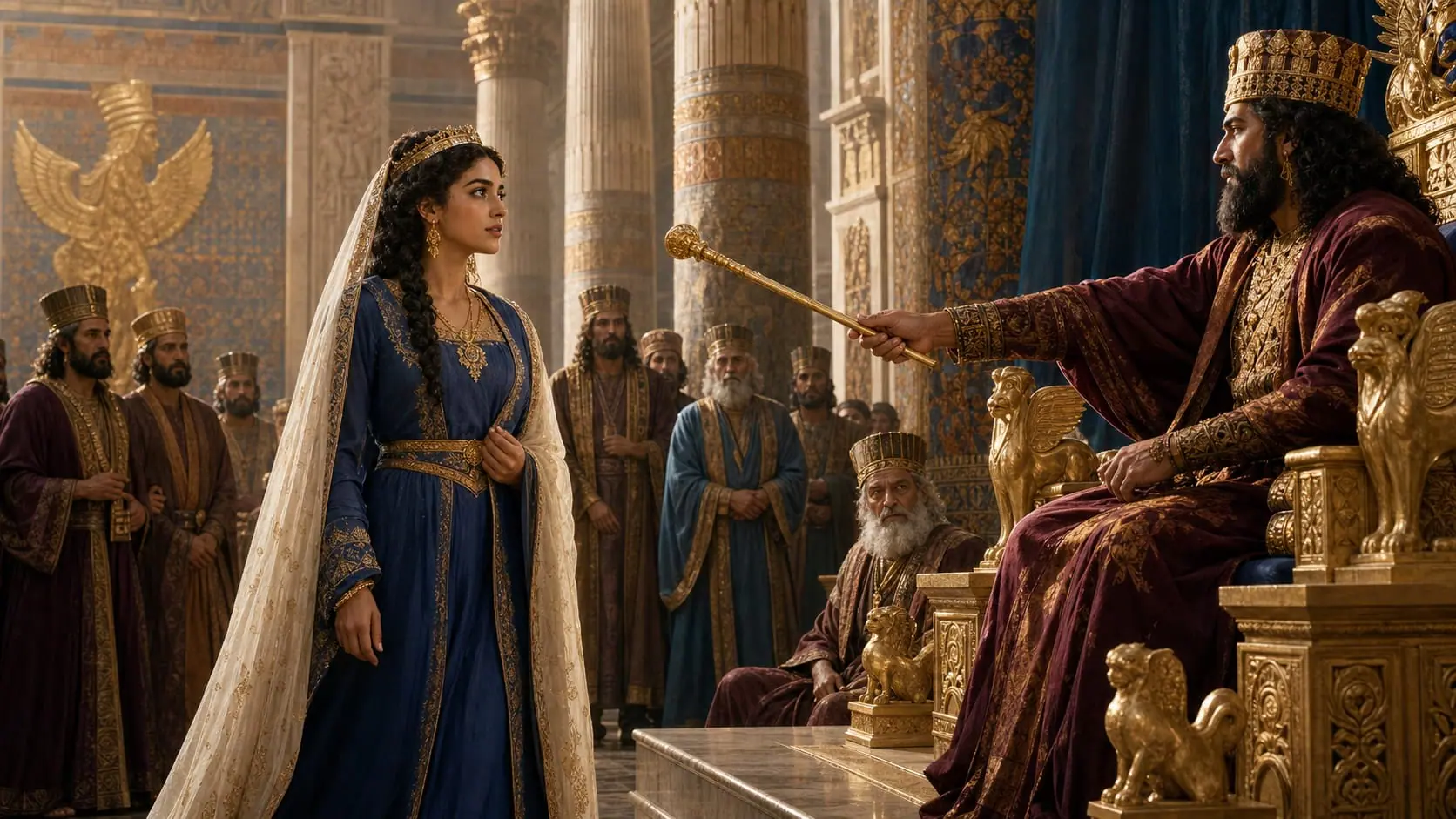
On the third day, Esther put on her royal clothing and stood in the inner court. When Ahasuerus saw her, she obtained favor and he extended the golden scepter. Esther touched its top and invited the king and Haman to a banquet.
At that first banquet, Esther did not immediately reveal her request. She invited them to return the next day. The narrator does not explain why she waited; the events of the intervening night will change Haman’s position dramatically. Esther 5
When the king saw Esther the queen standing in the court, she obtained favor in his sight; and the king held out to Esther the golden scepter that was in his hand. So Esther came near and touched the top of the scepter.
A sleepless night reverses Haman’s plan
Haman left the first banquet delighted, but the sight of Mordecai still enraged him. On the advice of his wife Zeresh and his friends, he had a wooden execution structure prepared for Mordecai. The WEB calls it a gallows; the NIV uses “pole.” The Hebrew word refers to wood or a tree, rather than specifying a modern gallows.
That night the king could not sleep. The royal chronicles were read aloud, and he discovered that Mordecai had never been honored for exposing the assassination plot. Haman arrived intending to ask for Mordecai’s death, but instead the king ordered him to lead Mordecai through the city in royal honor. Esther 5:9–6:14
Esther exposes Haman at the second banquet
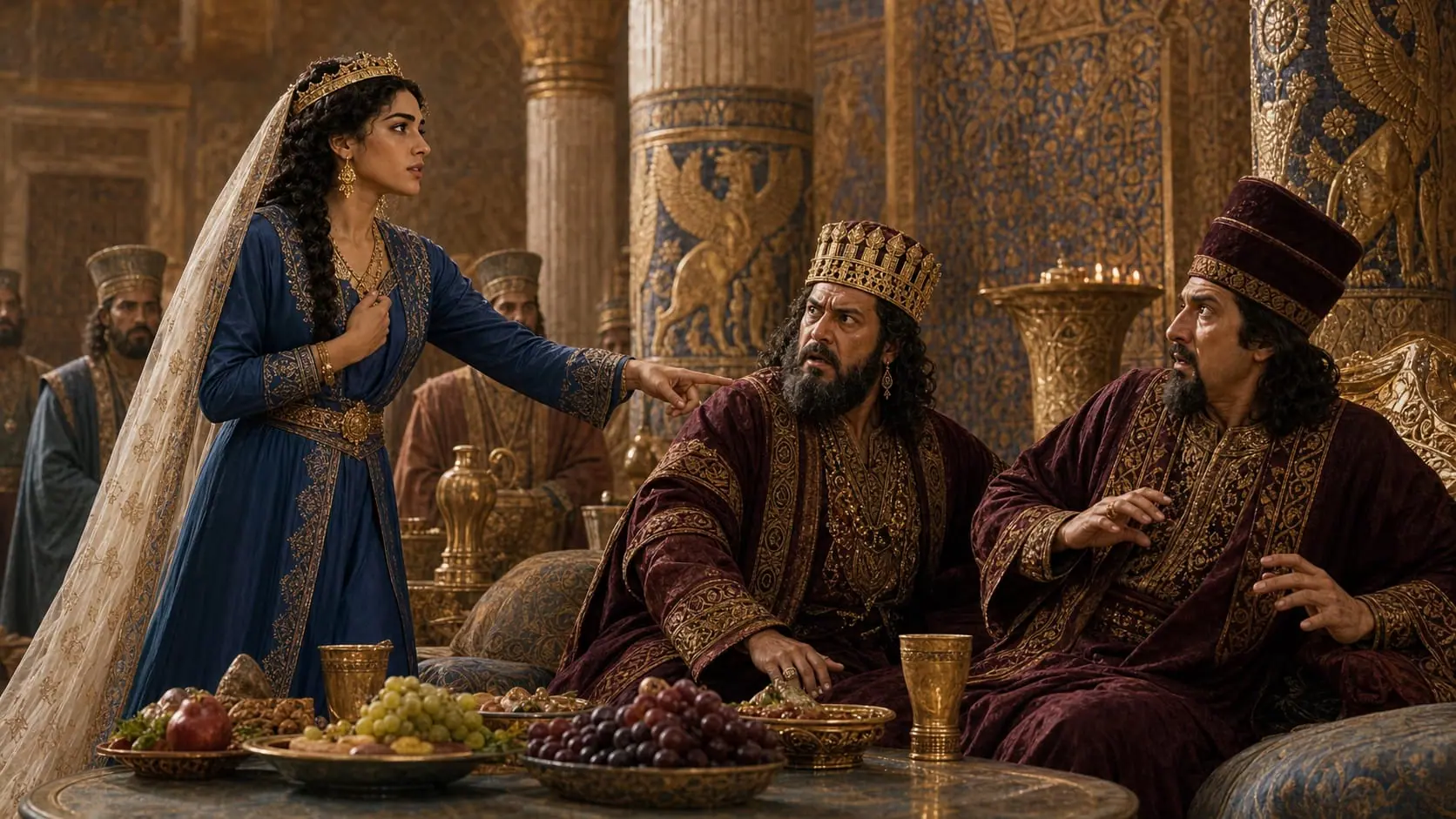
At the second banquet, Esther finally named her request: her life and the lives of her people were threatened. The king asked who had dared to do this, and Esther identified Haman as the adversary and enemy.
The king left in anger. Haman remained to plead for his life and fell on Esther’s couch. When the king returned, he accused Haman of assaulting the queen; that is the king’s accusation, while the narrator describes Haman pleading. Harbonah pointed out the structure Haman had prepared for Mordecai, and the king ordered Haman executed on it. Esther 7
A second decree allows the Jews to defend themselves
Esther received Haman’s estate, while Mordecai received the royal signet ring. Yet Haman’s first decree still remained. Under the story’s Persian legal framework, it could not simply be revoked.
Esther again appealed to the king. A second decree, written at Mordecai’s direction, authorized the Jews to gather and defend their lives on the thirteenth of Adar. Its wording also permitted the destruction of attackers, including their women and children, and the taking of their possessions. The account of what happened must be read separately from what this decree permitted. Esther 8:3–13
Mordecai left the king in royal clothing, and Susa celebrated. Wherever the news reached them, Jewish communities rejoiced. Many people of the land became Jews because fear of the Jews had fallen on them; the narrator gives that reason, rather than describing every conversion as spontaneous religious conviction. Esther 8:15–17
The reversal becomes the feast of Purim
On the thirteenth of Adar, the Jews overcame those who sought to harm them, aided by officials who feared Mordecai. The Hebrew account records 500 men killed in Susa and the deaths of Haman’s ten sons. Esther then asked for a second day of action in Susa and for Haman’s sons to be publicly hanged. They were already dead, not killed a second time. Another 300 men were killed in Susa on the fourteenth. Esther 9:1–15
In the provinces, the account gives a total of 75,000 enemies killed. It repeatedly says the Jews took no plunder. Although the second decree included women and children, the account of the fighting does not specifically say they were killed. The scale of the violence and Esther’s further request are part of the narrative; this is not a command for readers to attack people today. Esther 9:10, 15–16
The provincial Jews rested and feasted on the fourteenth of Adar; those in Susa did so on the fifteenth, after their second day of fighting. This explains the two dates associated with Purim. Esther 9:17–19
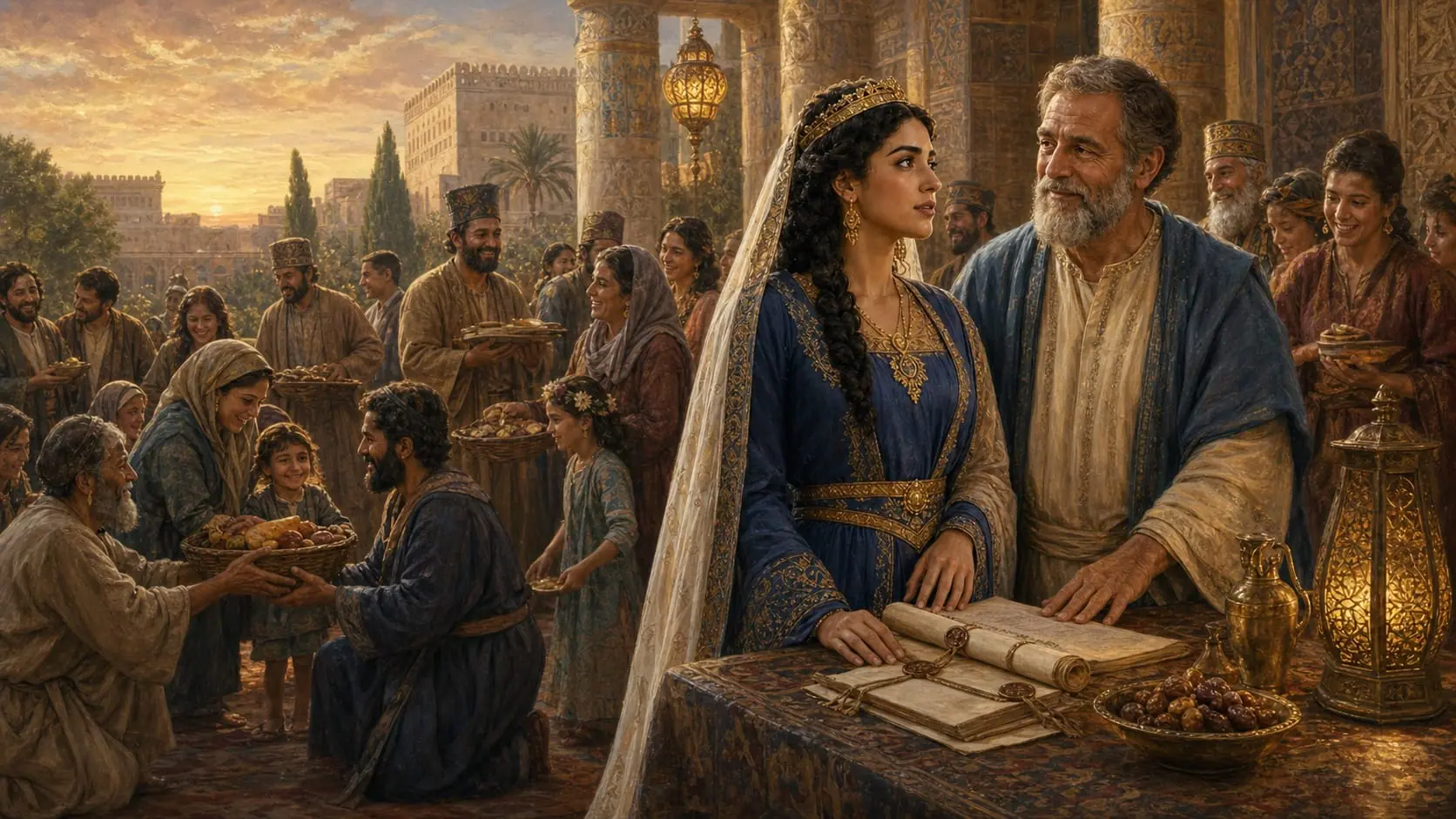
Mordecai recorded the events and established annual days of feasting and gladness, sending food to one another and gifts to the needy. The name Purim came from the Pur, the lot Haman had cast. Esther and Mordecai later confirmed the observance in writing, and Mordecai rose to second place in the empire. Esther 9–10
as the days in which the Jews had rest from their enemies, and the month which was turned to them from sorrow to gladness, and from mourning into a holiday; that they should make them days of feasting and gladness, and of sending presents of food to one another, and gifts to the needy.
How this story is structured
Reversal across Esther’s story
The Book of Esther moves through a series of reversals. Vashti’s removal creates the opening through which Esther becomes queen. Mordecai’s forgotten service is remembered on the night Haman intends to destroy him. Haman receives the outcome he designed for Mordecai, while Mordecai receives Haman’s position. A day selected for Jewish destruction becomes a day of deliverance.
Ahasuerus is widely identified with the Persian king Xerxes I, although Esther itself uses the name Ahasuerus. The book says nothing about Esther’s later life or death. Its final chapter focuses instead on Mordecai’s authority and his work for the welfare of his people.
The hidden question
Where is God in the story of Esther?
God is never named in the Hebrew text of Esther, and the book does not describe an explicit miracle. That absence is part of its distinctive form. Deliverance unfolds through ordinary-looking events: a queen’s position, a courageous decision, a delayed request, a sleepless night, and a forgotten record read at the necessary moment.
Jewish and Christian readers often describe this pattern as providence—God’s care working through human choices and historical circumstances. That is a theological reading of the reversals, not an explicit explanation spoken by the Hebrew narrator. The Greek additions include prayers and direct references to God; the Book of Esther guide explains the distinction.
For the ten-chapter outline, Persian setting, themes, and reading plan, open the Book of Esther guide. For Esther’s names, parents, marriage, character traits, and later-life questions, use the Esther character profile.