%20scale(.87)'%3e%3cg%20transform='rotate(-3%2032%2034)'%3e%3cpath%20d='M10.5%2019.5c7.65-2.35%2014.8-.45%2021.5%205.7%206.7-6.15%2013.85-8.05%2021.5-5.7v27.2c-7.65-2.15-14.8-.45-21.5%205.1-6.7-5.55-13.85-7.25-21.5-5.1V19.5Z'%20fill='%23fff'%20stroke='%23171528'%20stroke-width='4.5'%20stroke-linejoin='round'/%3e%3cpath%20d='M32%2025.2v26.6'%20stroke='%23171528'%20stroke-width='4'%20stroke-linecap='round'/%3e%3cpath%20d='M17.5%2034.5h9M22%2030v9'%20stroke='%23171528'%20stroke-width='3.75'%20stroke-linecap='round'/%3e%3ccircle%20cx='41.5'%20cy='32.5'%20r='2.5'%20fill='%23171528'/%3e%3ccircle%20cx='46.5'%20cy='38'%20r='2.5'%20fill='%23171528'/%3e%3c/g%3e%3c/g%3e%3c/svg%3e)
The quick answer
What happened to Sodom and Gomorrah?
Genesis describes a great outcry against Sodom and Gomorrah and says their sin was very grievous. Abraham appealed for the cities, asking whether the Judge of all the earth would spare Sodom if righteous people could be found there. The exchange ended with God agreeing not to destroy it for the sake of ten righteous people.
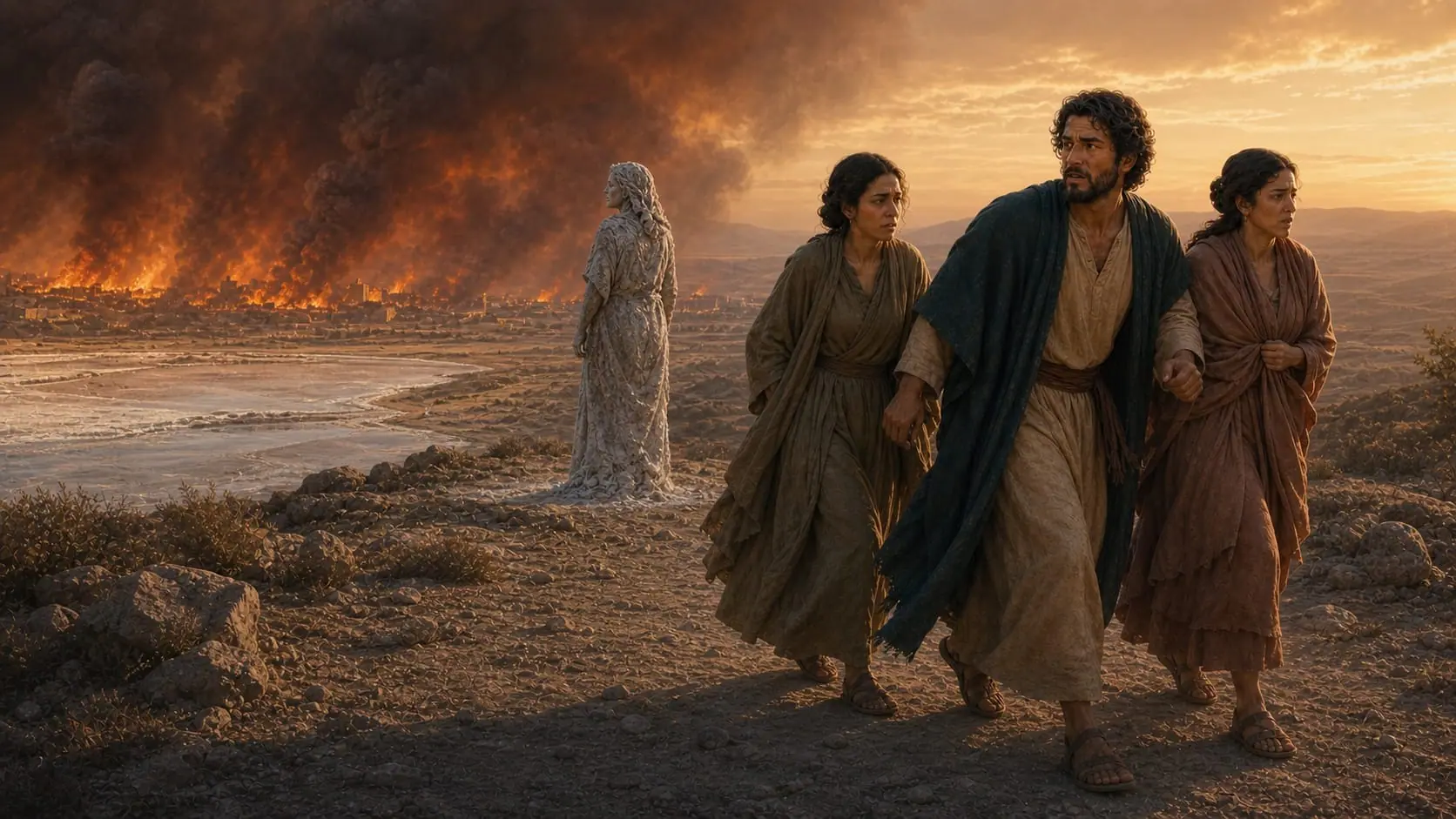
Two angels entered Sodom, where Lot welcomed them but a violent mob surrounded his house. The angels warned Lot to leave. At dawn they took Lot, his wife, and two daughters outside because God was merciful. Lot reached Zoar before sulfur and fire fell on the cities. Lot’s wife looked back and became a pillar of salt.
The full story
The Outcry, the Escape, and the Cities of the Plain
The outcry against the cities
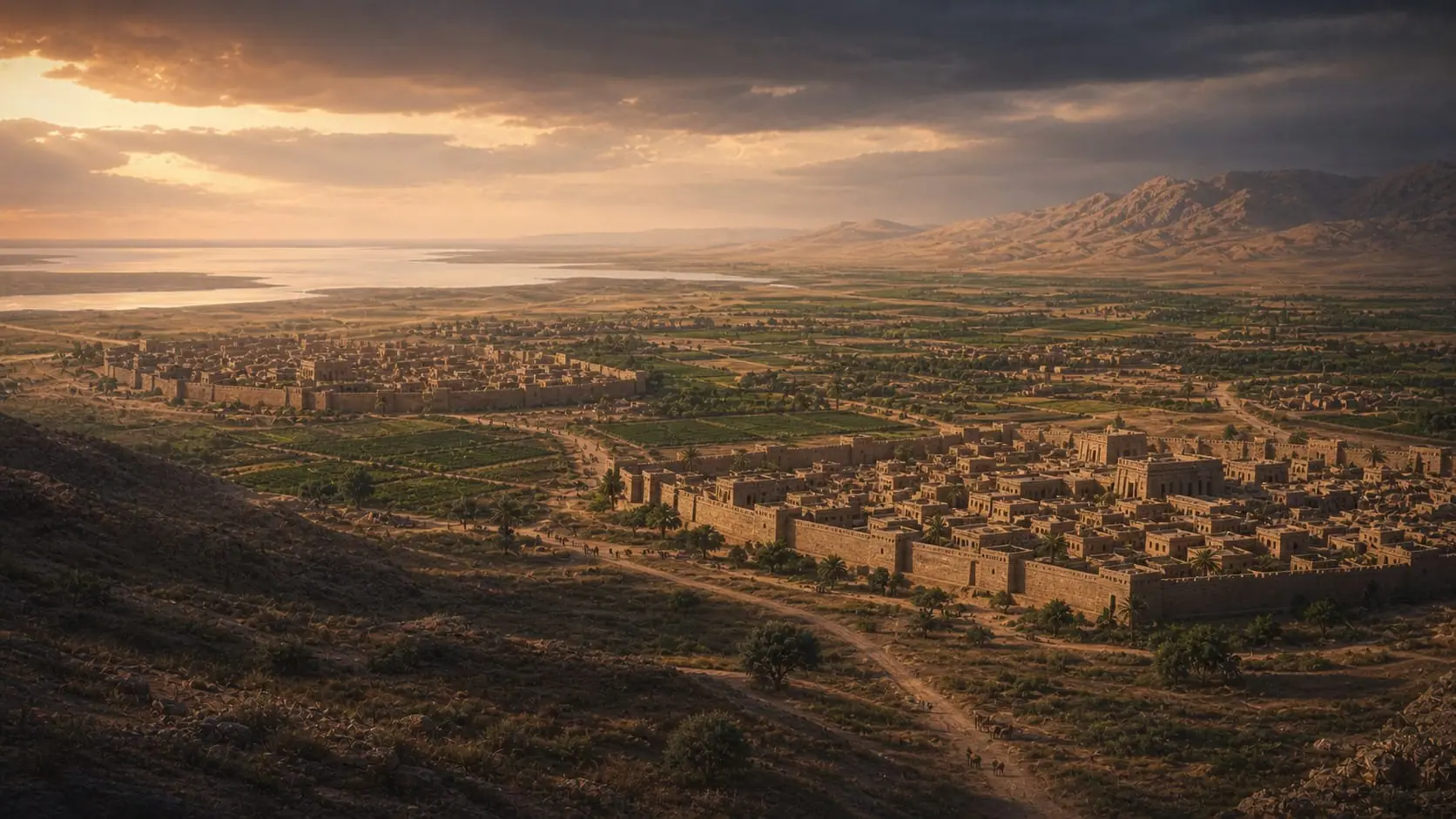
After the visitors ate with Abraham at Mamre and announced Sarah’s coming son, they looked toward Sodom. Abraham’s nephew Lot had settled there (Genesis 12:5; 13:12). God spoke of a great outcry against Sodom and Gomorrah and said their sin was very grievous.
The narrative presents an investigation: God would see whether the cities’ deeds matched the outcry. Abraham remained standing before God while the two men continued toward Sodom. Genesis 18:16–22
Yahweh said, ‘Because the cry of Sodom and Gomorrah is great, and because their sin is very grievous, I will go down now, and see whether their deeds are as bad as the reports which have come to me. If not, I will know.’
Abraham intercedes for Sodom
Abraham approached with a difficult question: would God sweep away the righteous with the wicked? He appealed to God as the Judge of all the earth, asking first about fifty righteous people and then forty-five, forty, thirty, twenty, and finally ten.
At each step, God agreed to spare the city for the sake of the number Abraham named. The conversation reveals Abraham’s concern for justice and mercy, but Genesis does not say that ten righteous people were found. Genesis 18:23–33
Abraham came near, and said, “Will you consume the righteous with the wicked? What if there are fifty righteous within the city? Will you consume and not spare the place for the fifty righteous who are in it? May it be far from you to do things like that, to kill the righteous with the wicked, so that the righteous should be like the wicked. May that be far from you. Shouldn’t the Judge of all the earth do right?” Yahweh said, “If I find in Sodom fifty righteous within the city, then I will spare the whole place for their sake.”
Lot welcomes two visitors
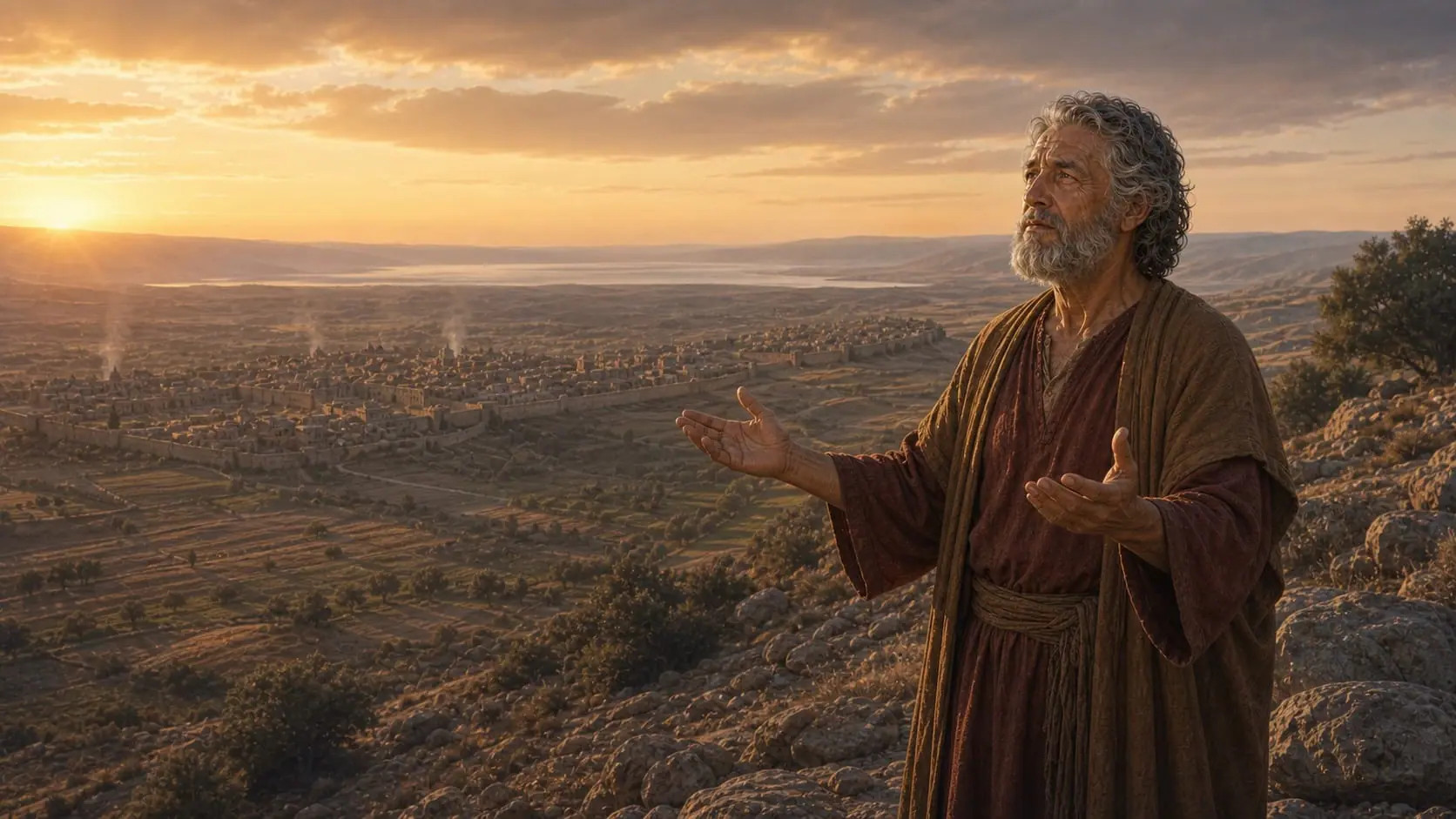
The two angels arrived at Sodom in the evening and found Lot sitting at the city gate. Lot rose, bowed, and strongly urged them not to spend the night in the street. He brought them into his house, prepared a meal, and gave them shelter.
Lot’s welcome contrasts sharply with what followed. Men from across the city surrounded the house and demanded that the visitors be handed over for sexual violence. Genesis 19:1–5
Violence gathers at Lot’s door
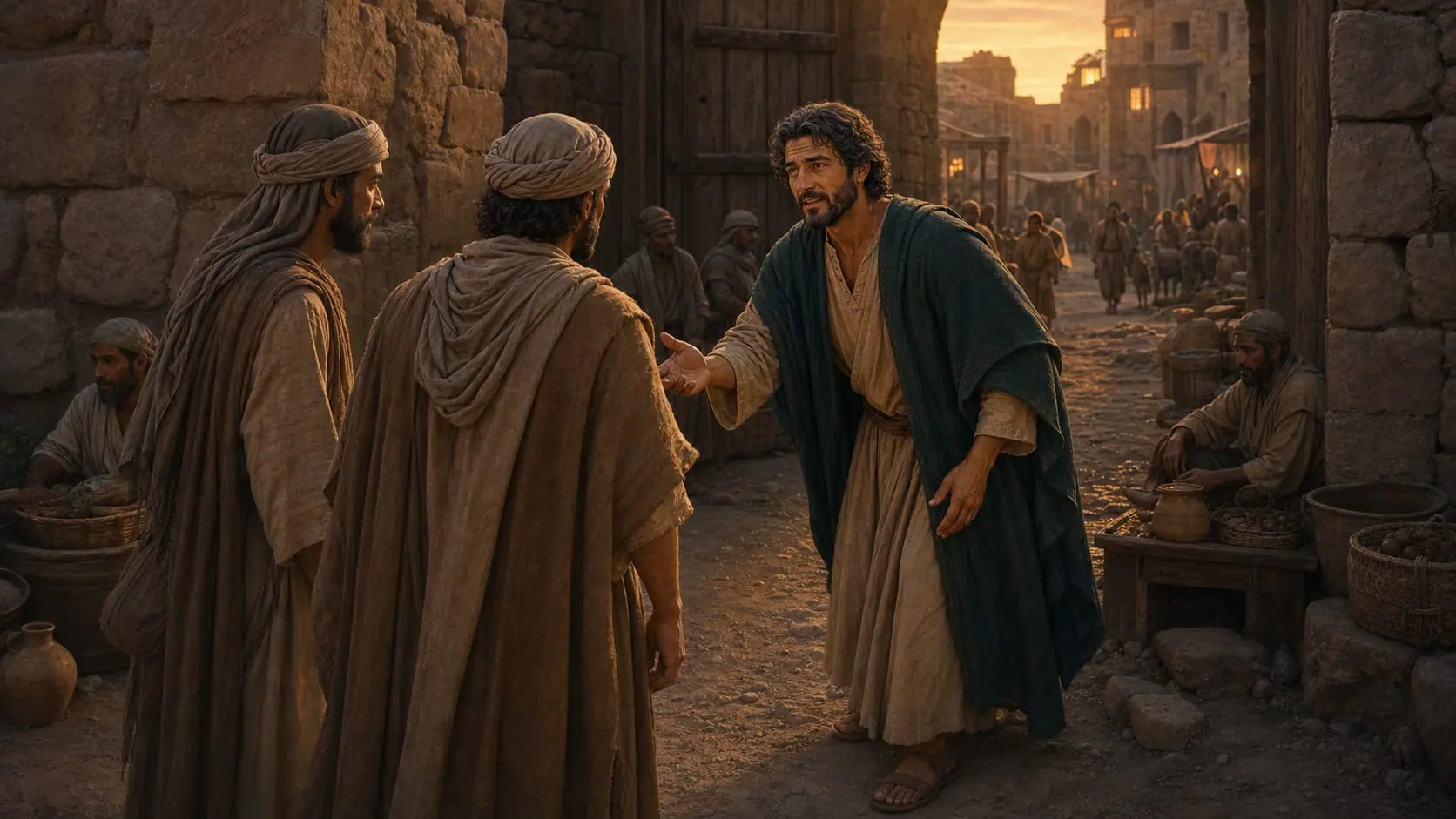
Lot stepped outside and begged the crowd not to act wickedly. He then offered his two daughters to the mob—an appalling proposal that the story records but never praises. The crowd rejected Lot’s appeal, threatened him as an outsider who presumed to judge them, and pressed forward to break the door.
The visitors pulled Lot back inside, shut the door, and struck the men outside with blindness. They then told Lot to gather his family because the outcry had become great before God and the city would be destroyed. Genesis 19:6–13
Second Peter 2:7–8 later calls Lot righteous and describes his distress at the lawlessness around him. That description does not commend his offer to hand over his daughters.
A major biblical question
What Was the Sin of Sodom and Gomorrah?
Genesis 19 depicts attempted gang sexual assault, abuse of vulnerable strangers, and a crowd threatening Lot when he resisted. This is an account of threatened violence, not a description of a consensual relationship. The visitors’ safety and Lot’s daughters’ safety must not disappear from a discussion of the passage.
Ezekiel 16 addresses Jerusalem, comparing its wrongdoing with that of Sodom. God names Sodom’s pride, plentiful food, prosperous ease, neglect of the poor, and abominations. The comparison is a rebuke of Jerusalem, not permission for its people to feel superior to Sodom.
Jude 7 emphasizes sexual immorality and pursuit of “strange flesh,” followed by judgment. Interpreters differ over whether that phrase focuses on the visitors being angels or on the sexual acts sought; the NET translation notes discuss both readings. Genesis, Ezekiel, and Jude each contribute to the picture. None makes cruelty toward people today acceptable.
“‘“Behold, this was the iniquity of your sister Sodom: pride, fullness of bread, and prosperous ease was in her and in her daughters. She also didn’t strengthen the hand of the poor and needy. They were arrogant and committed abomination before me. Therefore I took them away when I saw it.
Lot and his family are led out
Lot warned his sons-in-law, but they thought he was joking. The WEB describes them as pledged to marry his daughters; the KJV says they married his daughters. The NABRE note on Genesis 19:14 explains why their marital status, and whether other daughters are meant, is uncertain. When morning came, the angels urged Lot to take his wife and the two daughters there with him and leave. Lot lingered.
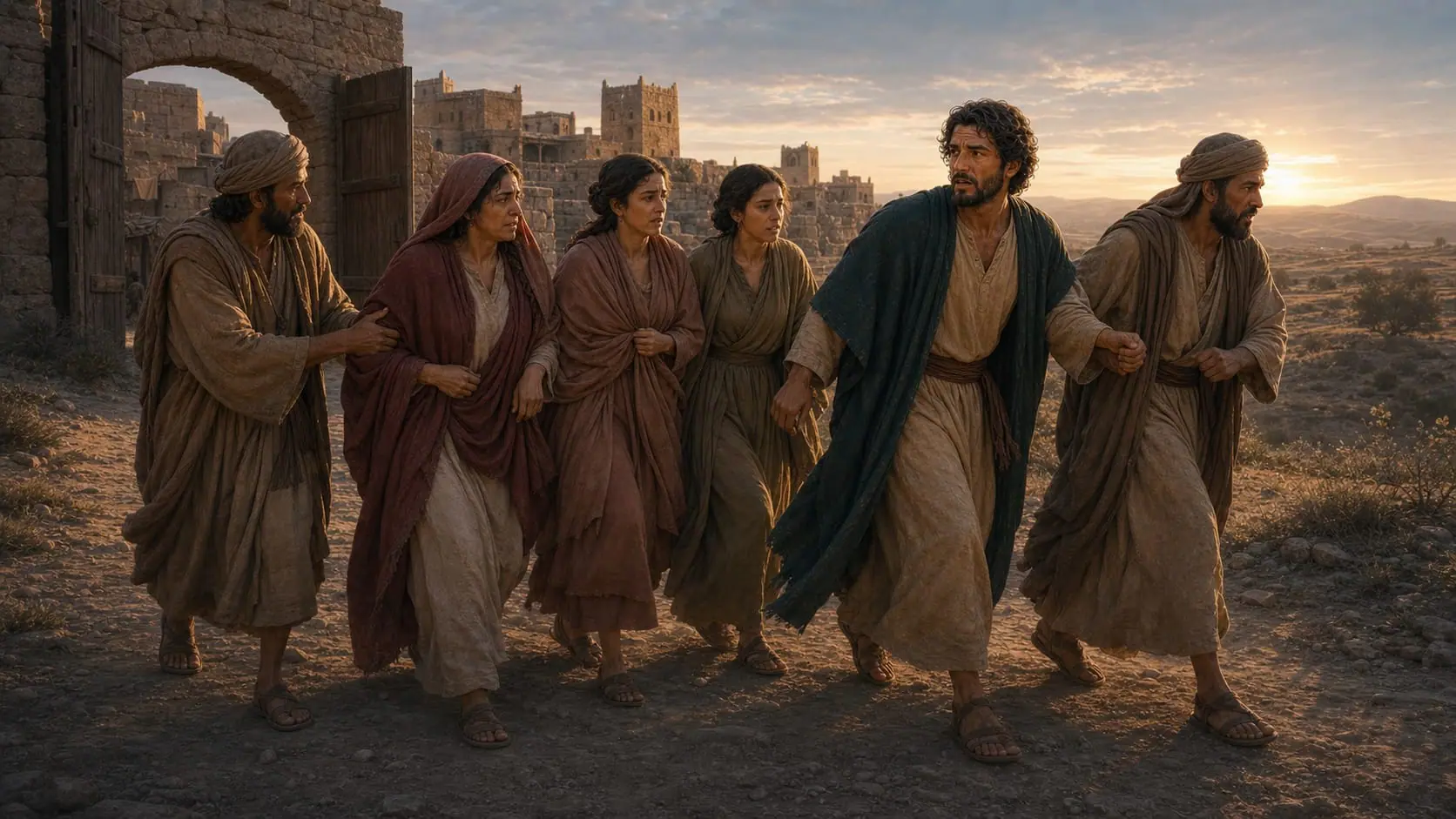
The men took hold of Lot, his wife, and his daughters and brought them outside because God was merciful to him. They were told to escape for their lives, not look behind, and not remain anywhere in the plain. Genesis 19:14–17
When the morning came, then the angels hurried Lot, saying, “Get up! Take your wife and your two daughters who are here, lest you be consumed in the iniquity of the city.” But he lingered; and the men grabbed his hand, his wife’s hand, and his two daughters’ hands, Yahweh being merciful to him; and they took him out, and set him outside of the city. It came to pass, when they had taken them out, that he said, “Escape for your life! Don’t look behind you, and don’t stay anywhere in the plain. Escape to the mountains, lest you be consumed!”
Fire and sulfur fall on the plain
Lot feared that he could not reach the mountains and asked to escape instead to a nearby small city. His request was granted, and the city became known as Zoar. Zoar was spared, not destroyed with Sodom and Gomorrah (Genesis 19:21). The sun had risen when Lot arrived there.
Genesis then says that sulfur and fire fell on Sodom and Gomorrah. The cities, the plain, their inhabitants, and what grew on the ground were overthrown. Abraham later saw smoke rising from the land like the smoke of a furnace. Genesis 19:18–29
The account closes this part of the escape by saying that God remembered Abraham and brought Lot out of the destruction. Lot’s rescue is thus connected with Abraham, whose appeal began the story. Genesis 19:29
The sun had risen on the earth when Lot came to Zoar. Then Yahweh rained on Sodom and on Gomorrah sulfur and fire from Yahweh out of the sky. He overthrew those cities, all the plain, all the inhabitants of the cities, and that which grew on the ground.
Remember Lot’s wife
Why Did Lot’s Wife Look Back?
Genesis does not tell us why. It records the command not to look behind, then says that Lot’s wife looked back from behind him and became a pillar of salt. It does not tell us what she hoped to see or what she was thinking.
Jesus later used the brief warning “Remember Lot’s wife!” while teaching about the day the Son of Man is revealed. People must not turn back for possessions; those who seek to preserve their life will lose it. In that teaching, her story warns against turning back when following Jesus requires leaving things behind. Genesis 19:17, 26; Luke 17:28–33
Geography and archaeology
Where Were Sodom and Gomorrah?
Genesis places the cities within the well-watered Jordan plain and connects their kings with the Valley of Siddim, identified in the text with the Salt Sea. Zoar was close enough for Lot to reach during the escape. These clues point broadly to the Dead Sea region.
Those passages do not give modern coordinates. Proposed identifications of the cities remain disputed; a destruction layer alone does not establish a settlement’s biblical name. The illustrations on this page are not archaeological reconstructions. Genesis 13:10–13; 14:1–3; 19:18–23
One widely circulated claim concerns a cosmic airburst at Tall el-Hammam. The 2021 Scientific Reports paper arguing for that event was retracted on April 24, 2025. It should not be presented as established scientific proof of the Sodom story. The retraction itself does not determine where Sodom was.