%20scale(.87)'%3e%3cg%20transform='rotate(-3%2032%2034)'%3e%3cpath%20d='M10.5%2019.5c7.65-2.35%2014.8-.45%2021.5%205.7%206.7-6.15%2013.85-8.05%2021.5-5.7v27.2c-7.65-2.15-14.8-.45-21.5%205.1-6.7-5.55-13.85-7.25-21.5-5.1V19.5Z'%20fill='%23fff'%20stroke='%23171528'%20stroke-width='4.5'%20stroke-linejoin='round'/%3e%3cpath%20d='M32%2025.2v26.6'%20stroke='%23171528'%20stroke-width='4'%20stroke-linecap='round'/%3e%3cpath%20d='M17.5%2034.5h9M22%2030v9'%20stroke='%23171528'%20stroke-width='3.75'%20stroke-linecap='round'/%3e%3ccircle%20cx='41.5'%20cy='32.5'%20r='2.5'%20fill='%23171528'/%3e%3ccircle%20cx='46.5'%20cy='38'%20r='2.5'%20fill='%23171528'/%3e%3c/g%3e%3c/g%3e%3c/svg%3e)
The quick answer
What were the Ten Plagues of Egypt?
After Pharaoh refused to release Israel, Egypt experienced ten plagues: water turned to blood, frogs, lice or gnats, flies, livestock disease, boils, hail, locusts, darkness, and the death of the firstborn. Moses and Aaron announced or performed the commanded signs, while Pharaoh repeatedly resisted.
Before the last plague, Israel observed the first Passover. Households marked their doorposts and lintels with blood from the sacrifice—an animal from the sheep or goats—and ate ready for departure. Pharaoh then ordered Israel to leave. The plagues function in Exodus as judgments, signs that reveal Yahweh’s authority, and the immediate path to deliverance from slavery.
Practice ordering the plagues and preparing a fictional household for Passover in the Exodus Journey Game.
The complete order
The Ten Plagues in Order
Moses and Aaron return to Pharaoh
God told Moses that Pharaoh would resist so that signs and judgments would be multiplied in Egypt. Moses was eighty and Aaron eighty-three when they spoke to Pharaoh. Aaron’s staff became a serpent before the court and swallowed the magicians’ rods, but Pharaoh’s heart remained hard. This sign came before the first plague. Exodus 7:1–13
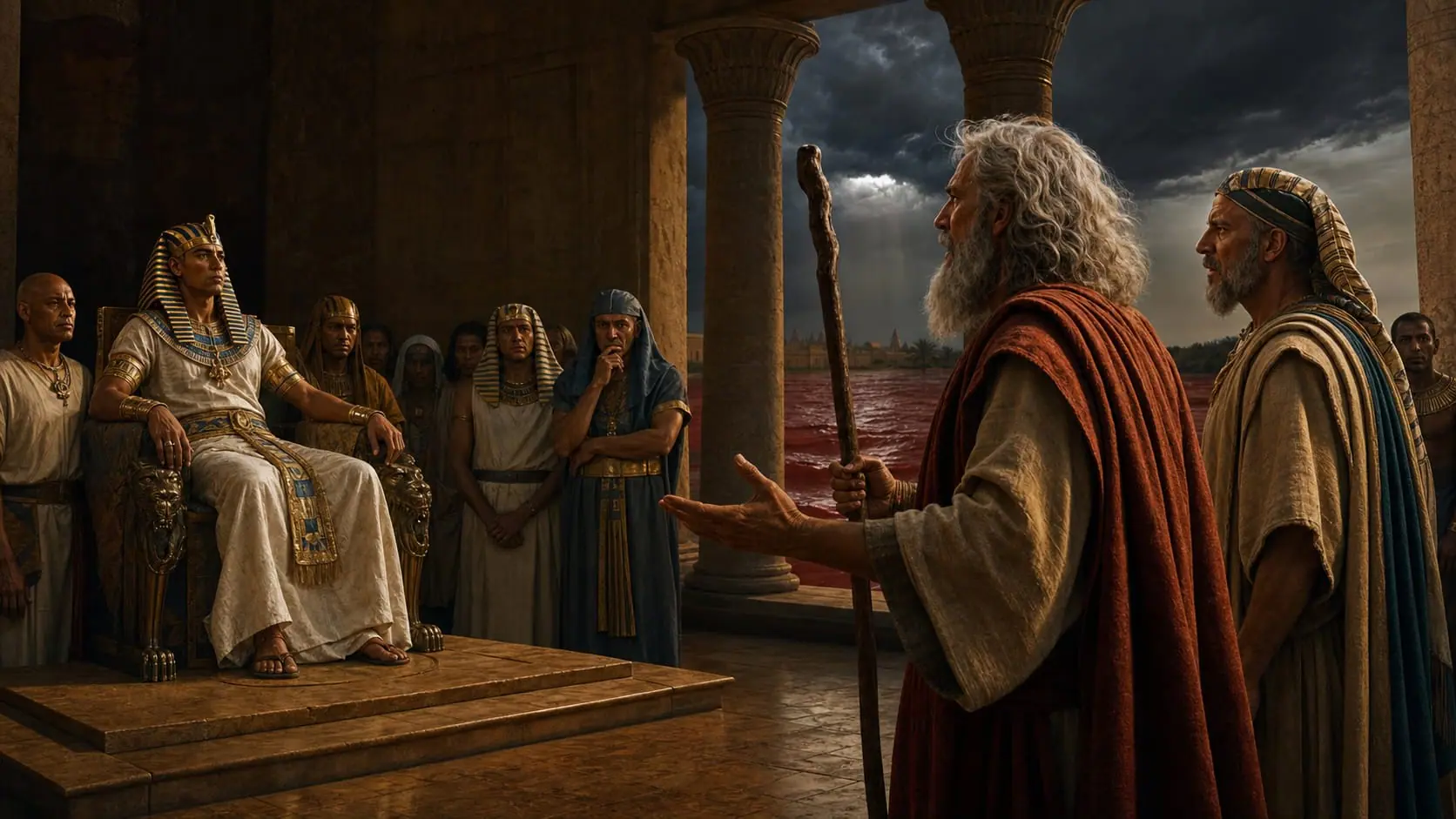
The opening illustration combines the royal audience with the later blood-red river. Exodus 7:15 places the warning about the Nile at the riverbank, not inside the throne room.
The Egyptians shall know that I am Yahweh when I stretch out my hand on Egypt, and bring the children of Israel out from among them.”
1. Water turns to blood
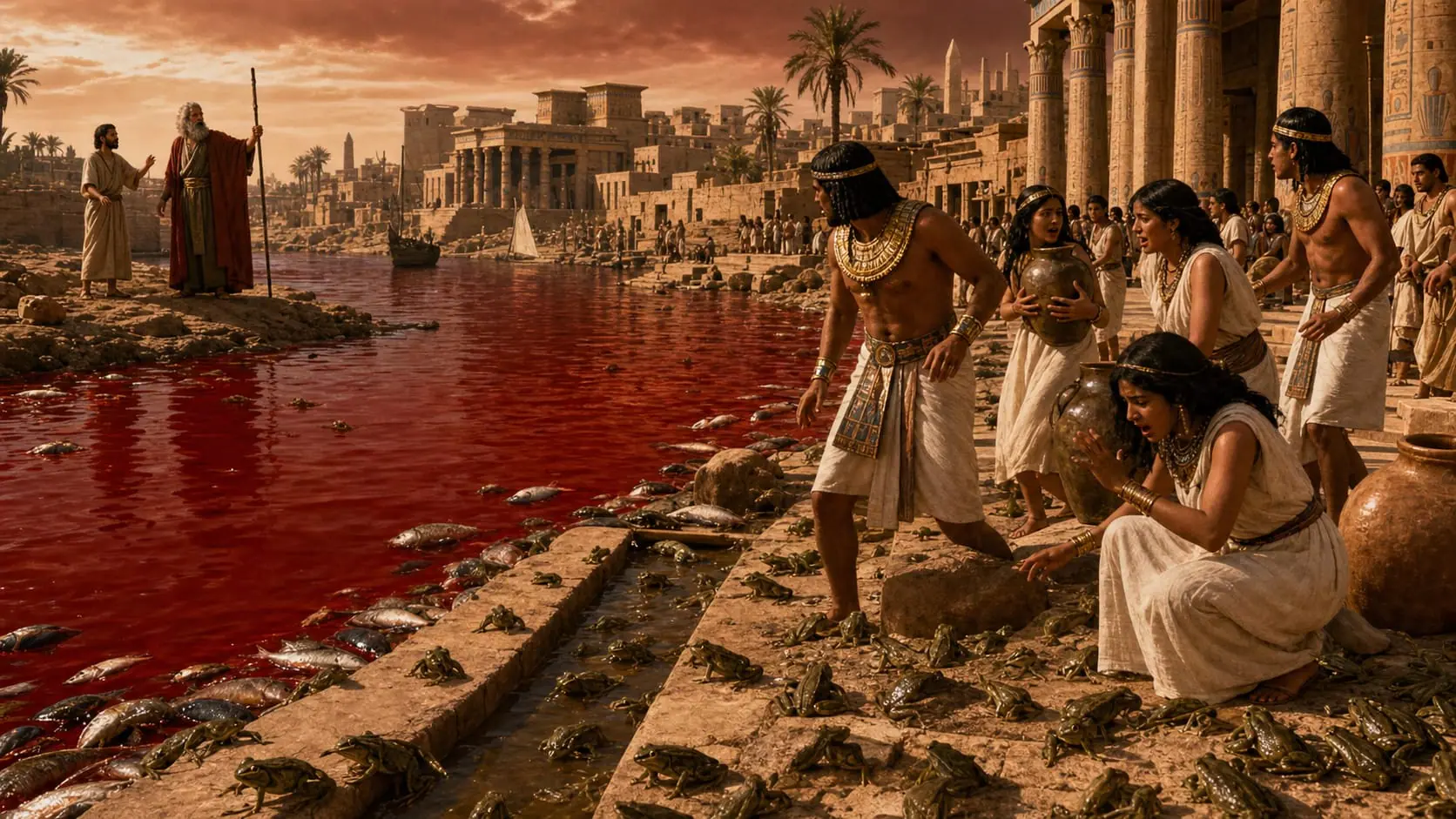
Aaron struck the Nile with the staff. The river, canals, pools, and stored water turned to blood; fish died, the river stank, and Egyptians dug for drinking water. Pharaoh’s magicians performed a similar sign, and Pharaoh did not listen. Exodus 7:14–25
2. Frogs
Frogs covered Egypt and entered houses, bedrooms, ovens, and kneading bowls. The magicians also brought up frogs. Pharaoh asked Moses to pray, promising release, but hardened his heart after relief came. Exodus 8:1–15
3. Lice or gnats
Aaron struck the dust, and tiny insects came on people and animals. The WEB and KJV call them “lice”; the ESV calls them “gnats.” The magicians could not reproduce the sign and told Pharaoh, “This is God’s finger.” Exodus 8:16–19
4. Flies
Swarms filled Egyptian houses and ruined the land, while Goshen was set apart. Pharaoh offered partial compromises but withdrew permission after the swarms left. Exodus 8:20–32
5. Livestock disease
A severe pestilence struck Egyptian livestock in the field, while none of Israel’s livestock died. The warning specifies livestock in the field (Exodus 9:3); the later hail account still includes Egyptian animals that could be brought indoors (9:19–21). Pharaoh investigated and still refused to release the people. Exodus 9:1–7
6. Boils
Moses scattered soot toward heaven, and boils broke out on people and animals. The magicians could not stand before Moses because of the boils. Exodus 9:8–12
7. Hail
A devastating storm of hail and fire struck people, animals, and crops left in the fields. Egyptians who feared the warning brought servants and livestock indoors. Goshen was spared. Pharaoh confessed sin, then returned to resistance when the storm stopped. Exodus 9:13–35
8. Locusts
Locusts covered the land and consumed what the hail had left. Pharaoh’s servants urged him to release the people, but negotiations failed over who could go. Pharaoh confessed his sin and asked for relief. After a west wind removed the locusts, Yahweh hardened his heart, and he still would not let Israel go. Exodus 10:1–20
9. Darkness
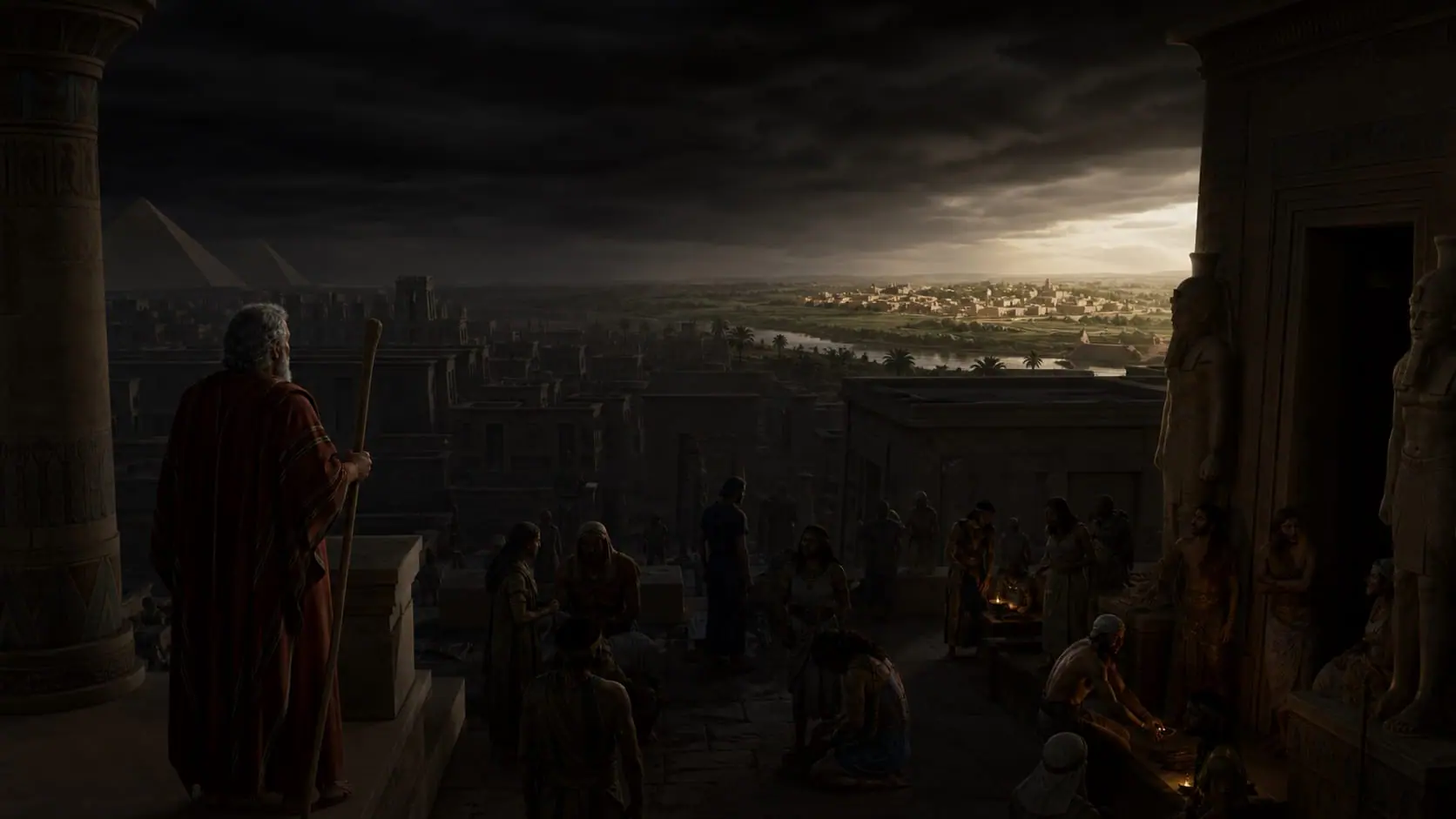
Thick darkness covered Egypt for three days, so people could not see or move from their places. Israel had light in their dwellings. Pharaoh’s final proposed compromise failed, and he warned Moses not to return. Exodus 10:21–29
Moses stretched out his hand toward the sky, and there was a thick darkness in all the land of Egypt for three days. They didn’t see one another, and nobody rose from his place for three days; but all the children of Israel had light in their dwellings.
10. Death of the firstborn and the first Passover
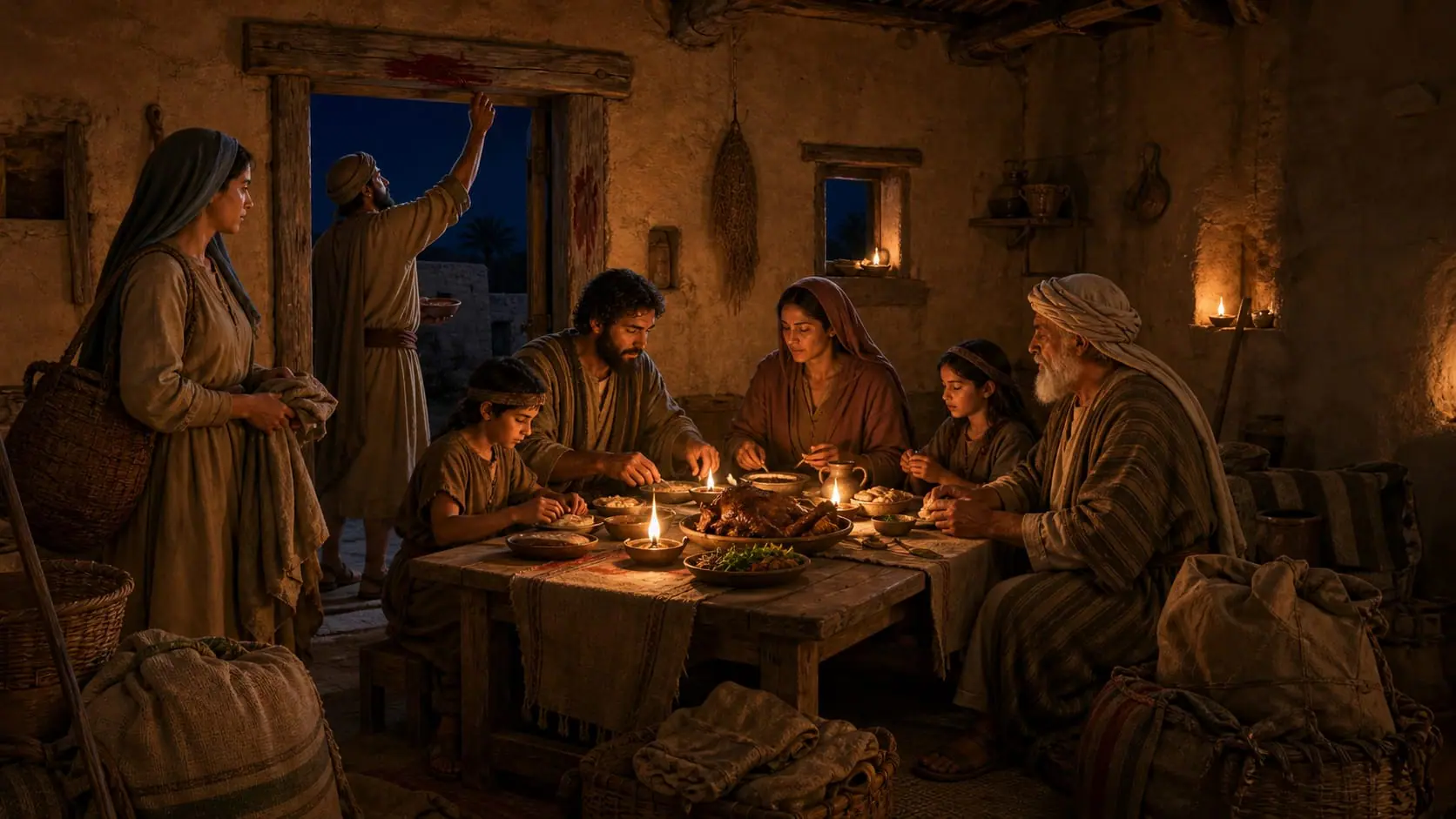
Before the final plague, each Israelite household was to select an unblemished, year-old male from the sheep or goats. A small household could share with its neighbor. They marked the two doorposts and the lintel above the door with the animal’s blood, then ate the roasted meat with unleavened bread and bitter herbs. They were to eat in haste, dressed for departure, and remain inside until morning. Exodus 12:1–13, 21–23
At midnight, Yahweh struck the firstborn throughout Egypt, from Pharaoh’s firstborn to the firstborn of a prisoner, as well as the firstborn of livestock. A great cry rose from the bereaved households. Pharaoh summoned Moses and Aaron that night and commanded Israel to leave with their flocks and herds. Exodus 12:29–32
The blood shall be to you for a token on the houses where you are. When I see the blood, I will pass over you, and no plague will be on you to destroy you when I strike the land of Egypt.
A repeated question
Who Hardened Pharaoh’s Heart?
Both Pharaoh and God are described as hardening Pharaoh’s heart. After the frogs and flies, Pharaoh hardens his own heart (Exodus 8:15, 32). After the boils, Yahweh hardens it (9:12). When the hail stops, Pharaoh and his servants harden their hearts again (9:34).
God had already announced that he would harden Pharaoh’s heart before the plagues began (Exodus 4:21; 7:3). The story therefore includes both Pharaoh’s deliberate refusal and God’s action in judgment, rather than a simple sequence in which only one of them is involved.
Pharaoh’s permission was not the end of the journey. Read how Israel crossed the sea after his army pursued them, or continue to the covenant at Sinai and the Ten Commandments.