%20scale(.87)'%3e%3cg%20transform='rotate(-3%2032%2034)'%3e%3cpath%20d='M10.5%2019.5c7.65-2.35%2014.8-.45%2021.5%205.7%206.7-6.15%2013.85-8.05%2021.5-5.7v27.2c-7.65-2.15-14.8-.45-21.5%205.1-6.7-5.55-13.85-7.25-21.5-5.1V19.5Z'%20fill='%23fff'%20stroke='%23171528'%20stroke-width='4.5'%20stroke-linejoin='round'/%3e%3cpath%20d='M32%2025.2v26.6'%20stroke='%23171528'%20stroke-width='4'%20stroke-linecap='round'/%3e%3cpath%20d='M17.5%2034.5h9M22%2030v9'%20stroke='%23171528'%20stroke-width='3.75'%20stroke-linecap='round'/%3e%3ccircle%20cx='41.5'%20cy='32.5'%20r='2.5'%20fill='%23171528'/%3e%3ccircle%20cx='46.5'%20cy='38'%20r='2.5'%20fill='%23171528'/%3e%3c/g%3e%3c/g%3e%3c/svg%3e)
The quick answer
What happened in the Moses Bible story?
Moses was born when Pharaoh ordered Hebrew baby boys to be killed. His mother hid him in a basket among the Nile reeds, where Pharaoh’s daughter found him. His own mother nursed him for Pharaoh’s daughter, who later adopted him. As an adult, Moses fled Egypt after killing an Egyptian who was beating a Hebrew. Years later, God called him from a burning bush to return and lead Israel out of slavery, with Aaron as his spokesman.
After ten plagues and the first Passover, Pharaoh released Israel, then pursued them. God opened a path through the sea. In the wilderness, Israel received manna, water, and the covenant at Mount Sinai, including the Ten Commandments. Moses led for forty years, but his failure at Meribah meant he would see Canaan without entering it. He died in Moab at 120.
To revisit the journey from Egypt to Sinai, try the Exodus Journey Game. Its six levels turn selected events into puzzles; they do not reproduce every event or establish the journey’s historical route.
The main events in order
From the Nile to the Promised Land
Israel is enslaved in Egypt
Generations after Joseph, a new king arose who did not know him. Fearing Israel’s growing population, Egypt forced the people into hard labor. When the Hebrew midwives refused an order to kill newborn sons, Pharaoh commanded that every Hebrew boy be thrown into the Nile. Exodus 1
Baby Moses is found in the Nile
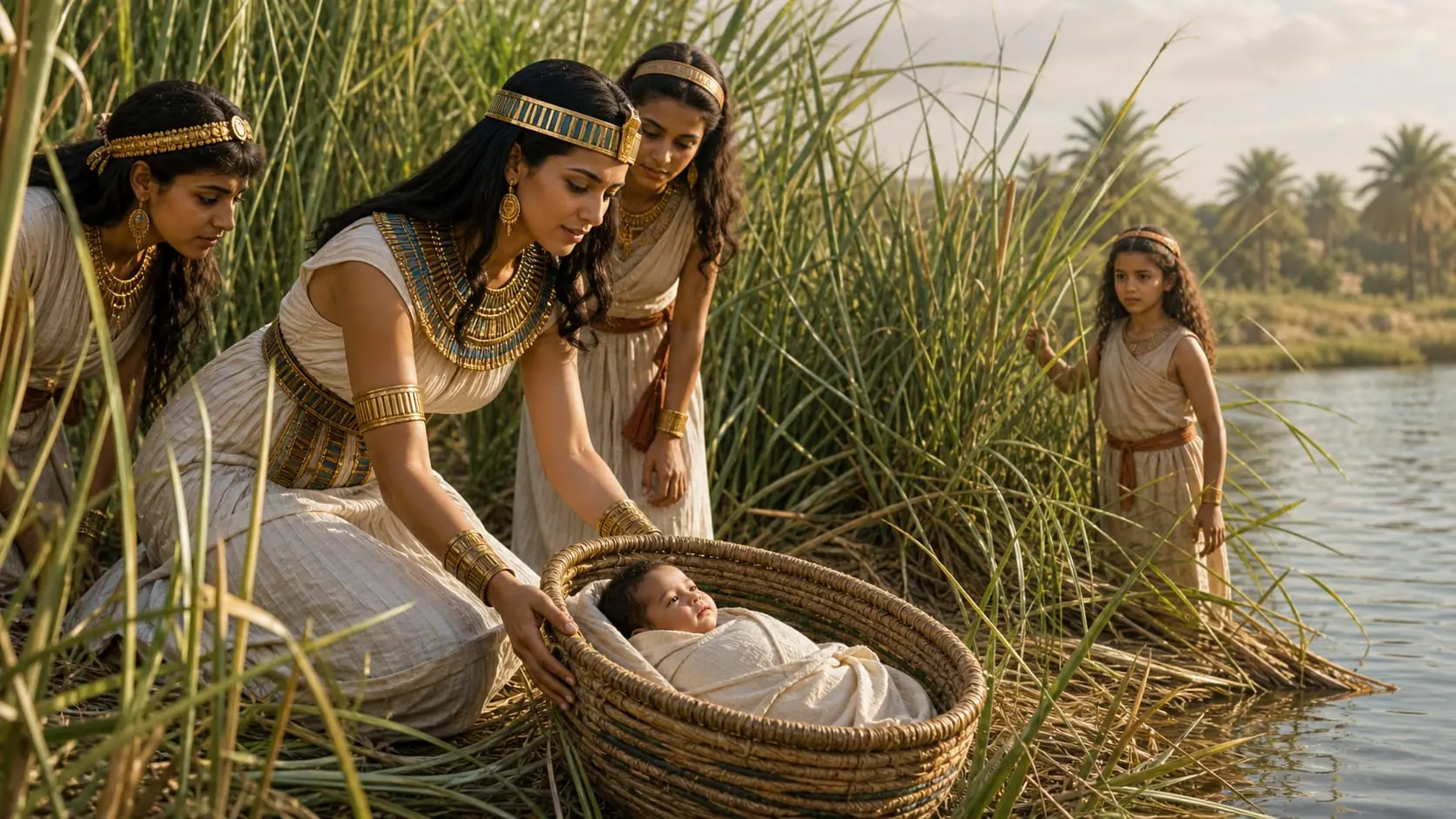
A Levite woman hid her son for three months. When she could hide him no longer, she placed him in a papyrus basket coated with tar and pitch among the river reeds. His sister watched. Pharaoh’s daughter found the crying child, recognized that he was Hebrew, and had compassion.
The sister offered to find a Hebrew nurse, so Moses’ own mother cared for him until he was brought to Pharaoh’s daughter. She named him Moses because she drew him out of the water. Exodus 2:1–10
The child grew, and she brought him to Pharaoh’s daughter, and he became her son. She named him Moses, and said, “Because I drew him out of the water.”
Moses flees to Midian
After Moses grew up, he saw an Egyptian beating a Hebrew and killed the Egyptian. The next day, a Hebrew challenged him, and Pharaoh sought to kill him. Moses fled to Midian, helped the daughters of a priest at a well, married Zipporah, and became a shepherd. During those years, Israel groaned under slavery, and God remembered his covenant with Abraham, Isaac, and Jacob. Exodus 2:11–25
God calls Moses from the burning bush
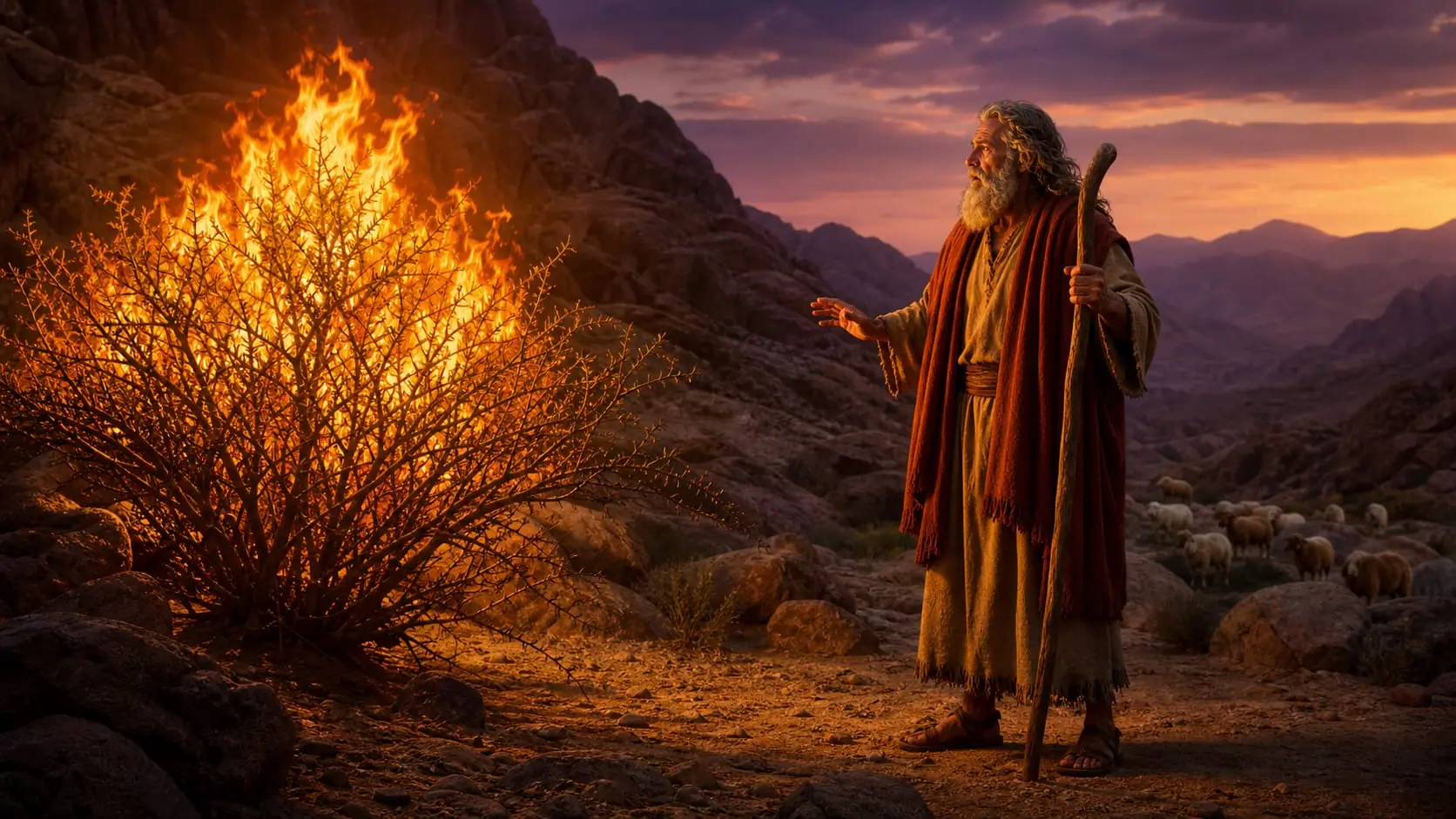
While tending Jethro’s flock near Horeb, Moses saw a bush burning without being consumed. God called his name and told him to remove his sandals because he stood on holy ground. God had seen Israel’s affliction and would send Moses to Pharaoh.
Moses asked who he was to lead Israel, what name to give them, and what to do if they did not believe him. He also said he was slow of speech. God promised to be with him, answered “I AM WHO I AM,” and identified himself as Yahweh, the God of their ancestors. He gave Moses signs and appointed Aaron to speak with him. Exodus 3–4
God said to Moses, ‘I AM WHO I AM,’ and he said, ‘You shall tell the children of Israel this: “I AM has sent me to you.”’
Moses and Aaron confront Pharaoh
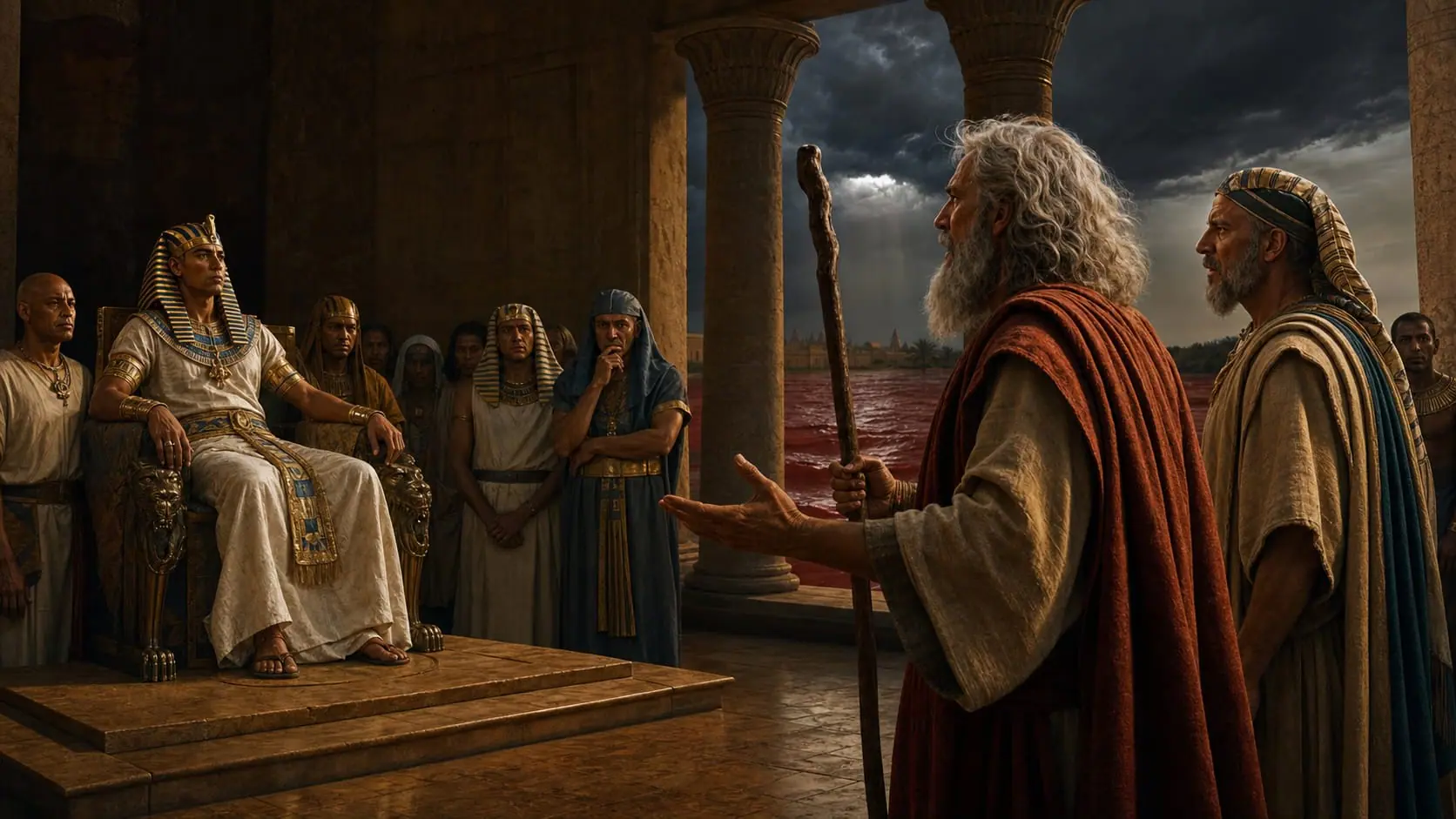
Moses and Aaron told Pharaoh to let Israel go and worship in the wilderness. Pharaoh increased the people’s labor and repeatedly resisted. Through Moses and Aaron, Egypt experienced ten plagues: water turned to blood, frogs, lice or gnats, flies, livestock disease, boils, hail, locusts, darkness, and the death of the firstborn.
The text describes Pharaoh hardening his heart, his heart being hardened, and Yahweh hardening it at different stages. After the final plague, Pharaoh sent Israel away. Exodus 5–12
The first Passover
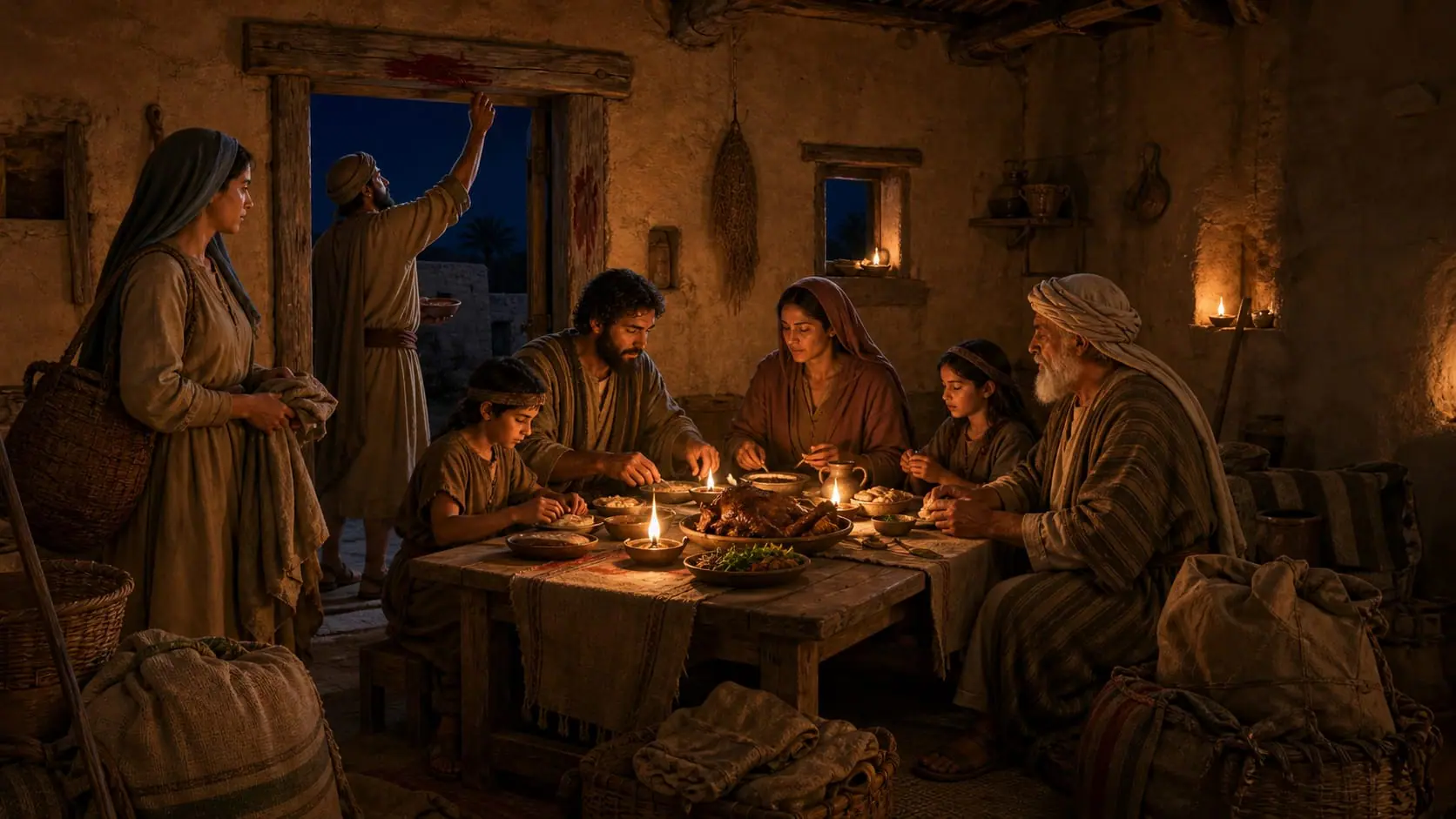
Before the final plague, Israelite households were told to select an unblemished year-old male from the sheep or goats. A small household could share with a neighbor. They put its blood on the two doorposts and lintel, then ate the roasted meat with unleavened bread and bitter herbs, ready to leave. The blood was a sign: Yahweh would not allow the destroyer to enter those homes.
At midnight, the firstborn in Egypt died, including Pharaoh’s firstborn and the firstborn of livestock. Pharaoh then told Moses and Aaron to take the people and go. Israel left carrying unleavened dough and goods the Egyptians gave them. Passover was to be remembered by later generations. Exodus 12
The blood shall be to you for a token on the houses where you are. When I see the blood, I will pass over you, and no plague will be on you to destroy you when I strike the land of Egypt.
Israel crosses the sea
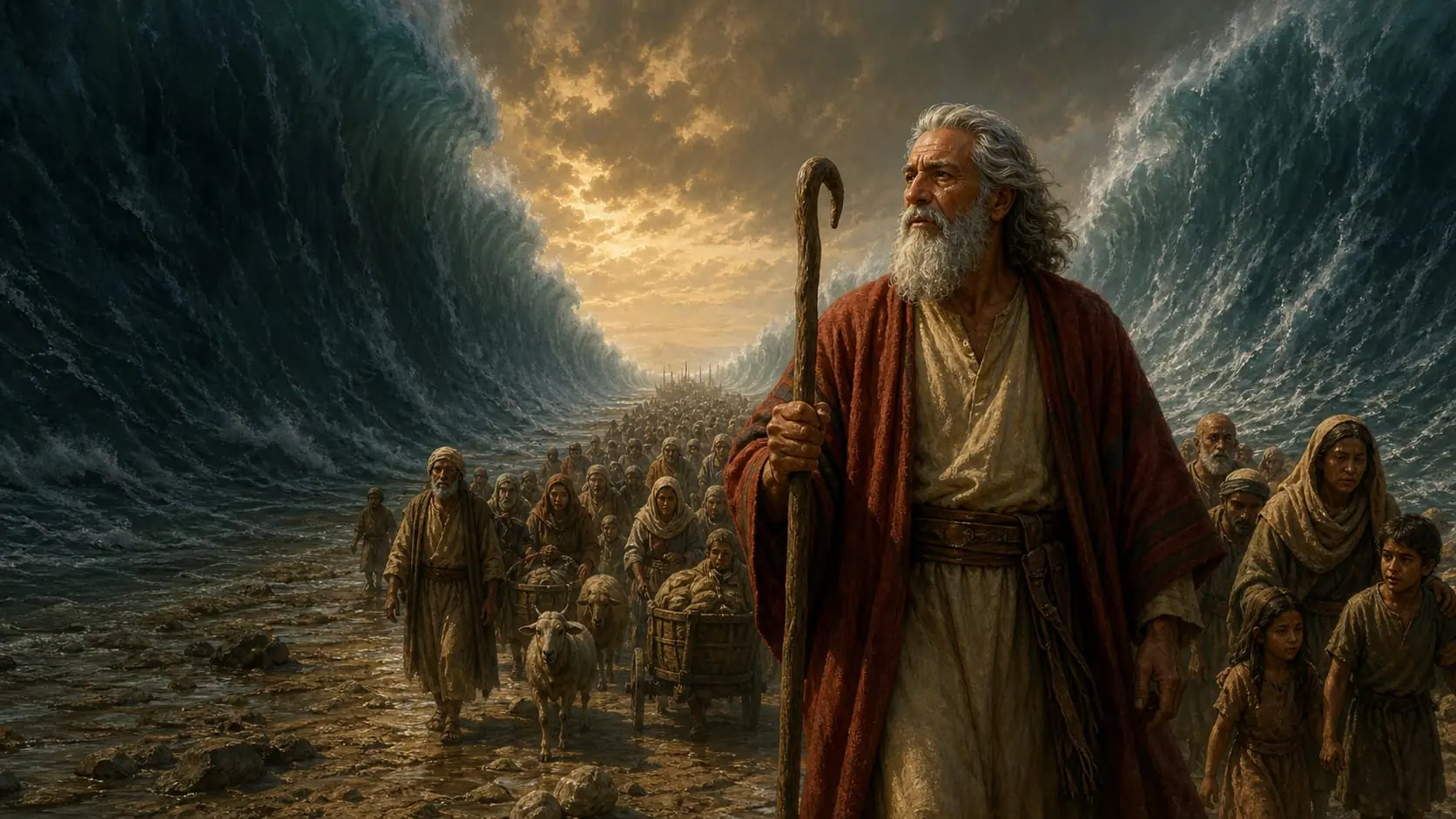
Pharaoh changed his mind and pursued Israel with chariots. Trapped between the army and the sea, the people were afraid. Moses told them to stand still and see Yahweh’s salvation. Moses stretched out his hand, and a strong east wind drove the water back through the night, making dry ground.
Israel crossed between walls of water. When the Egyptians followed, the waters returned. Exodus credits Yahweh with the deliverance; Moses’ raised hand was the commanded action, not an independent magical power. Exodus 14–15
Moses said to the people, “Don’t be afraid. Stand still, and see the salvation of Yahweh, which he will work for you today; for you will never again see the Egyptians whom you have seen today. Yahweh will fight for you, and you shall be still.”
Manna and testing in the wilderness
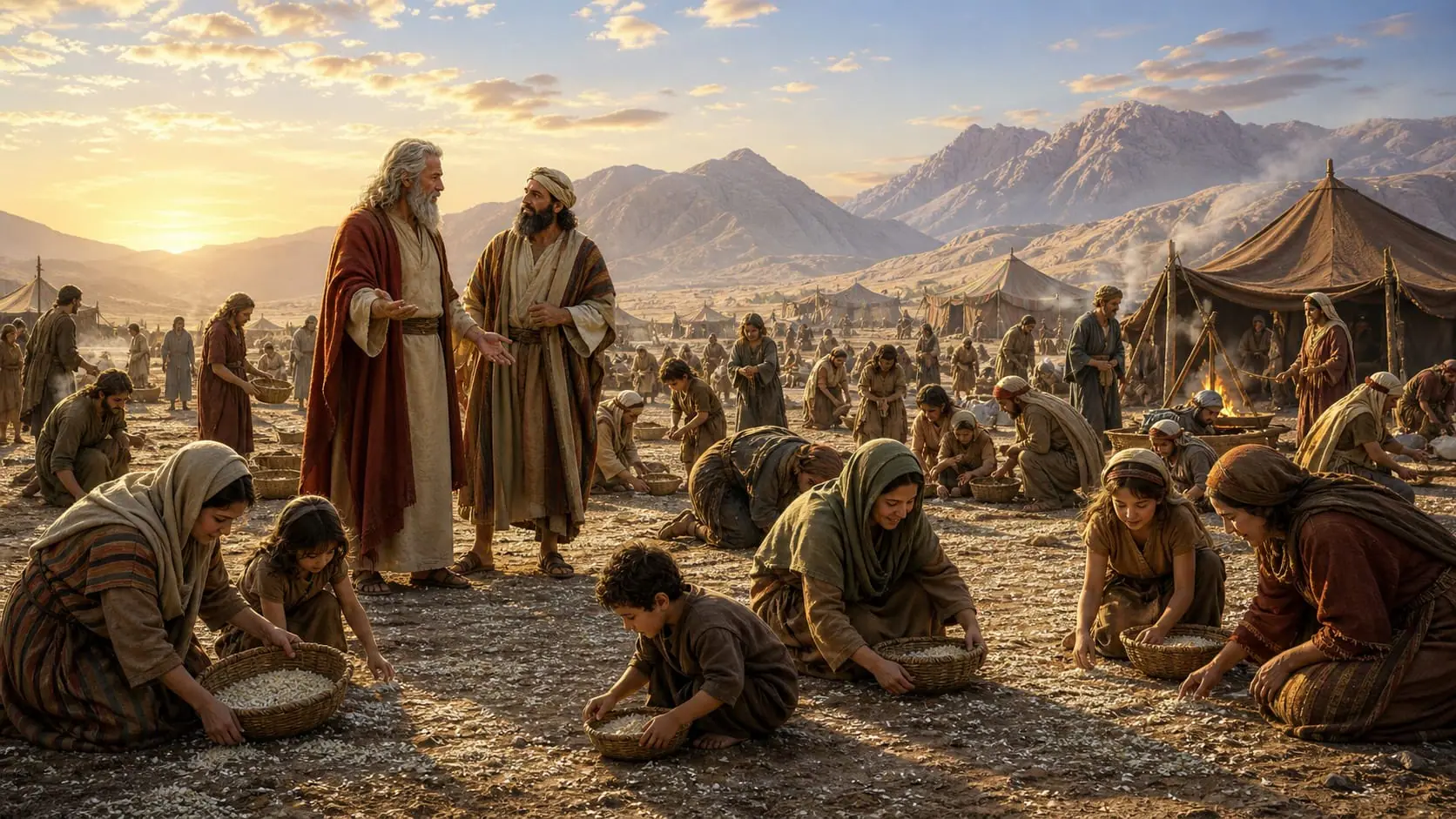
In the wilderness, the people complained about food. God sent quail in the evening and manna in the morning. They gathered manna on six days, taking a double portion on the sixth; there was none to gather on the Sabbath. God also provided water. At Rephidim, he told Moses to strike the rock at Horeb, and water came out for the people. Exodus 16:13–30; 17:1–7
When Amalek attacked, Joshua led Israel’s fighters while Aaron and Hur supported Moses’ hands on the hill. Later, Jethro saw Moses hearing disputes all day and advised him to appoint judges. Moses followed his advice, keeping the difficult cases for himself. Exodus 17:8–16; 18:13–27
The covenant and Ten Commandments at Sinai
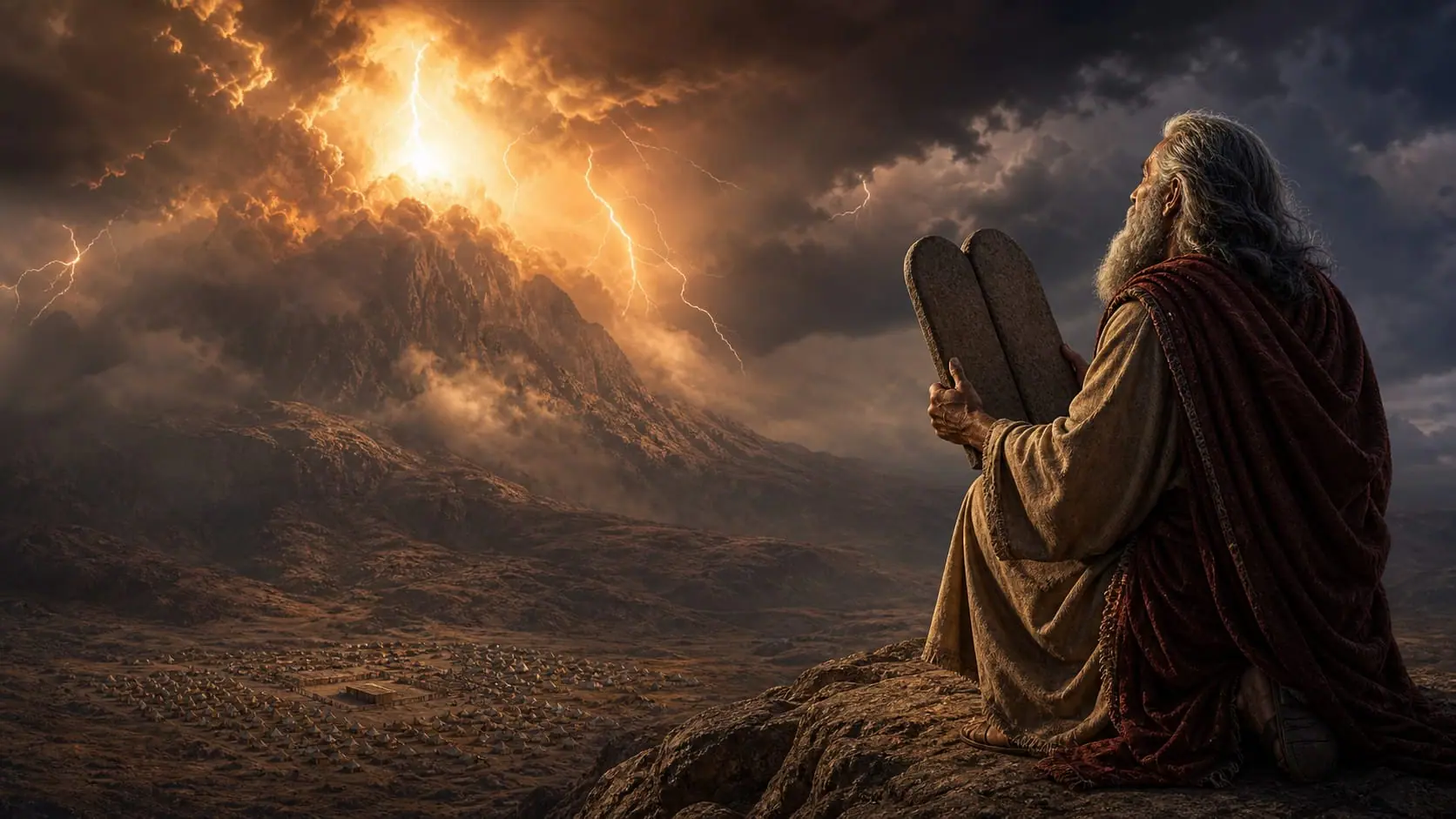
At Mount Sinai, God called Israel to be his treasured possession, a kingdom of priests, and a holy nation if they kept the covenant. Thunder, lightning, thick cloud, fire, and a trumpet blast marked the mountain as holy.
God spoke the covenant words beginning with Israel’s deliverance from Egypt and the commands commonly called the Ten Commandments. Moses later received two tablets of testimony. Exodus 19–24; 31:18
God spoke all these words, saying, “I am Yahweh your God, who brought you out of the land of Egypt, out of the house of bondage. “You shall have no other gods before me.
The golden calf and renewed covenant
While Moses remained on the mountain, the people asked Aaron to make gods to lead them. Aaron formed a golden calf. God warned Moses, who pleaded for Israel before returning to the camp. When he saw the calf and dancing, he broke the tablets and destroyed the calf.
The account includes severe judgment: at Moses’ command, the Levites killed about three thousand men, and Yahweh struck the people with a plague. Moses continued to intercede. God did not destroy the whole nation, but the story does not present the calf as an offense without consequences.
Moses cut two new tablets and returned to the mountain. The covenant was renewed, and his face shone after speaking with God. The tabernacle was constructed according to the instructions Moses had received. Exodus 32–40
Forty years in the wilderness
Israel refused to enter the land after the spies’ report, despite Joshua and Caleb urging them to trust God. God said the counted generation who had complained against him would die in the wilderness, except Joshua and Caleb, and their children would enter the land. The journey from Egypt lasted forty years. Moses continued to lead, intercede, and teach. Numbers 14:6–38; Deuteronomy 8:2
Later, at Meribah near Kadesh, God told Moses and Aaron to speak to the rock. Moses struck it twice instead. Water came out, but God said the two leaders had failed to believe him and uphold his holiness before Israel; they would not lead the assembly into the land. Unlike the earlier event in Exodus 17, striking the rock was not the command here. Numbers 20:1–13
Moses sees the land and dies in Moab
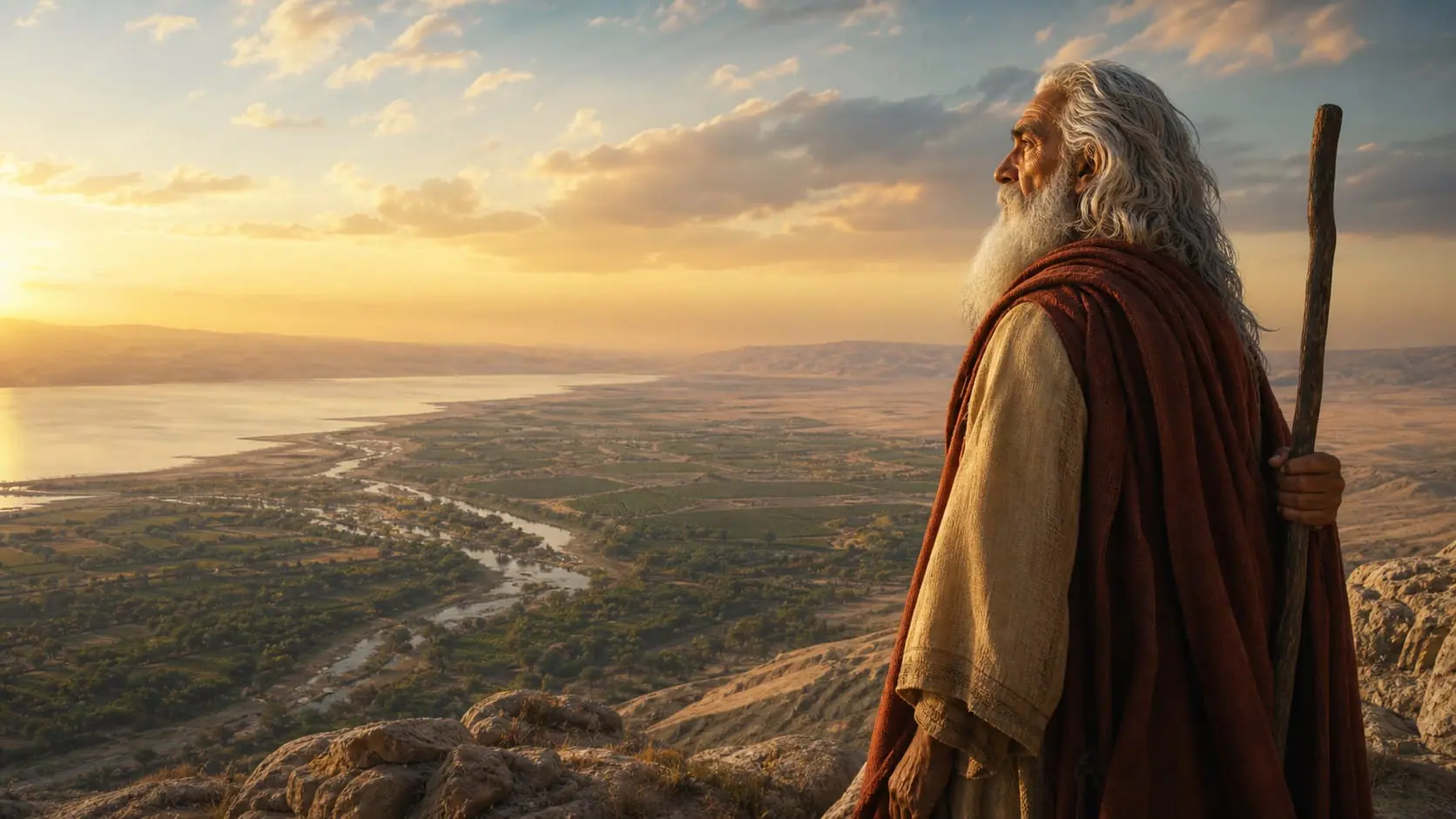
Near the end, Moses reviewed Israel’s history and covenant, commissioned Joshua, and climbed Mount Nebo. God showed him the land promised to Abraham, Isaac, and Jacob, but Moses did not cross the Jordan.
Moses died in Moab at 120. Deuteronomy says Yahweh buried him and no one knew his grave. It remembers Moses as a prophet whom Yahweh knew face to face. Deuteronomy 31–34
Moses was one hundred twenty years old when he died. His eye was not dim, nor his strength gone.