%20scale(.87)'%3e%3cg%20transform='rotate(-3%2032%2034)'%3e%3cpath%20d='M10.5%2019.5c7.65-2.35%2014.8-.45%2021.5%205.7%206.7-6.15%2013.85-8.05%2021.5-5.7v27.2c-7.65-2.15-14.8-.45-21.5%205.1-6.7-5.55-13.85-7.25-21.5-5.1V19.5Z'%20fill='%23fff'%20stroke='%23171528'%20stroke-width='4.5'%20stroke-linejoin='round'/%3e%3cpath%20d='M32%2025.2v26.6'%20stroke='%23171528'%20stroke-width='4'%20stroke-linecap='round'/%3e%3cpath%20d='M17.5%2034.5h9M22%2030v9'%20stroke='%23171528'%20stroke-width='3.75'%20stroke-linecap='round'/%3e%3ccircle%20cx='41.5'%20cy='32.5'%20r='2.5'%20fill='%23171528'/%3e%3ccircle%20cx='46.5'%20cy='38'%20r='2.5'%20fill='%23171528'/%3e%3c/g%3e%3c/g%3e%3c/svg%3e)
The quick answer
What happened at the Last Supper?
Jesus ate with the Twelve in Jerusalem before his arrest. Matthew, Mark, and Luke describe a Passover meal at which he spoke of betrayal and shared bread and a cup, connecting them with his body and blood. John records him washing the disciples’ feet, Judas leaving, and Jesus commanding the others to love one another.
The accounts also record a warning that Peter would deny Jesus, although they place that warning differently within the evening. After the meal, Jesus and his disciples went to the Mount of Olives. The night ended with prayer, betrayal, and arrest—not a return home.
The final meal before the cross
What Is the Last Supper?
“The Last Supper” is the traditional name for Jesus’ final meal with his disciples before his arrest and crucifixion. It is not a heading supplied by the Gospel text. “Last” refers to the meal before his death, not to a claim that Jesus never ate with his followers after the resurrection.
Christians remember this meal in the Lord’s Supper, also called Communion or the Eucharist. The name “Lord’s Supper” already appears in 1 Corinthians 11:20. Paul recounts the bread and cup and says that eating and drinking proclaim the Lord’s death until he comes (1 Corinthians 11:23–26).
The full story
The Last Supper Bible Story
These scenes compare the Gospel accounts rather than reconstructing a minute-by-minute order. In particular, John records Judas’ departure but does not narrate the institution of the bread and cup.
The disciples prepare the Passover
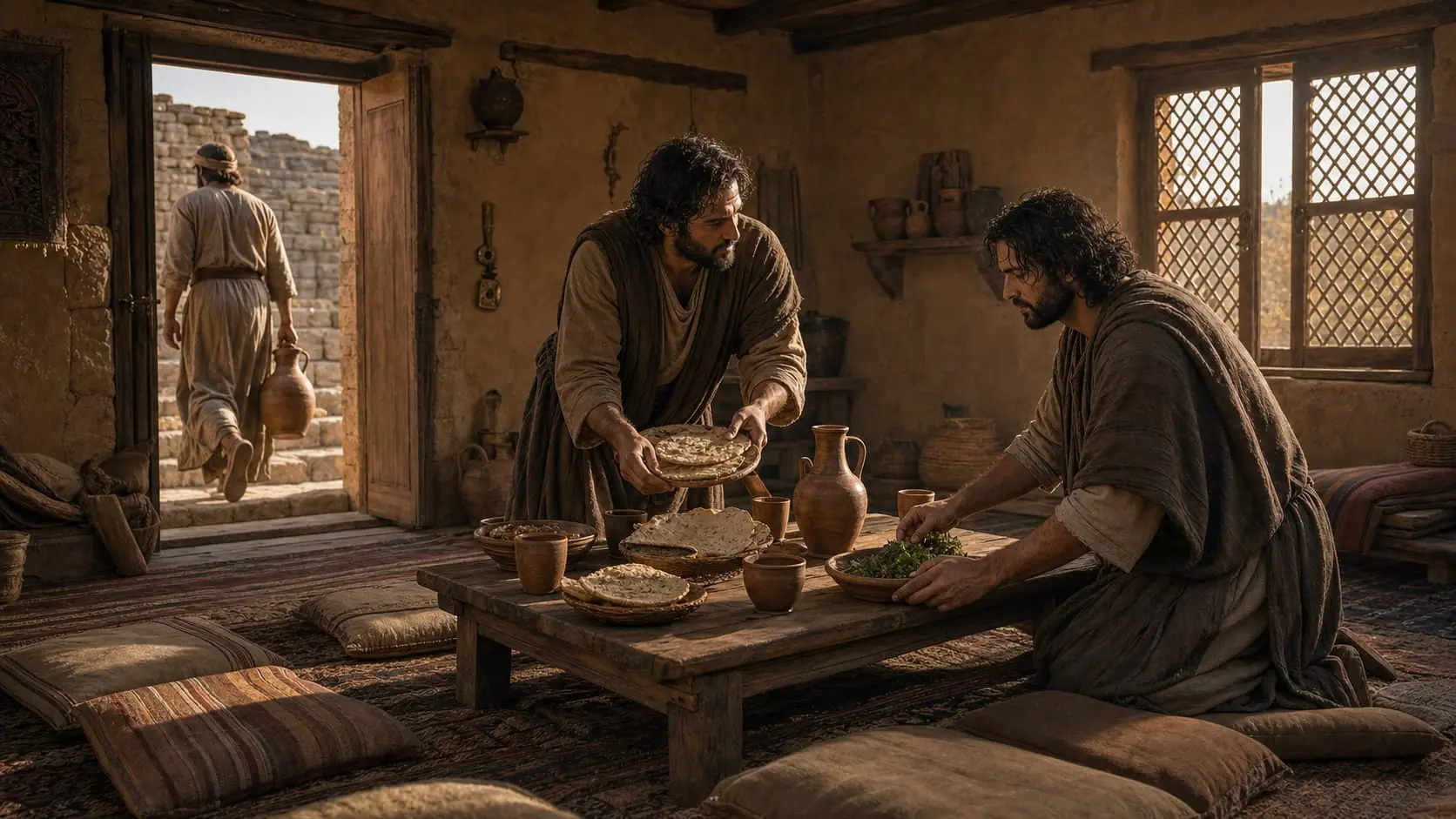
As the feast approached, the disciples asked Jesus where he wanted them to prepare the Passover. Mark and Luke say he sent two disciples into Jerusalem. They would meet a man carrying a pitcher of water and follow him to a house whose owner would show them a large furnished upper room.
Luke names the two disciples as Peter and John. They found everything as Jesus had said and prepared the meal. The unnamed homeowner, the address, and the room’s later history are not supplied by the Gospel accounts. Matthew 26:17–19; Mark 14:12–16; Luke 22:7–13
His disciples went out, and came into the city, and found things as he had said to them, and they prepared the Passover.
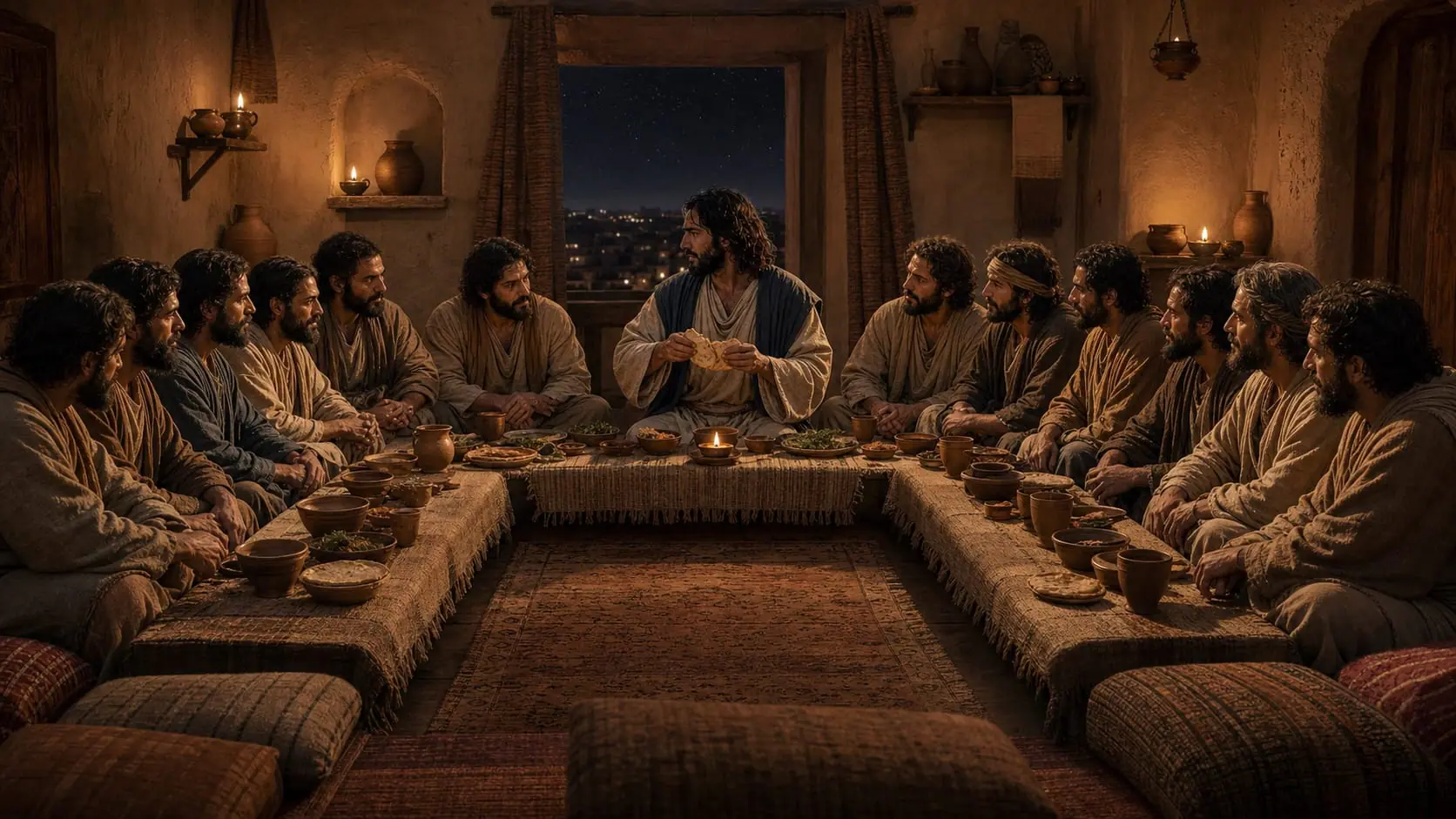
Jesus reclines at the table with the Twelve
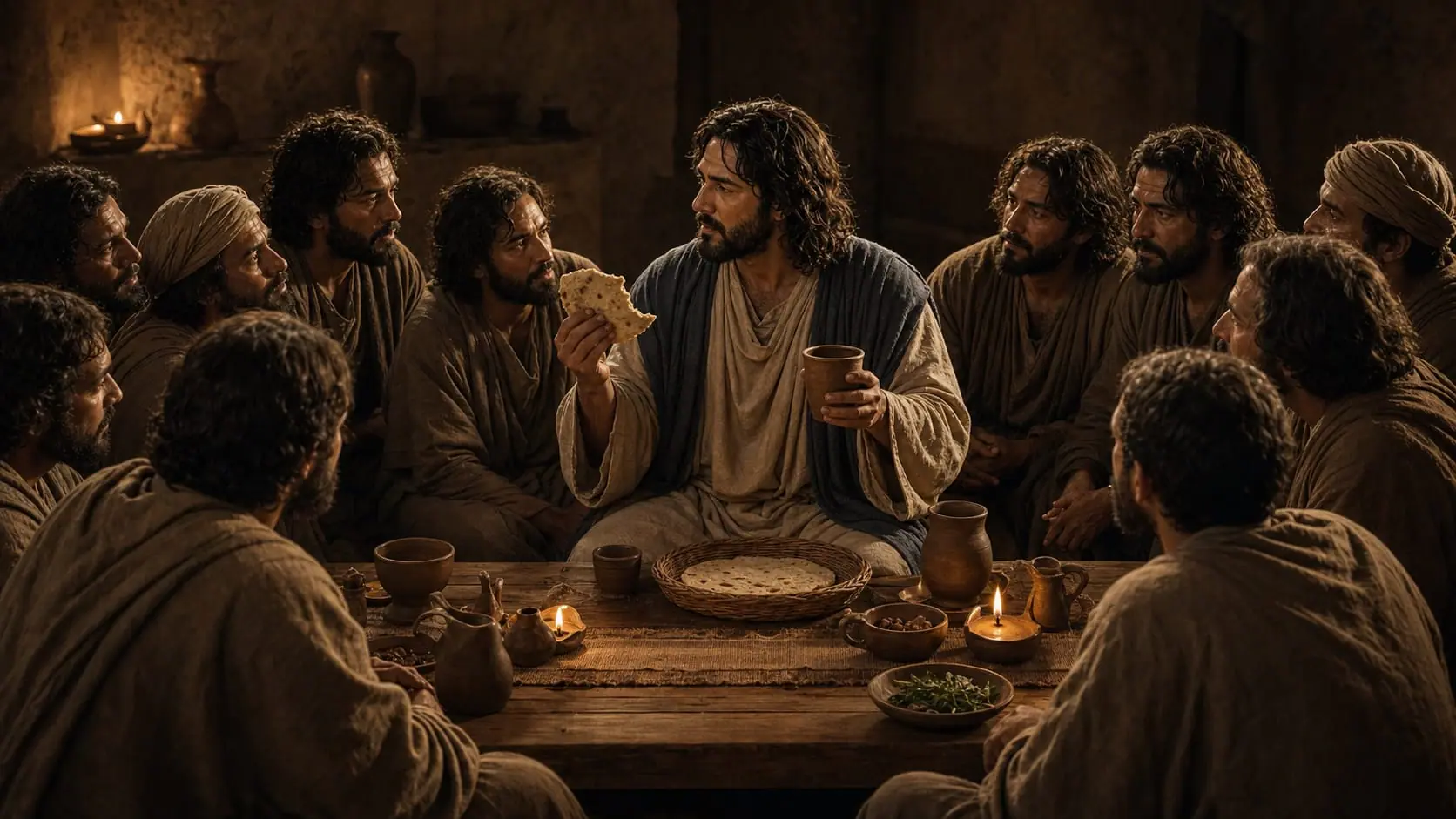
When evening came, Jesus took his place at the table with the Twelve. Luke records him saying that he had earnestly desired to eat this Passover with them before he suffered. The meal carried the memory of Israel’s deliverance from Egypt, but Jesus also directed the disciples toward his approaching suffering and God’s Kingdom.
Matthew describes Jesus reclining at the table. Neither the familiar long-table paintings nor the low-table illustration above establish everyone’s exact position. The accounts name the guests and their words, not a seating plan. Matthew 26:20; Mark 14:17; Luke 22:14–18
Jesus washes the disciples’ feet
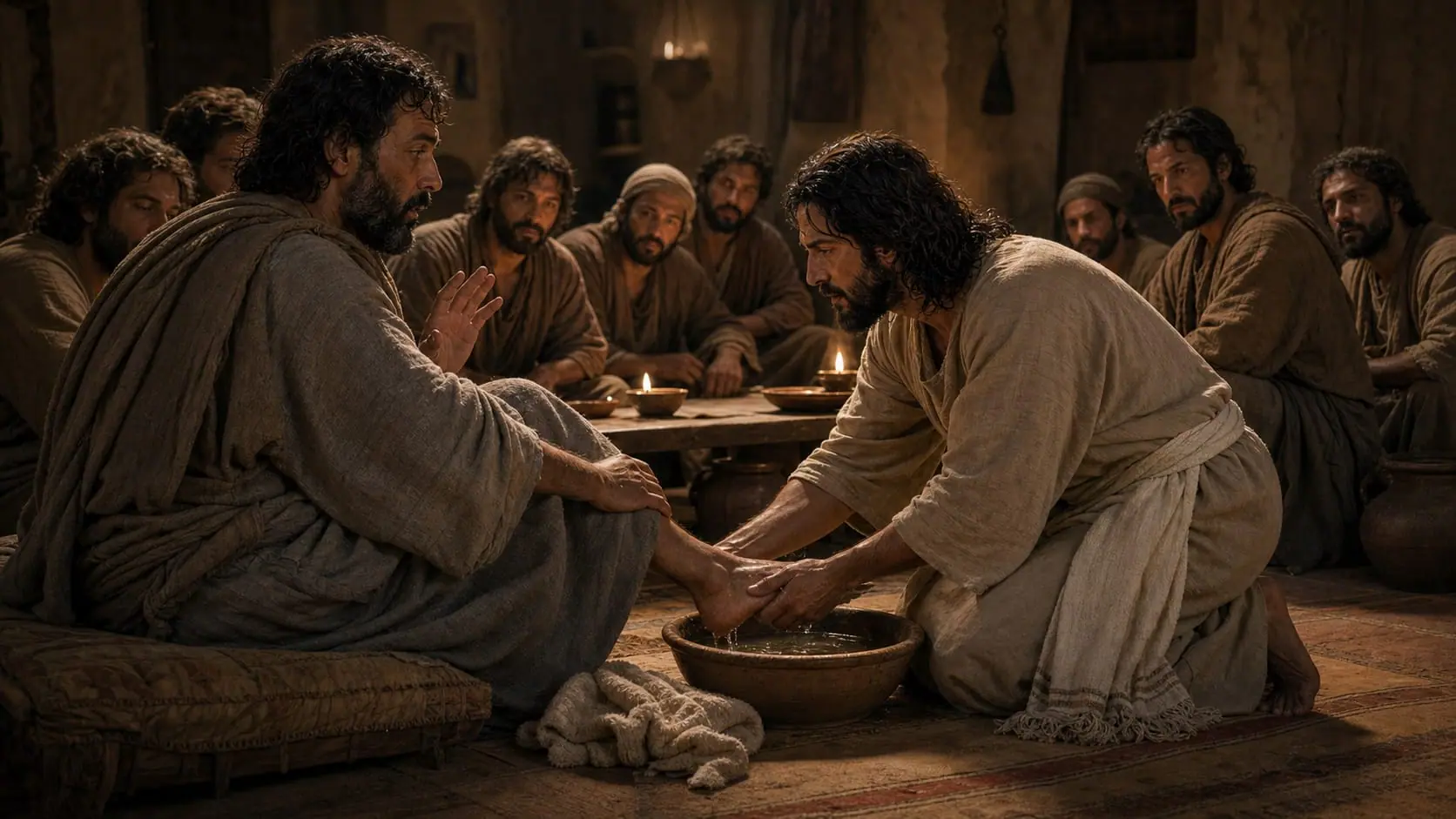
John says Jesus rose from supper, laid aside his outer garments, tied a towel around his waist, and poured water into a basin. He began washing the disciples’ feet. Peter refused at first. When Jesus said that without this washing Peter had no part with him, Peter asked him to wash his hands and head as well.
After returning to the table, Jesus explained the action. If their Lord and Teacher had taken the servant’s place, they should wash one another’s feet. Leadership among his followers would be measured by humble service rather than status. John 13:1–17
If I then, the Lord and the Teacher, have washed your feet, you also ought to wash one another’s feet. For I have given you an example, that you should also do as I have done to you. Most certainly I tell you, a servant is not greater than his lord, neither is one who is sent greater than he who sent him. If you know these things, blessed are you if you do them.
“One of you will betray me”
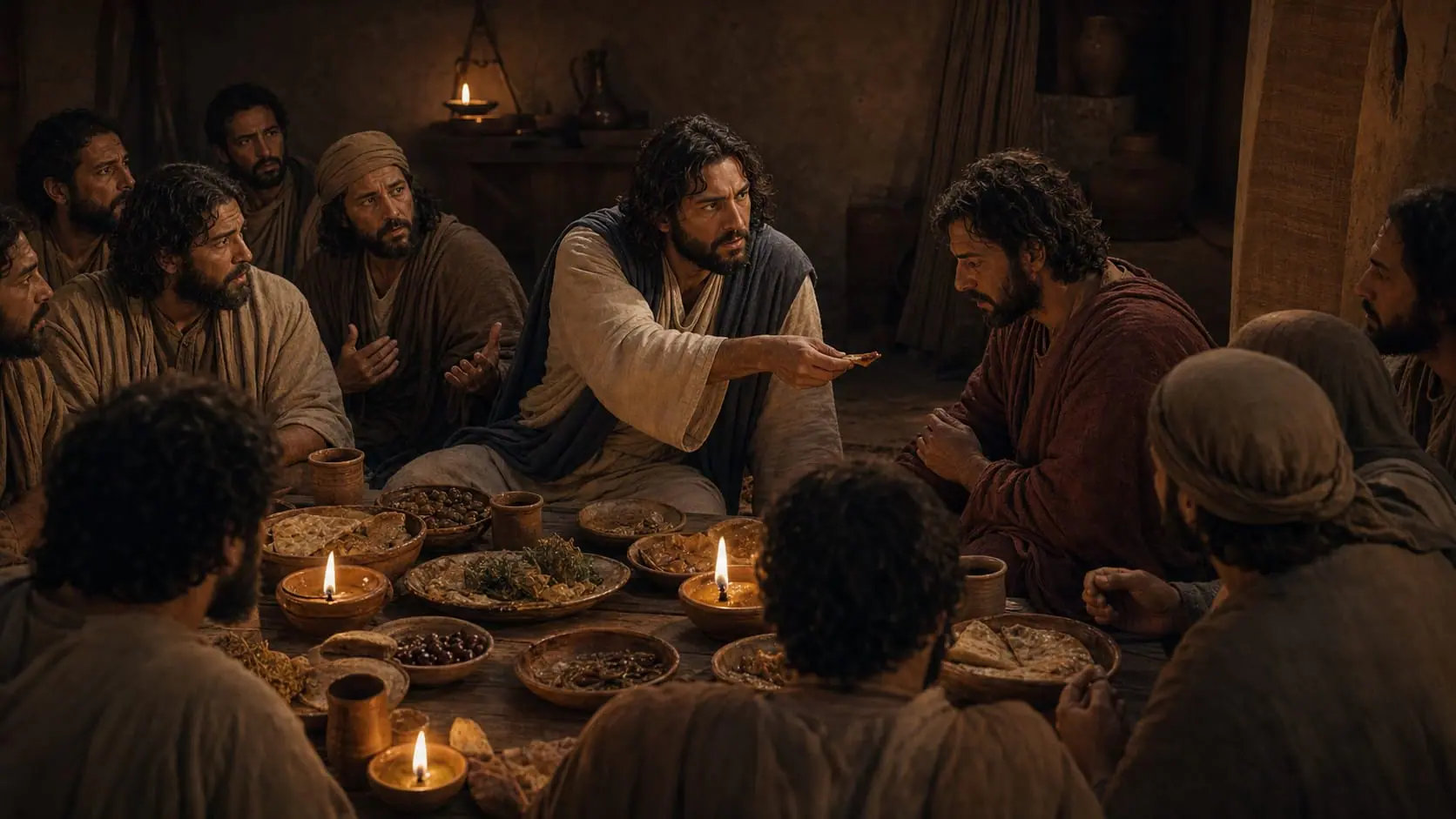
During the meal, Jesus announced that one of those eating with him would betray him. The disciples became deeply sorrowful and asked one by one whether it was they. Matthew records Judas also asking the question; John describes the disciples looking at one another in uncertainty.
Jesus did not lose control of events when betrayal came. The Gospels portray him speaking beforehand while also holding Judas responsible for his choice. Matthew 26:21–25; Mark 14:18–21; Luke 22:21–23; John 13:18–26
Now when evening had come, he was reclining at the table with the twelve disciples. As they were eating, he said, “Most certainly I tell you that one of you will betray me.” They were exceedingly sorrowful, and each began to ask him, “It isn’t me, is it, Lord?”
Jesus gives the bread and cup
Matthew, Mark, and Luke record Jesus taking bread, giving thanks or blessing it, breaking it, and giving it to the disciples. He identified the bread with his body. He then shared the cup and connected it with his blood of the covenant, poured out for others.
Luke adds the instruction to remember Jesus and places this cup after supper; he also records an earlier cup in Luke 22:17. Matthew explicitly connects the poured-out blood with forgiveness of sins. These words are central to Christian Communion, though churches differ in how they understand Christ’s presence in the bread and cup. Matthew 26:26–29; Mark 14:22–25; Luke 22:17–20
As they were eating, Jesus took bread, and when he had blessed it, he broke it and gave to them, and said, “Take, eat. This is my body.” He took the cup, and when he had given thanks, he gave to them. They all drank of it. He said to them, “This is my blood of the new covenant, which is poured out for many. Most certainly I tell you, I will no more drink of the fruit of the vine until that day when I drink it anew in God’s Kingdom.”
He took bread, and when he had given thanks, he broke and gave it to them, saying, “This is my body which is given for you. Do this in memory of me.” Likewise, he took the cup after supper, saying, “This cup is the new covenant in my blood, which is poured out for you. But behold, the hand of him who betrays me is with me on the table. The Son of Man indeed goes as it has been determined, but woe to that man through whom he is betrayed!” They began to question among themselves which of them it was who would do this thing.
Judas leaves the room
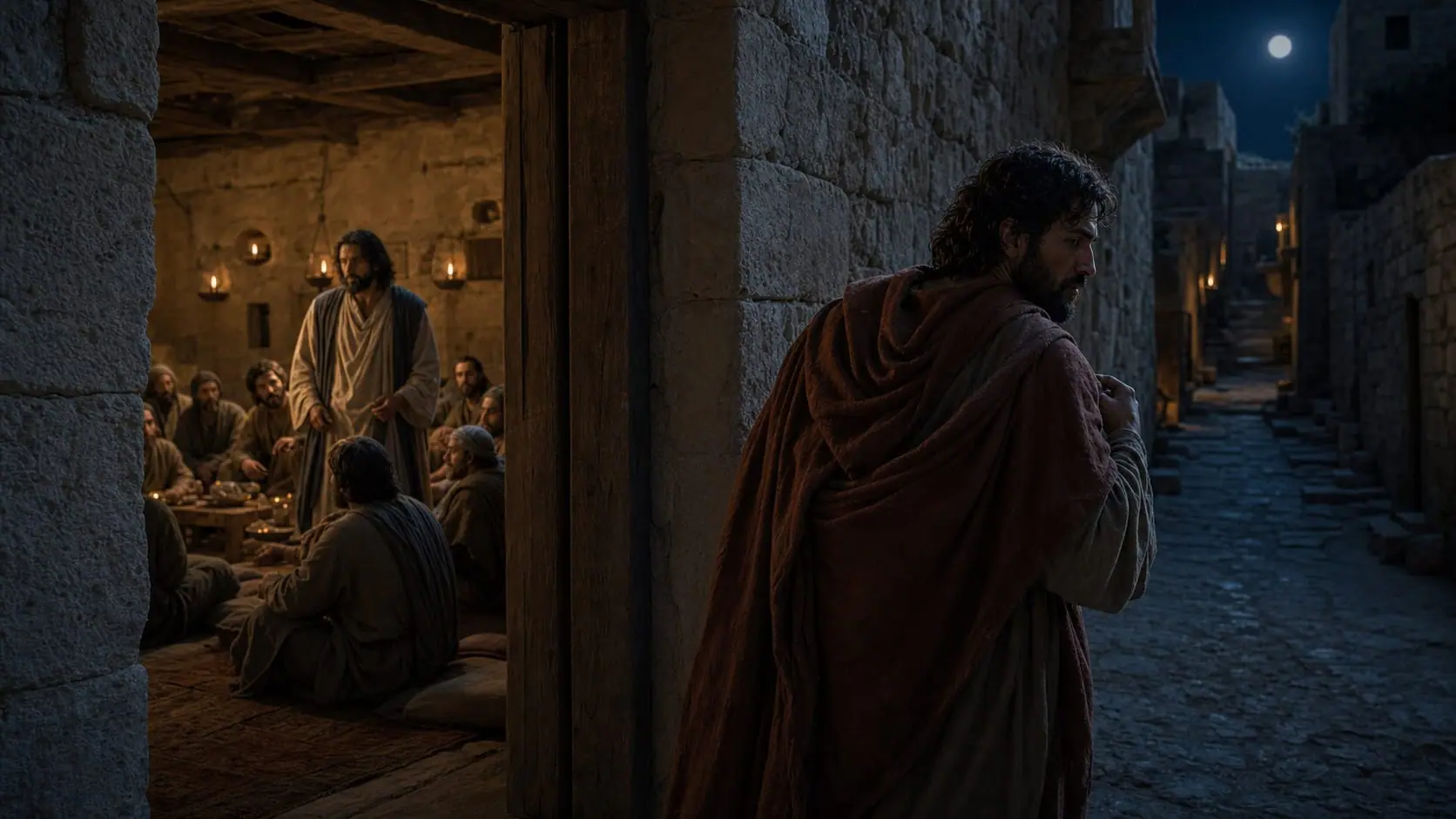
John records Jesus giving a dipped piece of bread to Judas and telling him to do quickly what he intended to do. The other disciples did not understand the instruction. Some assumed Judas was being sent to purchase festival supplies or give something to the poor because he kept the money box.
Judas received the piece and went out immediately. John closes the scene with three stark words: “It was night.” The darkness is both the actual setting and a powerful narrative contrast with Jesus’ words about glory and love that follow. John 13:26–31
Therefore having received that morsel, he went out immediately. It was night.
Jesus commands love and warns Peter
After Judas left, Jesus spoke about his coming glorification and gave the disciples a new commandment: they were to love one another as he had loved them. Their love—not status, force, or public display—would mark them as his disciples.
Peter declared that he would lay down his life for Jesus. Jesus answered that Peter would deny him three times before the rooster crowed. Luke also records Jesus saying he had prayed for Peter and instructing him to strengthen the others after he turned back. Luke 22:31–34; John 13:31–38
They sing a hymn and leave for the Mount of Olives
Matthew and Mark say the group sang a hymn and went out to the Mount of Olives. They place Jesus’ warning about the disciples scattering and Peter’s denial here, alongside his promise to go ahead of them into Galilee after his resurrection. Luke and John place the warning to Peter earlier in their narratives.
The Last Supper therefore ends without a peaceful return home. It leads directly to prayer at Gethsemane, Judas’ arrival, Jesus’ arrest, and the Crucifixion of Jesus. Matthew 26:30–35; Mark 14:26–31; Luke 22:39; John 18:1
People and food named by Scripture
Who Was at the Last Supper?
Matthew describes Jesus reclining with the Twelve; Mark also names the Twelve, and Luke describes him sitting down with the apostles. Judas was present for at least part of the meal. Peter appears in the foot washing and denial prediction. John refers to the disciple whom Jesus loved without naming him in the passage.
Did Judas receive the bread and cup? Luke 22:19–23 places the betrayer’s hand at the table after the bread and cup. Matthew and Mark put the betrayal announcement before them. John records Judas leaving but omits the bread-and-cup account, so John alone cannot establish whether he left before or after it.
Later paintings sometimes add attendants, Mary Magdalene, or Jesus’ mother. Those additions may serve artistic purposes, but the Gospel narratives describe Jesus and the Twelve at the table. They explicitly mention bread and the fruit of the vine, but they do not give a complete menu.
A real question readers encounter
Was the Last Supper a Passover Meal?
Matthew, Mark, and Luke explicitly call the meal Passover. The disciples prepare the Passover, and Luke records Jesus saying he earnestly desired to eat “this Passover” before suffering. On that evidence, the Synoptic presentation is clear.
John 13:1 opens before the feast. At the trial, John 18:28 says the authorities still intended to eat the Passover, and John 19:14 calls the day the Preparation of the Passover. Explanations include different calendars, broader uses of “Passover,” and differing narrative chronologies. None is explicitly spelled out in these passages, and the accounts do not give identical descriptions of the timing.
Four accounts with distinct emphases
The Last Supper in Matthew, Mark, Luke, and John
Matthew 26:17–30
Matthew records preparation for Passover, the betrayal announcement, Judas’ question, the bread and cup, forgiveness of sins, and the hymn before the Mount of Olives.
Mark 14:12–26
Mark describes the man carrying water, the furnished upper room, sorrow around the betrayal, the bread and cup, and Jesus’ promise to drink anew in God’s Kingdom.
Luke 22:7–38
Luke names Peter and John, records the command to remember Jesus, and places a dispute about greatness beside Jesus’ teaching on service. Jesus warns Peter and gives him a future task: strengthen the others after he turns back.
John 13–17
John records the foot washing, Judas’ departure, and the command to love one another, but not the institution of the bread and cup. Farewell teaching and prayer follow in chapters 14–17. Jesus calls the disciples to leave in John 14:31; the setting of chapters 15–17 is not restated. They should not all be described as definitely taking place in the upper room.
What did Jesus eat at the Last Supper?
Bread and the fruit of the vine are directly named. Exodus 12:8 prescribes roasted meat, unleavened bread, and bitter herbs for Passover. That explains why readers associate those foods with the supper, but the Gospel passages do not give a complete menu.
To follow the warning about Peter into his denial and later restoration, read Peter’s story. For a quiz covering more of Jesus’ ministry, try Jesus Trivia.