%20scale(.87)'%3e%3cg%20transform='rotate(-3%2032%2034)'%3e%3cpath%20d='M10.5%2019.5c7.65-2.35%2014.8-.45%2021.5%205.7%206.7-6.15%2013.85-8.05%2021.5-5.7v27.2c-7.65-2.15-14.8-.45-21.5%205.1-6.7-5.55-13.85-7.25-21.5-5.1V19.5Z'%20fill='%23fff'%20stroke='%23171528'%20stroke-width='4.5'%20stroke-linejoin='round'/%3e%3cpath%20d='M32%2025.2v26.6'%20stroke='%23171528'%20stroke-width='4'%20stroke-linecap='round'/%3e%3cpath%20d='M17.5%2034.5h9M22%2030v9'%20stroke='%23171528'%20stroke-width='3.75'%20stroke-linecap='round'/%3e%3ccircle%20cx='41.5'%20cy='32.5'%20r='2.5'%20fill='%23171528'/%3e%3ccircle%20cx='46.5'%20cy='38'%20r='2.5'%20fill='%23171528'/%3e%3c/g%3e%3c/g%3e%3c/svg%3e)
The quick answer
What is the Book of Daniel about?
The Book of Daniel follows a Judean exile serving in Babylonian and Persian courts while remaining faithful to God. Chapters 1–6 contain court narratives: the food test, royal dreams, the fiery furnace, Nebuchadnezzar’s humbling, Belshazzar’s feast, and Daniel in the lions’ den. Chapters 7–12 recount symbolic visions of beasts, kingdoms, conflict, judgment, resurrection, and promised deliverance. Together they ask how God’s people live faithfully under empires that appear overwhelming.
Literary and historical setting
How the Book of Daniel fits into the Bible
The narrative begins under Nebuchadnezzar and reaches Cyrus’s third year in Daniel 10:1. Its two halves are not a straight timeline: chapters 7 and 8 return to Belshazzar’s reign, before his death in chapter 5. Chapter 9 is dated to Darius’s first year, without specifying its order relative to the lions’ den.
In the Hebrew-Aramaic text, Daniel 1:1–2:4a and 8:1–12:13 are Hebrew; 2:4b–7:28 is Aramaic. The letters a and b mean the first and second parts of a verse. In the Jewish Bible, Daniel belongs to the Writings; Christian Bibles generally place it among the Prophets. Matthew 24:15 calls Daniel a prophet.
This outline follows the twelve chapters in the WEB. Catholic and Orthodox Bibles also receive the Greek additions as Scripture: the Prayer of Azariah and Song of the Three Young Men, Susanna, and Bel and the Dragon. The NABRE places the prayer and song at 3:24–90 and the two stories in chapters 13–14. Placement and verse numbering differ between editions.
Summary by chapter
Book of Daniel outline
Daniel and his friends in Babylon
Four Judean youths receive new names and court training. They seek an alternative to the royal food and are found exceptionally capable.
A dream of kingdoms and the fiery furnace
Daniel interprets Nebuchadnezzar’s statue dream. Later, Shadrach, Meshach, and Abednego refuse worship of a golden image and survive the furnace.
Two royal warnings and the lions’ den
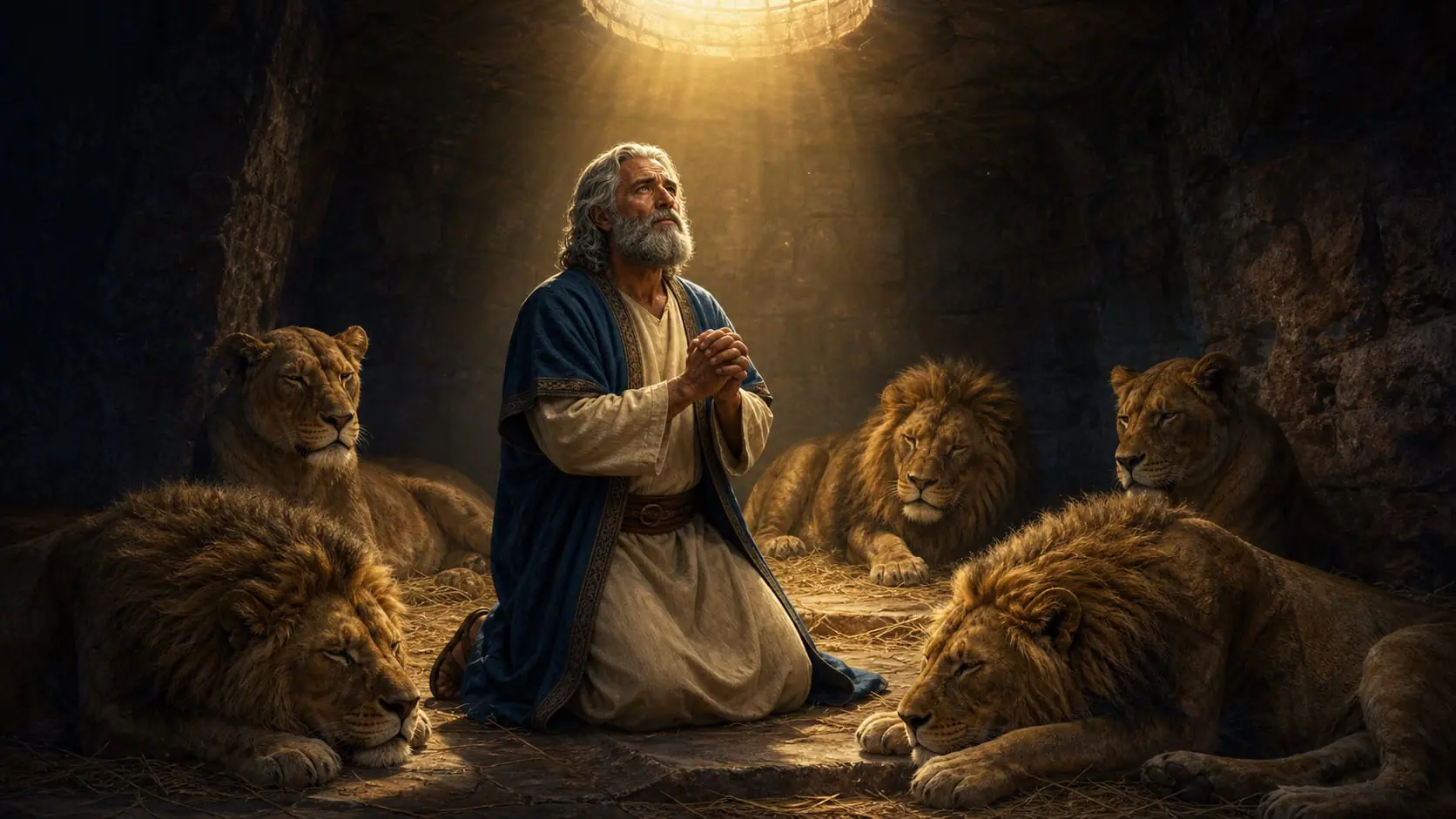
Nebuchadnezzar is humbled, writing appears at Belshazzar’s feast, and Daniel survives the lions’ den after continuing to pray.
Beasts, a heavenly court, a ram, and a goat
Daniel sees four beasts and one like a son of man receiving dominion. In the next vision, Gabriel identifies the ram with Media and Persia and the goat with Greece. Both chapters are dated to Belshazzar’s reign.
Confession, seventy weeks, and resurrection
Daniel reads Jeremiah and confesses his own and Israel’s sin; Gabriel explains seventy weeks. Chapters 10–12 describe a heavenly encounter and conflicts involving Persia, Greece, and kings of the north and south. They close with deliverance, resurrection to differing destinies, and a promise to Daniel.
Themes to look for
Main themes in the Book of Daniel
Faithfulness in exile
Daniel and his friends serve foreign rulers without surrendering worship or covenant identity.
Daniel 1; 3; 6God’s rule over kingdoms
Kings boast and empires rise, but every vision places their authority inside a larger divine judgment.
Daniel 2:20–22, 44; 4:34–37; 7:9–14Wisdom and revelation
Daniel prays for insight and credits God rather than personal brilliance for revealed mysteries.
Daniel 2:17–30; 9:20–23Endurance and hope
The visions do not deny persecution; they promise that oppression is limited and that final deliverance belongs to God.
Daniel 7:21–27; 12:1–3, 13People in the book
Key characters in Daniel
Daniel
A Judean exile who interprets royal dreams, prays for Jerusalem, and receives visions.
Shadrach, Meshach & Abednego
Daniel’s three companions who refuse the golden image and survive the fiery furnace.
Nebuchadnezzar
The Babylonian king whose court, dreams, image, and humbling appear in chapters 1–4.
Belshazzar
The ruler who calls Daniel to interpret the writing at his feast in chapter 5; not Belteshazzar, Daniel’s court name.
Darius the Mede
The ruler who signs the decree in chapter 6. His identification outside the biblical account is disputed.
Gabriel & Michael
Gabriel explains revelations in chapters 8–9. Michael is called one of the chief princes in 10:13 and the prince who stands for Daniel’s people in 12:1.
Meaning and application
Why does the Book of Daniel matter?
The early stories show concrete choices: Daniel asks for different food, his friends refuse the image, and Daniel continues to pray after the decree. Their rescues do not promise that every faithful person will escape death. Daniel 11:33–35 describes wise people suffering and falling; 12:2 looks beyond death to resurrection, both everlasting life and judgment.
Some symbols are explained in the text: Daniel 2:38 identifies Nebuchadnezzar as the golden head; 8:20–21 names Media, Persia, and Greece. The identifications of the four kingdoms, the seventy weeks, and later rulers are debated. Interpretations should not be presented as if every name and date were explicitly supplied by Daniel.
A short reading plan
How to read the Book of Daniel
- Day 1
Read Daniel 1–3
Notice the ten-day food test, the friends’ prayer, and their refusal to worship the image even if they are not rescued.
- Day 2
Read Daniel 4–6
Compare Daniel’s advice to Nebuchadnezzar, his warning to Belshazzar, and his response to Darius’s decree.
- Day 3
Read Daniel 7–9
Note each chapter’s date and the explanations its speakers give. Read Daniel’s confession before Gabriel’s message.
- Day 4
Read Daniel 10–12
Follow the messenger’s account of conflict. What does Daniel ask, and what does the final promise tell him?
Check the sources
Scripture and further references
Read Daniel in the World English Bible
ESV Global Study Bible: the traditional authorship and date
Direct answers
Book of Daniel FAQ
What is the Book of Daniel about?
Daniel combines stories of faithful Jewish exiles in foreign courts with visions about empires, persecution, judgment, deliverance, and resurrection. Chapters 1–6 contain the court stories; 7–12 recount Daniel’s visions and prayers.
Who wrote the Book of Daniel?
The traditional view attributes the book to Daniel in the sixth century BC; the ESV Global Study Bible follows that view. The USCCB introduction dates its composition to the persecution under Antiochus IV in 167–164 BC. The narrative’s setting and the date of composition are different questions. Daniel speaks in the first person in several passages, but authorship and the book’s final form remain disputed.
Why is Daniel written in Hebrew and Aramaic?
Daniel 1:1–2:4a and 8:1–12:13 are Hebrew; 2:4b–7:28 is Aramaic. The switch starts within verse 2:4 as the court advisers speak to the king. The text does not explain why that language continues through chapter 7; proposed reasons are interpretations.
How many chapters are in Daniel?
The Hebrew-Aramaic form has twelve chapters, as in the WEB used here. Catholic and Orthodox editions also include Greek material. In the NABRE, Susanna and Bel and the Dragon are chapters 13–14, and the prayer and song expand chapter 3. Numbering varies by edition.
What is the main message of Daniel?
Human rulers do not have the last word. Daniel calls for faithfulness under pressure and looks toward God’s lasting kingdom, judgment, and resurrection. Its hope does not erase the suffering described in chapter 11.
Are Daniel’s chapters in chronological order?
Not throughout. Chapters 7 and 8 date their visions to Belshazzar’s reign, before his death in chapter 5. Chapter 9 is set in Darius’s first year; the final vision begins in Cyrus’s third year in 10:1.