%20scale(.87)'%3e%3cg%20transform='rotate(-3%2032%2034)'%3e%3cpath%20d='M10.5%2019.5c7.65-2.35%2014.8-.45%2021.5%205.7%206.7-6.15%2013.85-8.05%2021.5-5.7v27.2c-7.65-2.15-14.8-.45-21.5%205.1-6.7-5.55-13.85-7.25-21.5-5.1V19.5Z'%20fill='%23fff'%20stroke='%23171528'%20stroke-width='4.5'%20stroke-linejoin='round'/%3e%3cpath%20d='M32%2025.2v26.6'%20stroke='%23171528'%20stroke-width='4'%20stroke-linecap='round'/%3e%3cpath%20d='M17.5%2034.5h9M22%2030v9'%20stroke='%23171528'%20stroke-width='3.75'%20stroke-linecap='round'/%3e%3ccircle%20cx='41.5'%20cy='32.5'%20r='2.5'%20fill='%23171528'/%3e%3ccircle%20cx='46.5'%20cy='38'%20r='2.5'%20fill='%23171528'/%3e%3c/g%3e%3c/g%3e%3c/svg%3e)
The quick answer
What is the story of Cain and Abel?
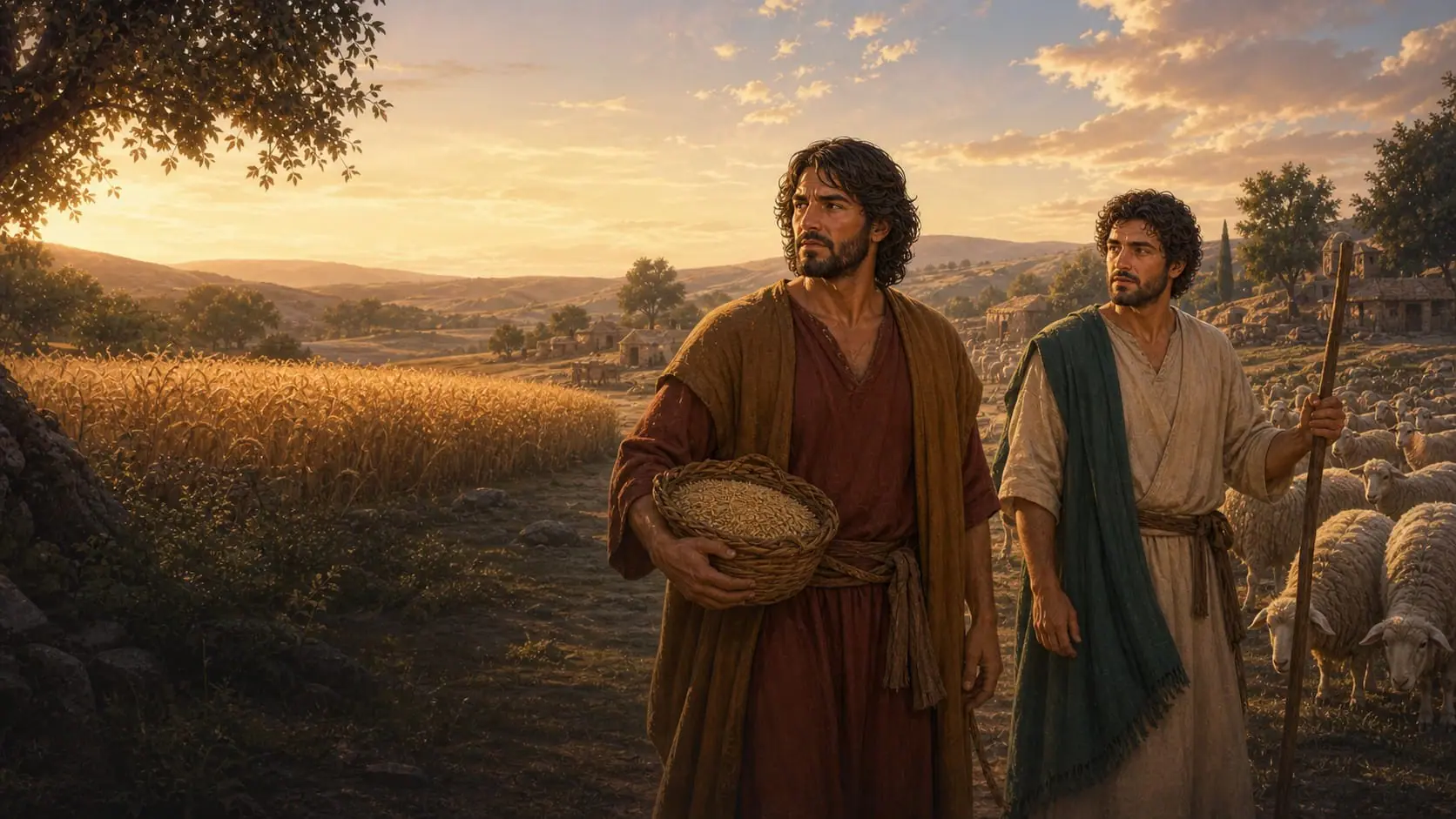
Cain and Abel were the first two sons named in the Bible. Cain worked the ground, while Abel kept sheep. Both brought offerings to God, but God regarded Abel and his offering and did not regard Cain and his offering. Cain became angry. God warned him that sin was crouching at the door and that he was to rule over it.
Cain later attacked Abel in a field and killed him. When God confronted Cain, he denied responsibility with the question, “Am I my brother’s keeper?” God punished Cain, yet also gave him a sign of protection. Cain left for the land of Nod, east of Eden, and the chapter continues with his family and the city he built.
The full story
Cain, Abel, and the First Murder in the Bible
Cain and Abel are born
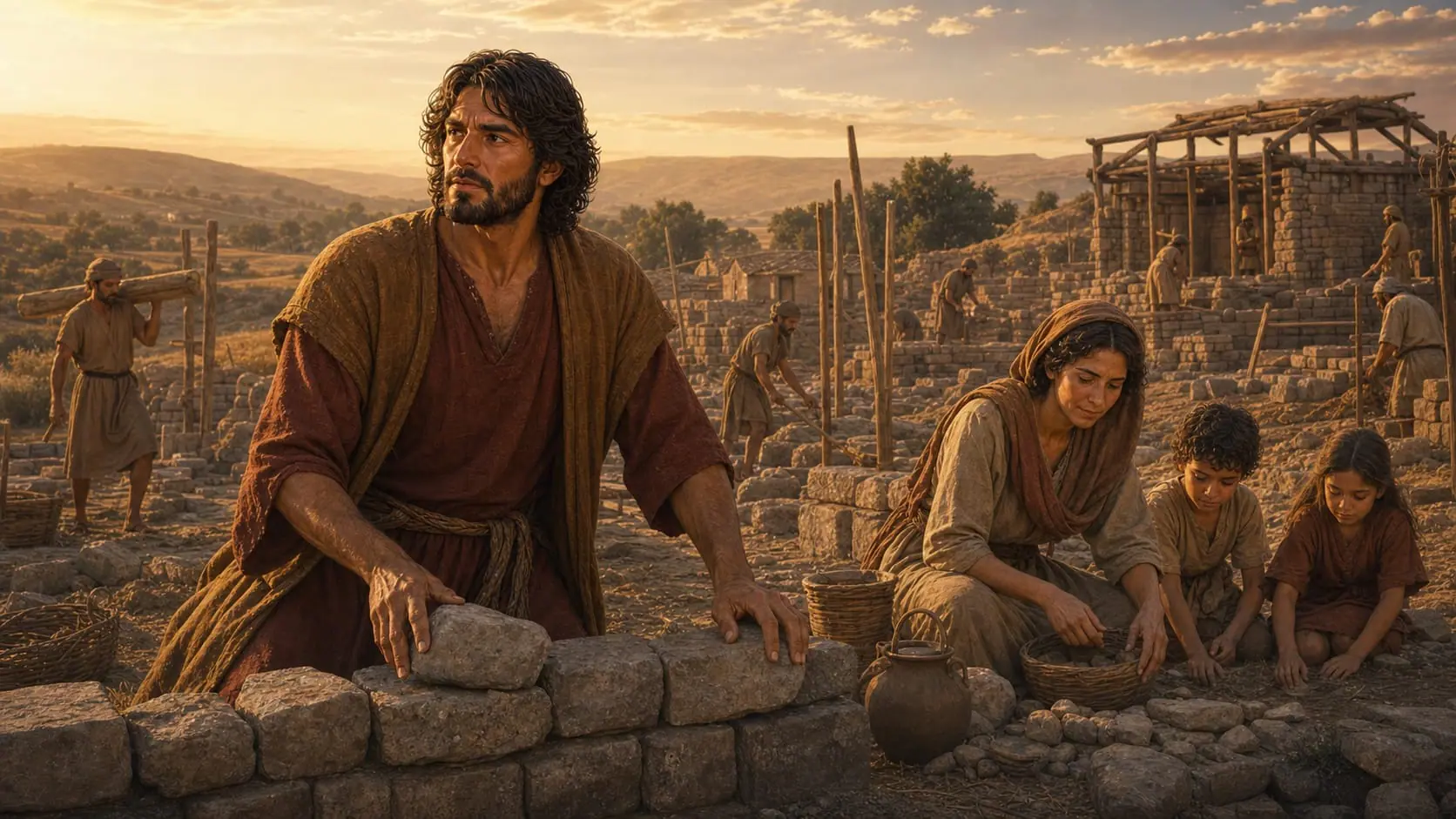
After Adam and Eve left Eden, Eve gave birth to Cain and then to his brother Abel. The two brothers took different kinds of work: Abel became a keeper of sheep, and Cain became a worker of the ground.
These occupations prepare the setting for the gifts each brother later brought to God. Genesis does not present either farming or shepherding as wrong in itself. Genesis 4:1–2
Cain and Abel bring offerings
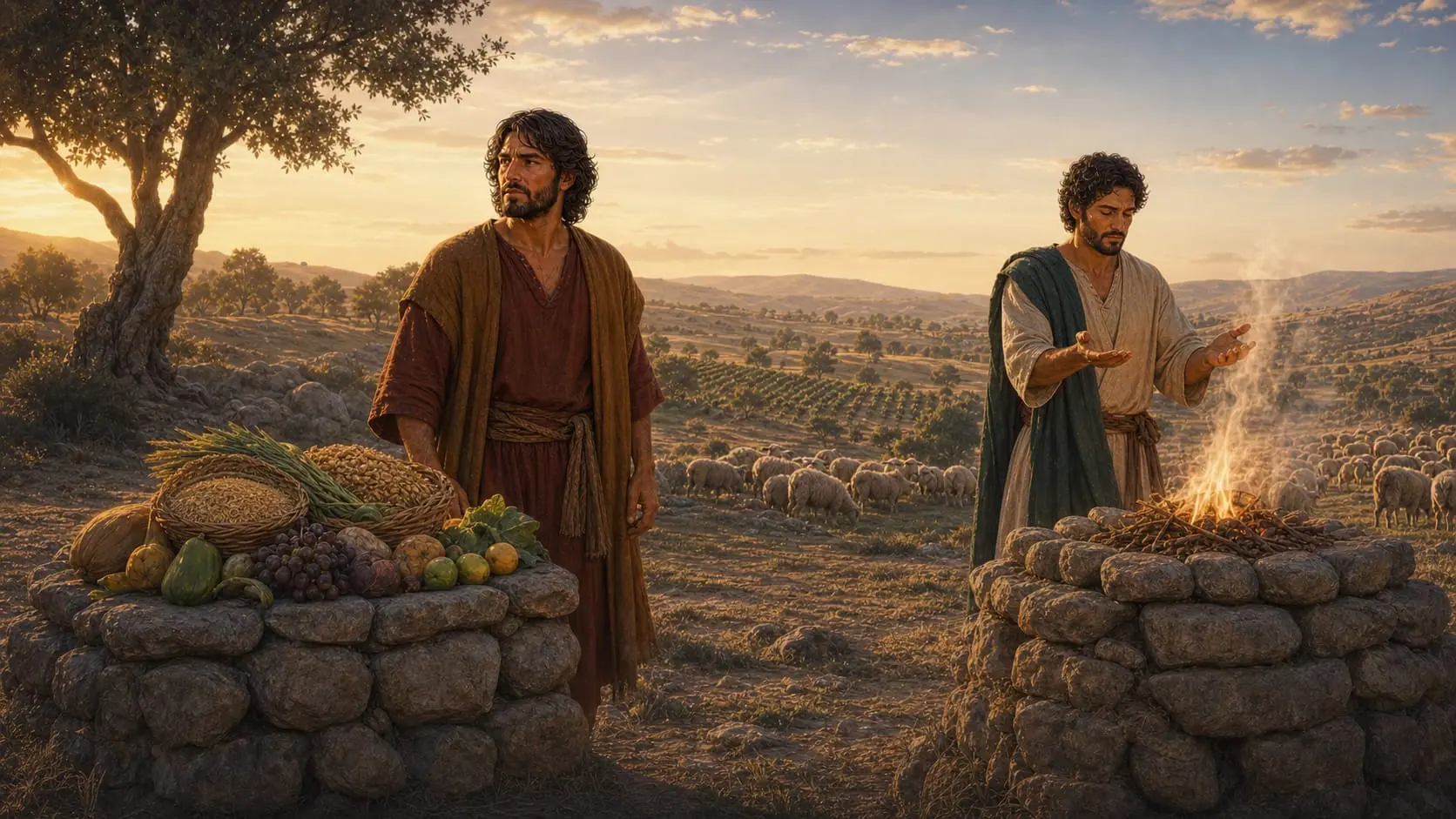
In the course of time, Cain brought some of the fruit of the ground as an offering. Abel brought from the firstborn of his flock and their fat portions. God regarded Abel and his offering, but did not regard Cain and his offering. Cain became very angry, and his face fell.
The passage speaks about both the men and what they brought. It does not reduce the difference to the simple idea that crops were forbidden. Genesis 4:3–5
Abel also brought some of the firstborn of his flock and of its fat. Yahweh respected Abel and his offering, but he didn’t respect Cain and his offering. Cain was very angry, and the expression on his face fell.
A common question
Why Did God Reject Cain’s Offering?
Genesis does not give a single explicit reason. It emphasizes that Abel brought from the firstborn and their fat portions, while describing Cain’s gift more generally. Hebrews 11:4 later says that Abel offered a better sacrifice “by faith,” and 1 John 3:12 contrasts Cain’s evil works with Abel’s righteous works.
Produce was not inherently an unacceptable offering. Leviticus 2:1–3, 14–16 later gives instructions for grain and firstfruits offerings. Genesis does not say that Cain’s produce was rotten or that he had been told to bring an animal instead. The later passages emphasize faith and conduct; they do not supply a missing instruction to Cain. Genesis 4:3–7; Hebrews 11:4; 1 John 3:12
God warns Cain about anger and sin
God asked Cain why he was angry and why his face had fallen. He told Cain that if he did well, he would be accepted, but if he did not do well, sin was crouching at the door. Its desire was for Cain, but Cain must rule over it.
The warning comes before Abel’s death. Cain is not portrayed as trapped by his emotion; he is addressed as someone responsible for what he does next. Genesis 4:6–7
Yahweh said to Cain, ‘Why are you angry? Why has the expression of your face fallen? If you do well, won’t it be lifted up? If you don’t do well, sin crouches at the door. Its desire is for you, but you are to rule over it.’
Motive and responsibility
Why Did Cain Kill Abel?
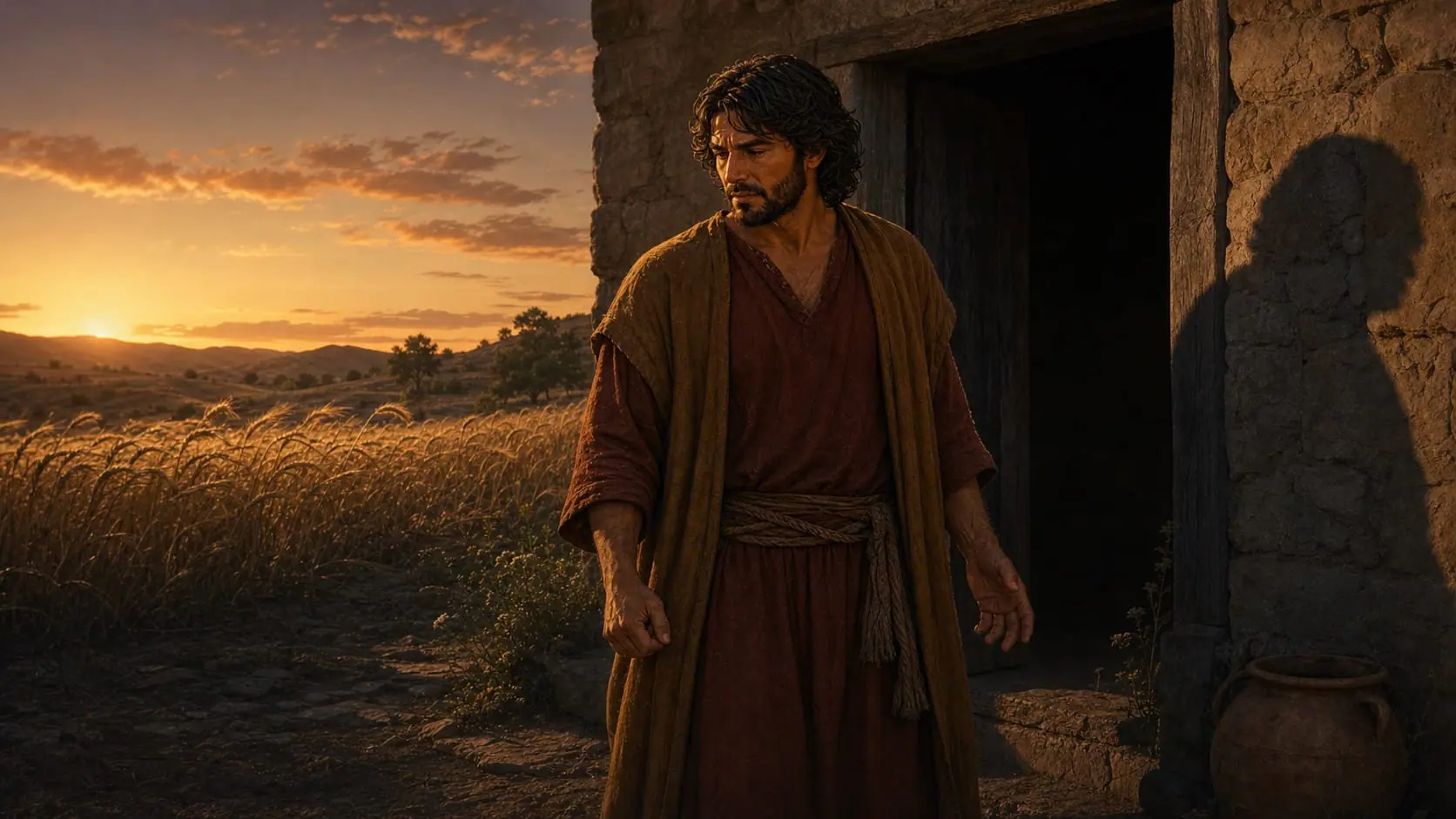
Genesis connects the murder with Cain’s anger after God’s response to the two offerings. Cain ignored the warning to master sin and turned against his brother. The text gives no excuse that removes his responsibility.
First John later interprets the contrast morally: Cain’s works were evil, while Abel’s were righteous. Together, these passages place jealousy, anger, conduct, and deliberate choice at the center of the story. Genesis 4:5–8; 1 John 3:11–12
What the text does not say
How Did Cain Kill Abel?
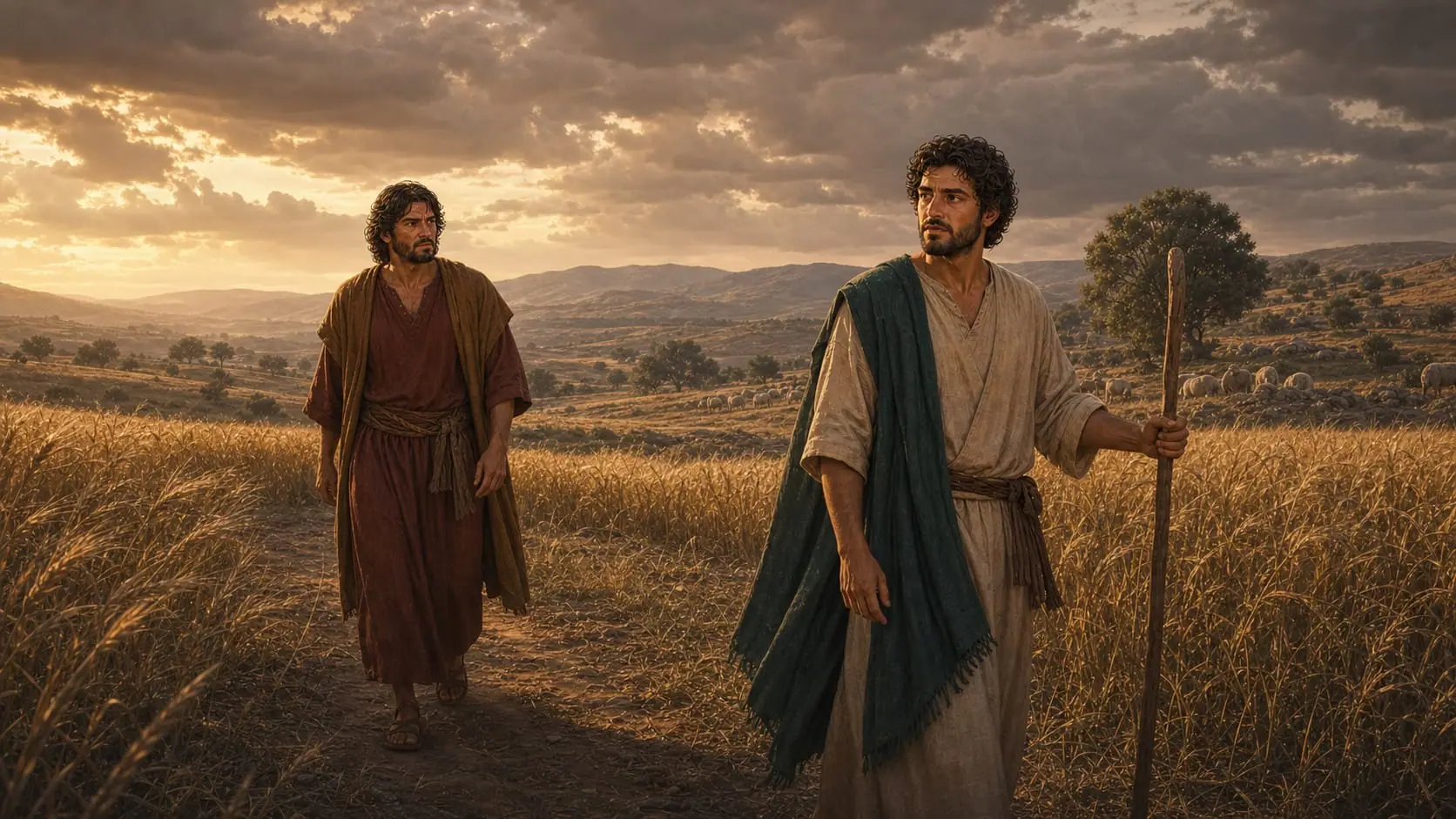
Genesis says that Cain rose up against Abel in the field and killed him. It does not name a weapon, describe the attack, or explain how Abel died. Images of a rock, club, or other weapon come from later art and imagination rather than the passage itself.
The narrative focuses instead on Cain’s choice and responsibility for his brother’s blood. Genesis 4:8–10
“Am I my brother’s keeper?”
God asked Cain, “Where is Abel, your brother?” Cain answered that he did not know and asked whether he was his brother’s keeper. God then said that the voice of Abel’s blood was crying out from the ground.
Cain’s reply attempts to evade responsibility, but the story answers it through God’s confrontation: his brother’s life mattered, and the violence could not be hidden. Genesis 4:9–10
Yahweh said to Cain, ‘Where is Abel, your brother?’ He said, ‘I don’t know. Am I my brother’s keeper?’ Yahweh said, ‘What have you done? The voice of your brother’s blood cries to me from the ground. Now you are cursed because of the ground, which has opened its mouth to receive your brother’s blood from your hand. From now on, when you till the ground, it won’t yield its strength to you. You will be a fugitive and a wanderer on the earth.’
Cain’s punishment
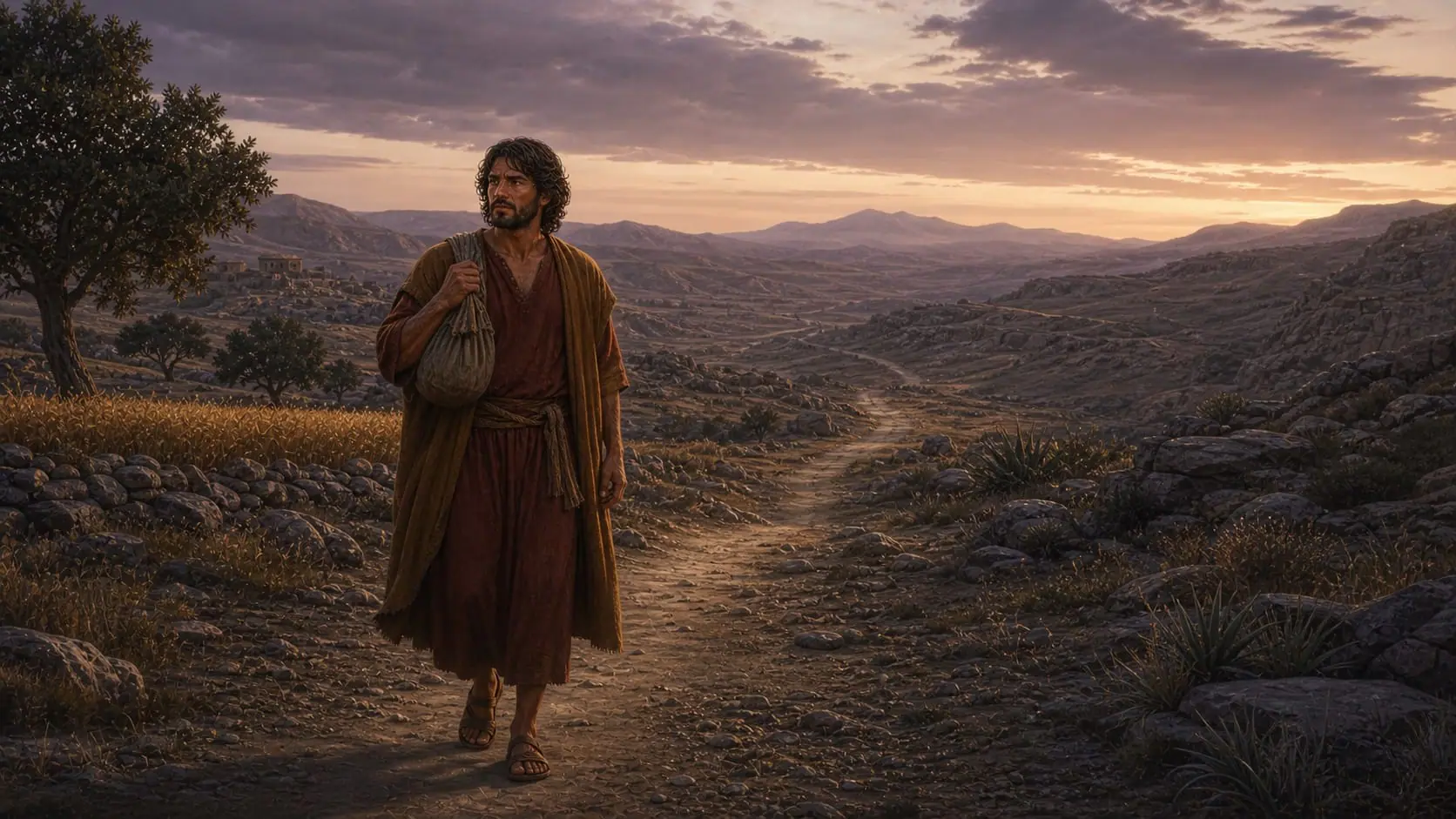
God cursed Cain from the ground that had received Abel’s blood. When Cain worked it, it would no longer yield its strength to him. Cain would become a fugitive and wanderer on the earth.
Cain feared that anyone who found him would kill him. God declared vengeance against anyone who killed Cain and placed a sign on him so that he would not be struck down. Judgment and restraint both appear in the same scene. Genesis 4:11–15
Protection after judgment
What Was the Mark of Cain?
The Bible never describes the sign’s form. Its stated purpose was to keep anyone who found Cain from killing him. The sign therefore functioned as protection, even while Cain lived with the consequences of his violence.
Scripture gives no basis for identifying it as a tattoo, disease, physical feature, or skin color. Such claims should not be treated as part of the Cain and Abel story. Genesis 4:13–15
Yahweh said to him, ‘Therefore whoever slays Cain, vengeance will be taken on him sevenfold.’ Yahweh appointed a sign for Cain, so that anyone finding him would not strike him. Cain left Yahweh’s presence, and lived in the land of Nod, east of Eden.
Cain’s wife, the land of Nod, and a city
Cain went away from God’s presence and lived in the land of Nod, east of Eden. Genesis does not provide its exact geography. It also does not name Cain’s wife or state her precise relationship to him. Genesis 5:4 later says that Adam had other sons and daughters.
Cain’s wife bore Enoch, and Cain built a city that he named after his son. Genesis then follows Cain’s descendants, including people associated with herding, music, and metalworking. Genesis 4:16–24; 5:4
The family account also records growing violence. Cain’s descendant Lamech told his wives Adah and Zillah that he had killed a man for wounding him, then claimed vengeance seventy-seven times over. This boast echoes and escalates the sevenfold protection God had given Cain; it is Lamech’s speech, not a new command from God. Genesis 4:19, 23–24
Genesis then returns to Adam and Eve. Eve named another son Seth, saying God had given her a child in place of Abel. Seth later became the father of Enosh, and people began to call on God’s name. Read about Seth and his family line for what follows this loss. Genesis 4:25–26