%20scale(.87)'%3e%3cg%20transform='rotate(-3%2032%2034)'%3e%3cpath%20d='M10.5%2019.5c7.65-2.35%2014.8-.45%2021.5%205.7%206.7-6.15%2013.85-8.05%2021.5-5.7v27.2c-7.65-2.15-14.8-.45-21.5%205.1-6.7-5.55-13.85-7.25-21.5-5.1V19.5Z'%20fill='%23fff'%20stroke='%23171528'%20stroke-width='4.5'%20stroke-linejoin='round'/%3e%3cpath%20d='M32%2025.2v26.6'%20stroke='%23171528'%20stroke-width='4'%20stroke-linecap='round'/%3e%3cpath%20d='M17.5%2034.5h9M22%2030v9'%20stroke='%23171528'%20stroke-width='3.75'%20stroke-linecap='round'/%3e%3ccircle%20cx='41.5'%20cy='32.5'%20r='2.5'%20fill='%23171528'/%3e%3ccircle%20cx='46.5'%20cy='38'%20r='2.5'%20fill='%23171528'/%3e%3c/g%3e%3c/g%3e%3c/svg%3e)
The quick answer
Who was Abel in the Bible?
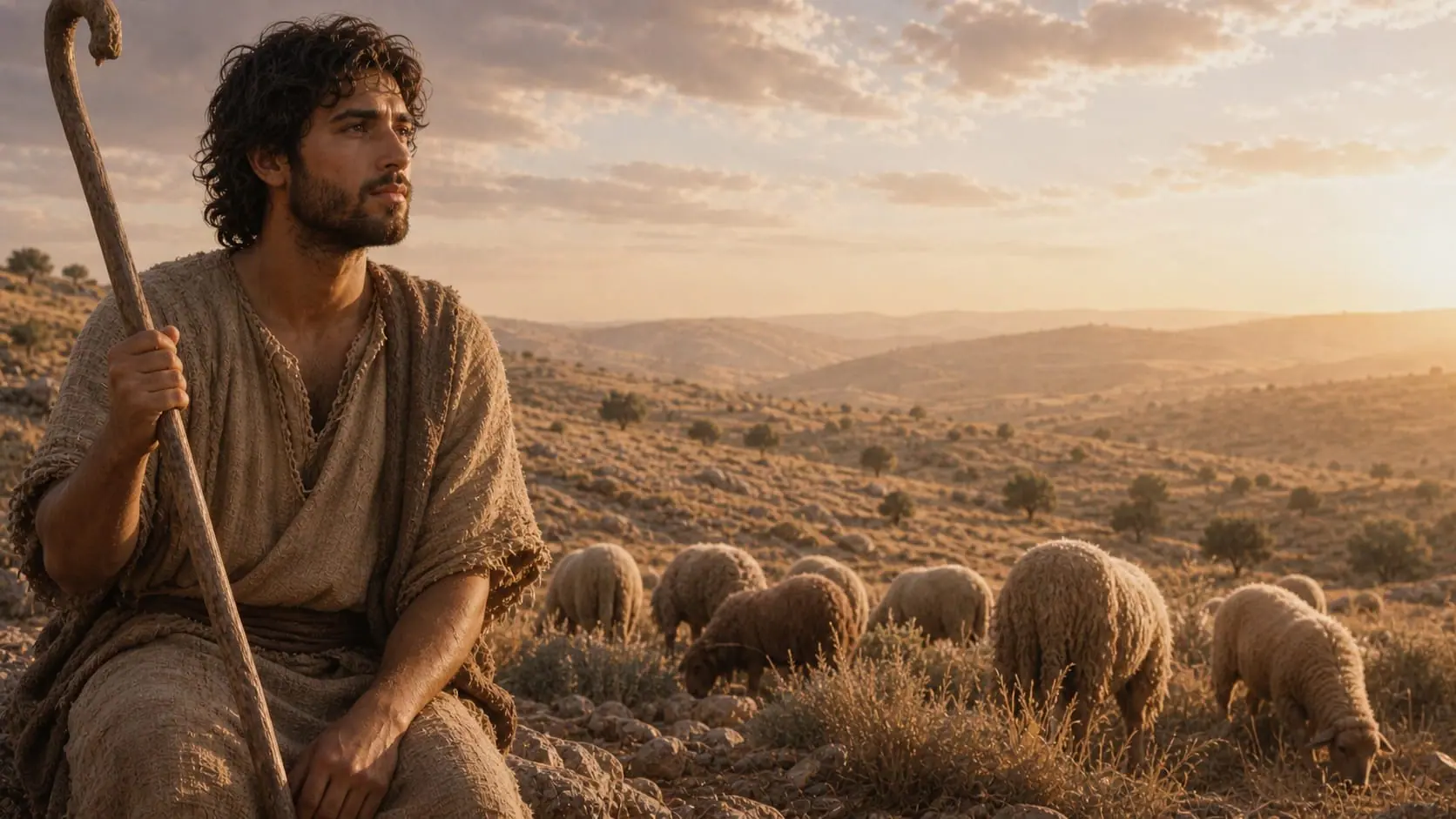
Abel was Adam and Eve’s second named son, Cain’s younger brother, and a keeper of sheep. Genesis records that he brought from the firstborn of his flock, that God regarded him and his offering, and that Cain killed him in the field. Scripture does not record Abel’s age, wife, children, or burial. Matthew, Hebrews, and 1 John remember him as righteous, faithful, and still speaking through his witness.
Why he matters
Why is Abel important in the Bible?
The first shepherd named in Scripture
Abel’s ordinary work gives him a clear identity even though Genesis tells very little about his daily life.
An early example of faith
Hebrews places Abel at the beginning of its witnesses of faith and says God commended him as righteous.
A witness whose life still speaks
Jesus and the New Testament letters return to Abel when discussing innocent blood, righteous works, and enduring testimony.
Name and meaning
What does the name Abel mean?
Abel comes from the Hebrew Hevel, a common word for “breath,” “vapor,” or something fleeting. The same word is prominent in Ecclesiastes. Genesis does not explain why he received this name or connect its meaning with his death.
A life in four stages
Abel’s brief life and enduring witness
Genesis follows Abel from his birth to his work, offering, and death. Hebrews later returns to his offering as an example of faith.
Genesis 4:1–2
Born into Adam and Eve’s first family
Genesis 4:2
Works as a keeper of sheep
Genesis 4:3–5; Hebrews 11:4
Offers to God by faith
Genesis 4:8–10; Hebrews 11:4
Dies in the field, yet still speaks
The direct answer
How old was Abel when he died?
The Bible does not say. Genesis records neither Abel’s age nor the length of his life. It also gives no wife, children, burial place, or later family line. Images and traditions may fill those gaps, but they should not be presented as details from Scripture.
Abel’s work and faith
Abel’s character: shepherd, faithful, righteous, witness
Genesis records no words spoken by Abel. We learn about him through his offering and through the New Testament’s descriptions of his faith and righteous deeds.
Keeps and cares for sheep
Abel’s occupation is the first action Genesis records about him: he becomes a keeper of sheep.
His flock supplies the firstborn animals he brings as an offering in Genesis 4:4.Brings an offering by faith
Hebrews interprets Abel’s offering as an act of faith through which he received commendation.
Genesis describes what Abel brought; Hebrews draws attention to his faith.Remembered for righteous works
Jesus calls him righteous, Hebrews says he was commended as righteous, and 1 John calls his works righteous.
First John places the contrast between the brothers within a call to love one another.Speaks without recorded words
Genesis records no spoken sentence from Abel, yet his blood cries from the ground and Hebrews says he still speaks through faith.
The text gives Abel a continuing witness; it does not preserve a speech from him.Family and relationships
Abel’s parents, brothers, and unrecorded family
Genesis names Abel’s parents and brothers, but does not say whether he married or had children.
Cain
A worker of the ground whose choices bring Abel’s life to an end.
Seth
Born after Abel’s death and named in relation to that loss.
Marriage
Genesis does not say whether Abel married.
Children or descendants
The Bible gives Abel no named child or family line.
Follow the events
Read the stories surrounding Abel
Cain and Abel Story
Follow the offerings, God’s warning, the field, confrontation, judgment, and protective sign in their full narrative order.
Read the full story →Genesis 2–3Adam and Eve Story
Return to Abel’s parents and the events in Eden that form the background to the first family outside the garden.
Read the family’s earlier story →Read the claim carefully
What Scripture says—and does not say—about Abel
Abel was Cain’s brother, kept sheep, and brought from the firstborn of his flock.
Genesis also says God regarded Abel and his offering, while he did not regard Cain and his offering.
Genesis 4:2–4Later Scripture explicitly calls Abel faithful and righteous.
Hebrews connects his offering with faith; Jesus calls him righteous, and 1 John describes his deeds as righteous.
Matthew 23:35; Hebrews 11:4; 1 John 3:12Abel’s age, wife, children, burial place, and spoken words are not recorded.
Genesis tells us that Cain killed him in the field, but gives no account of his marriage, children, or burial.
Genesis 4:1–10Later works give Abel a wife, a tomb, or the title of the first martyr.
Such claims may reflect reception history or theology, but Genesis does not name a wife or burial site and does not use the word martyr.
Compare Genesis 4:1–10What happened between the brothers’ offerings and Abel’s death? The Cain and Abel story follows God’s warning to Cain, the murder, and God’s response.