BibleGamesHub
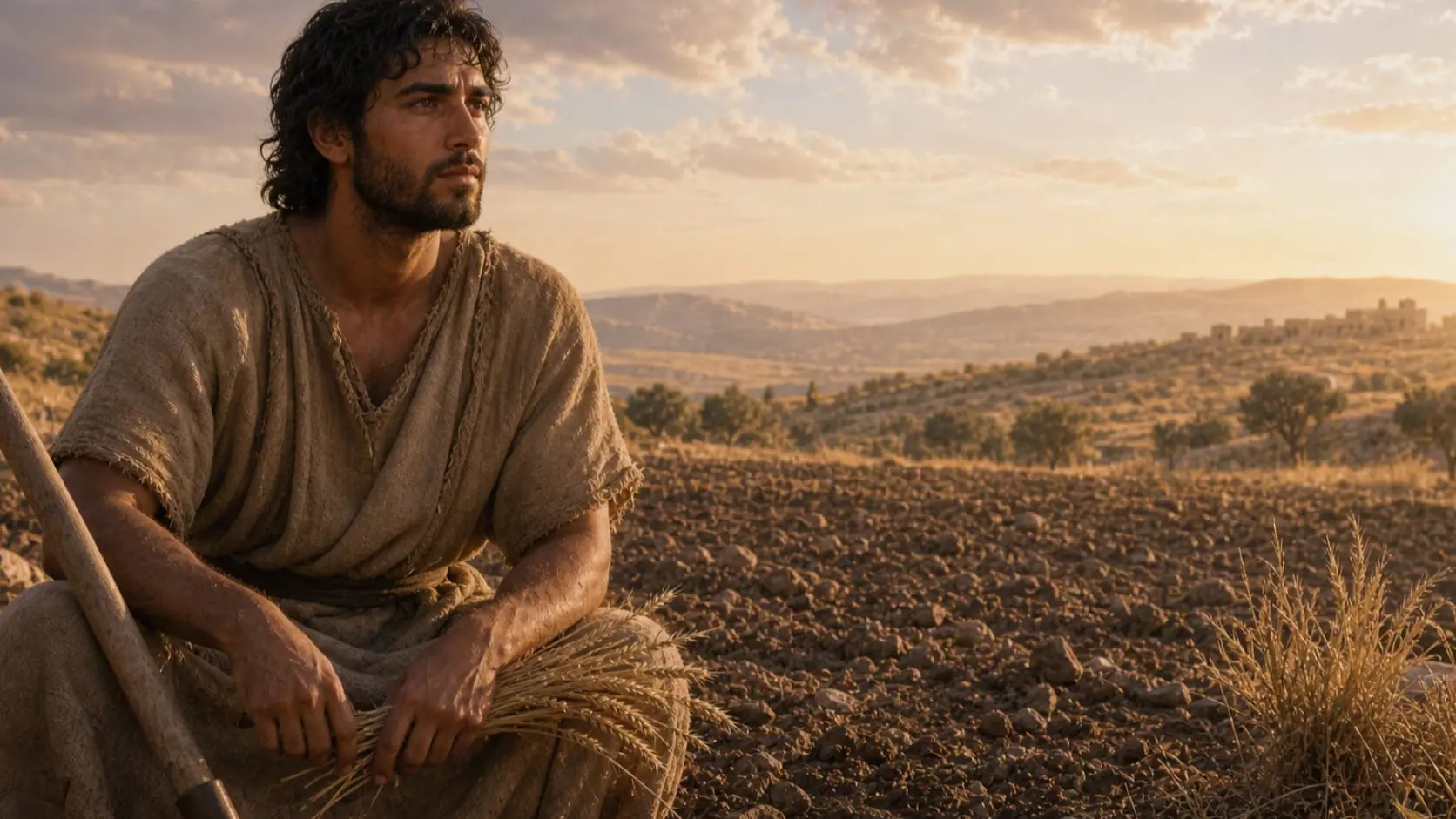
Illustrated portrait of Cain resting beside worked ground in an early landscape

Bible Character Profile · Genesis 4

Cain in the Bible

Meet Adam and Eve’s first named son—a farmer, brother, exile, husband, father, and city builder whose choices echo into the New Testament.
Old TestamentPrimeval HistoryFirstborn Son
Main passageGenesis 4
OccupationWorker of the ground
Named sonEnoch
Recorded lifespanNot stated

The quick answer

Who was Cain in the Bible?

Cain was the first son named for Adam and Eve and the older brother of Abel. He worked the ground, killed Abel after ignoring God’s warning, received judgment and a protective sign, and lived in the land of Nod. Genesis later presents him as a husband, father of Enoch, city builder, and ancestor of a developing family line. Hebrews, 1 John, and Jude remember Cain primarily as a warning.

Why he matters

Why is Cain important in the Bible?

01

The first child whose birth is recorded

Cain opens the Bible’s account of the first generation born outside Eden and the first relationship between brothers.

02

A person warned before he acts

God’s warning places responsibility and choice at the center of Cain’s story before the tragedy occurs.

03

A lasting biblical warning

Later writers return to Cain when discussing faith, hatred, evil works, and destructive ways of life.

Name and wordplay

What does the name Cain mean?

Genesis 4:1 places Cain’s Hebrew name, Qayin, beside Eve’s declaration that she had “gotten” or “acquired” a man with the Lord’s help. The wordplay is commonly connected with the Hebrew verb qanah, “to acquire” or “obtain.” Genesis supplies a narrative connection, while proposed links to a spear or metalworking belong to broader linguistic discussion rather than the verse’s direct explanation.

קַיִןQayinCain
קָנִיתִיqanitiI have acquired

A life in four stages

Cain’s life from firstborn son to life east of Eden

Genesis 4 gives a concentrated account rather than a complete biography. These four stages keep the event narrative brief and focus on what the text reveals about Cain’s identity, later life, and family.

01

Genesis 4:1–2

Born into the first family outside Eden

Cain is the first child whose birth Genesis records. Eve speaks of receiving him with the Lord’s help. Cain grows into a worker of the ground, while his younger brother Abel becomes a keeper of sheep.
02

Genesis 4:3–12

Warned before a devastating choice

Genesis records Cain’s anger after God’s response to the brothers and God’s warning that sin was crouching at the door. Cain then kills Abel and evades responsibility when questioned. The event sequence belongs to the complete Cain and Abel story.
Read the complete offerings, warning, and murder story
03

Genesis 4:12–16

Judged, protected, and sent east

Cain is sentenced to a life of restless wandering and fears retaliation. God appoints a sign so that no one will kill him, and Cain leaves the Lord’s presence to live in the land of Nod, east of Eden.
04

Genesis 4:17–24

Husband, father, and city builder

Cain’s unnamed wife bears Enoch, and Cain builds a city named for his son. Genesis follows the family through several generations, associating Cain’s descendants with herding, music, metalwork, and an expanding pattern of violence.
?not recorded

The direct answer

How old was Cain when he died—and how did he die?

The Bible does not say. Genesis records Cain’s family line but gives no age for him and never describes his death. The idea that Lamech accidentally killed Cain is a later interpretation of Genesis 4:23–24, not a fact stated by the biblical text.

Behavior before labels

Cain’s character: work, anger, evasion, and building

Cain is often remembered only as the first murderer. Genesis does make that act central, but it also identifies his work, records the warning he received, preserves his own words, and follows his life east of Eden.

WorkerGenesis 4:2–3

Cultivates the ground

Cain’s first identifying action is ordinary work: he cultivates the soil and later brings some of its produce as an offering.

Genesis does not portray farming itself as Cain’s moral failure; Adam had already been charged to work the ground.
AngryGenesis 4:5–8

Receives a warning but does not master sin

Cain becomes very angry, his face falls, and God directly calls him to choose what is right before he acts against Abel.

The text records anger and responsibility; it does not give a complete psychological diagnosis of Cain.
EvasiveGenesis 4:9–10

Answers accountability with denial

When asked about Abel, Cain says he does not know and challenges the idea that he is his brother’s keeper.

Cain’s famous question is part of an attempted evasion, not a biblical answer that people owe one another nothing.
BuilderGenesis 4:16–22

Begins a settled family line

East of Eden, Cain has a son and builds a city, while Genesis traces cultural developments through his descendants.

The passage records real developments without saying that every descendant shared Cain’s guilt.

Family and relationships

Cain’s wife, son, and descendants

Genesis names Cain’s parents, brother, son, and several generations of descendants. It mentions his wife without naming her and never states her exact relationship to Cain.

Cainson ofAdam & Eve
Brother

Abel

Cain’s younger brother, a keeper of sheep, and the victim of Cain’s violence.

Wife

Unnamed wife

Mentioned in Genesis 4:17 but never named or precisely identified.

Son

Enoch

Cain names a city after his son Enoch.

Family line

Later descendants

Includes Irad, Mehujael, Methushael, Lamech, and Lamech’s children.

Follow the events

Read the stories surrounding Cain

Read the claim carefully

What Scripture says—and does not say—about Cain

Text

Cain worked the ground, lived in Nod, had a son, and built a city.

These details are stated directly in Genesis and form the core of Cain’s profile after the story’s central tragedy.

Genesis 4:2, 16–17
Text

The sign appointed for Cain was meant to protect him from being killed.

Genesis explains the sign’s purpose but not its shape, placement, color, or duration.

Genesis 4:15
Not stated

Cain’s wife’s name, the mark’s appearance, and Cain’s death are not recorded.

These are genuine gaps in the biblical account and should receive direct “the Bible does not say” answers.

Genesis 4:15–24
Tradition

Later traditions name Cain’s wife or identify Lamech as Cain’s killer.

Such stories may be discussed as reception history, but Genesis itself does not make either claim.

Compare Genesis 4:17, 23–24

The offerings, warning, murder, confrontation, and punishment sequence are treated in context on the complete Cain and Abel story. This profile concentrates on Cain as a person before and after those events.

Beyond Genesis

How later Scripture remembers Cain

The New Testament does not add a missing biography or explain Cain’s death. Instead, it interprets the moral and spiritual contrast between Cain and Abel for later communities.

Faith

Abel’s offering by faith

Hebrews praises Abel’s faith, creating a contrast with Cain without supplying every reason God evaluated the offerings differently.

Hebrews 11:4
Works

Cain’s works called evil

First John places Cain inside an appeal to love one another and warns that hatred belongs to the pattern of murder.

1 John 3:11–15
Way

“The way of Cain”

Jude uses Cain as one of several warnings about people whose corrupt path harms a believing community.

Jude 11
Responsibility

A brother cannot be reduced to an obstacle

Cain’s refusal of responsibility becomes part of Scripture’s enduring testimony about violence, hatred, and care for others.

Genesis 4:9; 1 John 3:12
In GenesisCainwarning and choice
In later lettersA warningworks, hatred, and way

Later Scripture remembers Cain through the choices Genesis records. It does not turn speculation about his wife, mark, or death into new biblical facts.

Reflection grounded in the text

What can we learn from Cain?

01

A warning creates a moment of real responsibility

Cain is addressed before he acts. Anger is not treated as destiny; he is called to do what is right and master sin. Genesis 4:6–7

02

Evasion cannot erase responsibility for another person

“Am I my brother’s keeper?” does not close the question. Abel’s blood and Cain’s actions remain known to God. Genesis 4:9–10

03

Careful readers distinguish Scripture from speculation

Cain’s wife, the sign’s appearance, and Cain’s death invite curiosity, but intellectual honesty requires saying where the text stops. Genesis 4:15–24

Read the passages

Key Bible passages about Cain

Character check · Five questions

How well do you know Cain beyond the field?

These questions follow Cain’s work, family, protective sign, unknown death, and later biblical legacy. Every answer includes a passage to check.
1

What work did Cain do?

2

What was the name of Cain’s son?

3

Why did God appoint a sign for Cain?

4

How old was Cain when he died?

5

Which New Testament letter warns against going “in the way of Cain”?

0 of 5 answered

Keep going—each answer opens its reference.Try the full Bible Characters Quiz

Questions readers ask

Cain in the Bible FAQ

Who was Cain in the Bible?

Cain was the first son named for Adam and Eve and the older brother of Abel. He worked the ground, killed Abel after ignoring God’s warning, received judgment and a protective sign, lived in the land of Nod, fathered Enoch, and began a family line recorded in Genesis 4.

What does the name Cain mean in the Bible?

Genesis 4:1 places Cain’s name beside Eve’s statement that she had “gotten” or “acquired” a man with the Lord’s help. The name is commonly connected with the Hebrew verb qanah, meaning to acquire or obtain, although Genesis gives wordplay rather than a modern dictionary definition.

What was Cain’s occupation?

Cain was a worker of the ground. His occupation is introduced in Genesis 4:2 and remains significant because his later judgment affected the ground’s ability to yield its strength to him.

Who was Cain’s wife, and did he marry his sister?

The Bible never names Cain’s wife or states her exact relationship to him. Genesis 4:17 simply says Cain had a wife, while Genesis 5:4 says Adam had other sons and daughters. A sister or another close relative is therefore a common inference, but Scripture does not identify her precisely.

What was the mark of Cain?

Genesis does not describe the mark’s appearance. It says God appointed a sign for Cain so that anyone finding him would not kill him. Its stated function was protection; claims that it was a particular letter, scar, skin color, or supernatural power go beyond the biblical text.

Why did God protect Cain?

Cain feared that someone would kill him. God declared sevenfold vengeance against anyone who killed Cain and appointed a sign for his protection. The protection limited further revenge without canceling Cain’s judgment.

Where did Cain live?

Cain lived in the land of Nod, east of Eden. The Hebrew name is associated with wandering, but Genesis does not provide enough geographical information to identify Nod on a modern map.

Who were Cain’s children and descendants?

Genesis names Cain’s son Enoch, followed by Irad, Mehujael, Methushael, and Lamech. Lamech’s children include Jabal, Jubal, Tubal-cain, and Naamah. The text connects this family line with herding, music, and metalworking as well as another escalation of violence.

How old was Cain when he died, and how did he die?

The Bible does not say how old Cain was when he died or how he died. A later interpretation that Lamech killed Cain is not stated in Genesis and should not be presented as biblical fact.

Where is Cain mentioned in the New Testament?

Cain is named in Hebrews 11:4, 1 John 3:12, and Jude 11. These passages contrast Abel’s faith with Cain, describe Cain’s works as evil, and use “the way of Cain” as a warning.

Continue exploring

Continue with Abel’s complete profile

Explore Abel’s name, work as a shepherd, unknown age and family, faith, righteousness, and New Testament legacy.

Explore Abel →