%20scale(.87)'%3e%3cg%20transform='rotate(-3%2032%2034)'%3e%3cpath%20d='M10.5%2019.5c7.65-2.35%2014.8-.45%2021.5%205.7%206.7-6.15%2013.85-8.05%2021.5-5.7v27.2c-7.65-2.15-14.8-.45-21.5%205.1-6.7-5.55-13.85-7.25-21.5-5.1V19.5Z'%20fill='%23fff'%20stroke='%23171528'%20stroke-width='4.5'%20stroke-linejoin='round'/%3e%3cpath%20d='M32%2025.2v26.6'%20stroke='%23171528'%20stroke-width='4'%20stroke-linecap='round'/%3e%3cpath%20d='M17.5%2034.5h9M22%2030v9'%20stroke='%23171528'%20stroke-width='3.75'%20stroke-linecap='round'/%3e%3ccircle%20cx='41.5'%20cy='32.5'%20r='2.5'%20fill='%23171528'/%3e%3ccircle%20cx='46.5'%20cy='38'%20r='2.5'%20fill='%23171528'/%3e%3c/g%3e%3c/g%3e%3c/svg%3e)
The quick answer
What happened in the Jacob and Esau story?
Jacob and Esau were Isaac and Rebekah’s twin sons. Esau, the older brother, became a hunter; Jacob lived among the tents. When Esau came home famished, he swore away his birthright to Jacob for bread and lentil stew. Later, Rebekah helped Jacob disguise himself as Esau and deceive Isaac, who could no longer see, so Jacob received the blessing Esau expected.
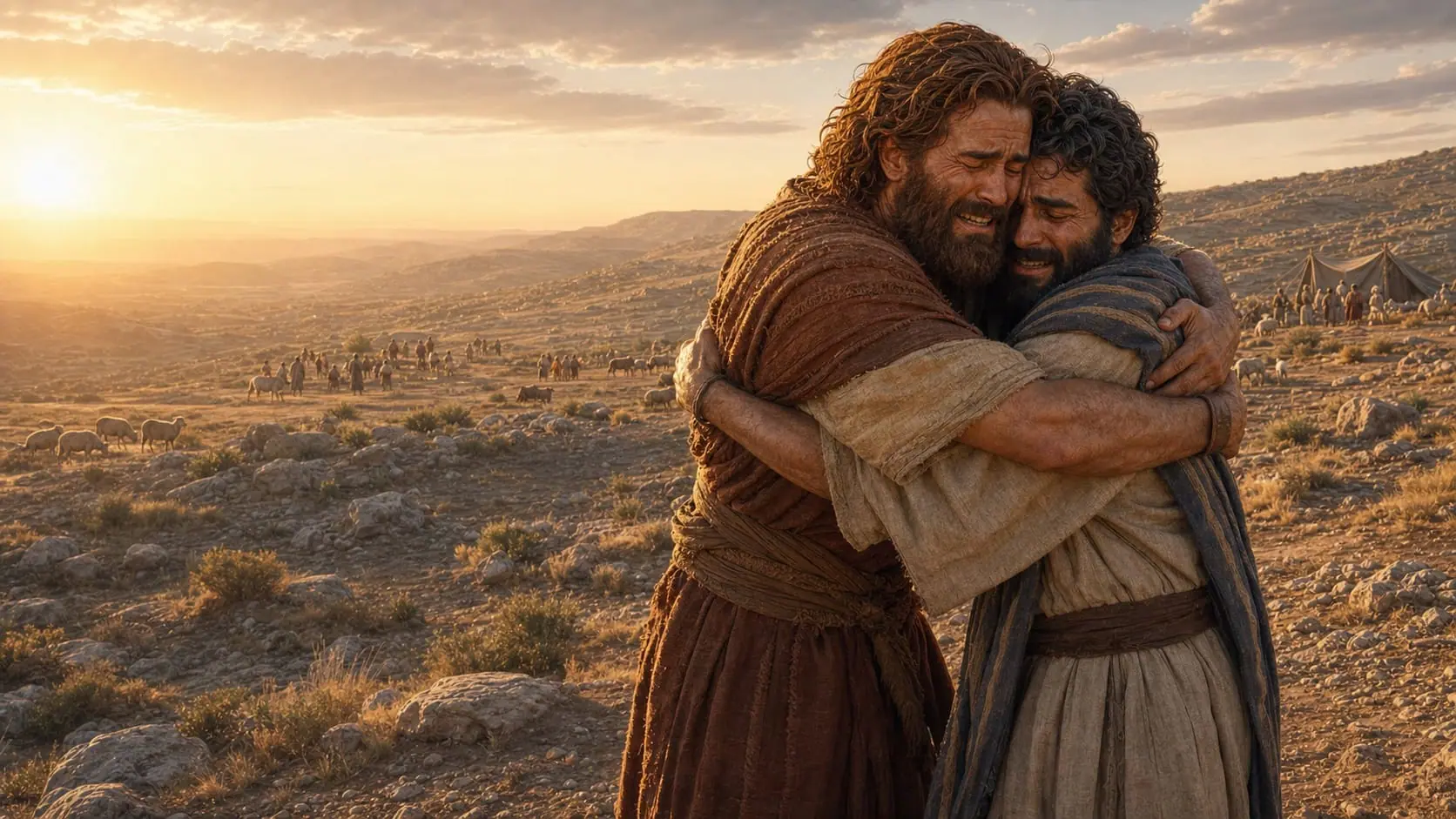
Esau planned to kill Jacob, and Jacob fled to Rebekah’s family in Haran. After many years, Jacob returned with a large household and feared Esau’s response. He prayed, sent gifts ahead, and bowed seven times. Instead of attacking, Esau ran to embrace and kiss him, and the brothers wept together.
The full story
From Rivalry to Reconciliation
The twins struggle before birth
Isaac prayed because Rebekah could not have children, and she conceived twins. The children struggled within her, so she asked Yahweh what it meant. The answer looked beyond two babies to two peoples: one would be stronger, and the elder would serve the younger.
Esau was born first, red and covered with hair. Jacob followed with his hand holding Esau’s heel. Isaac was sixty years old when the twins were born. Genesis 25:19–26
Yahweh said to her, ‘Two nations are in your womb. Two peoples will be separated from your body. The one people will be stronger than the other people. The elder will serve the younger.’
Two brothers with different lives
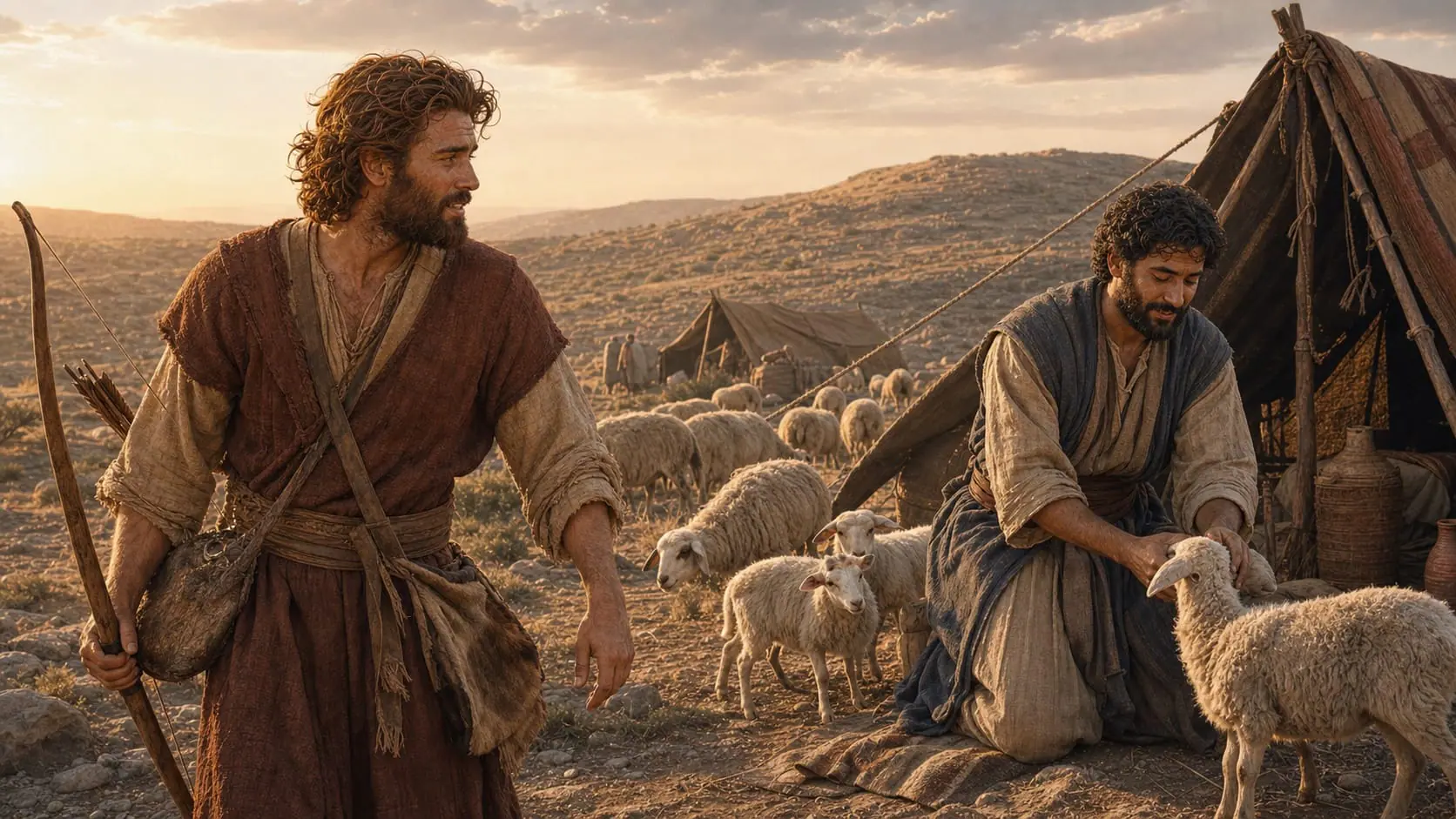
As the brothers grew, their lives took different directions. Esau became a skillful hunter and a man of the field. Jacob is described as a quiet man who lived in tents. Their parents’ affections were also divided: Isaac loved Esau and the game he brought, while Rebekah loved Jacob.
Genesis reports these preferences without praising them. The family division becomes part of the conflict that follows. Genesis 25:27–28
Esau sells his birthright for lentil stew
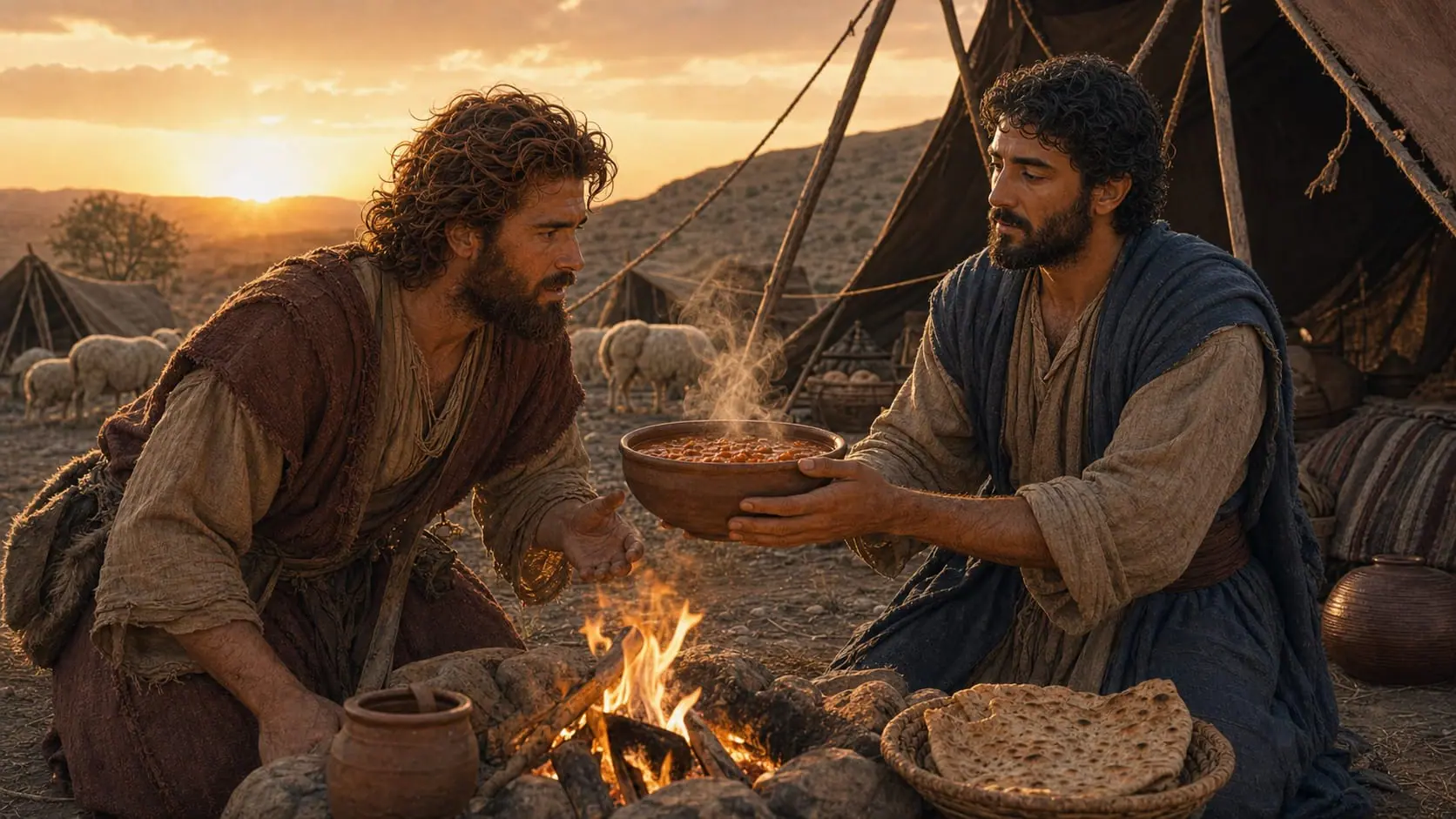
One day Jacob was cooking stew when Esau returned from the field exhausted and hungry. Esau asked for the red stew. Jacob named his price: “First, sell me your birthright.” Esau spoke as if he were near death and questioned what value the birthright had for him.
Jacob required an oath. Esau swore and sold the birthright; then Jacob gave him bread and lentil stew. Jacob had made the birthright the price of a meal; Esau accepted those terms. The narrator closes the scene by saying that Esau despised his birthright. Genesis 25:29–34
Jacob said, ‘Swear to me first.’ He swore to him. He sold his birthright to Jacob. Jacob gave Esau bread and lentil stew. He ate and drank, rose up, and went his way. So Esau despised his birthright.
Rebekah and Jacob deceive Isaac
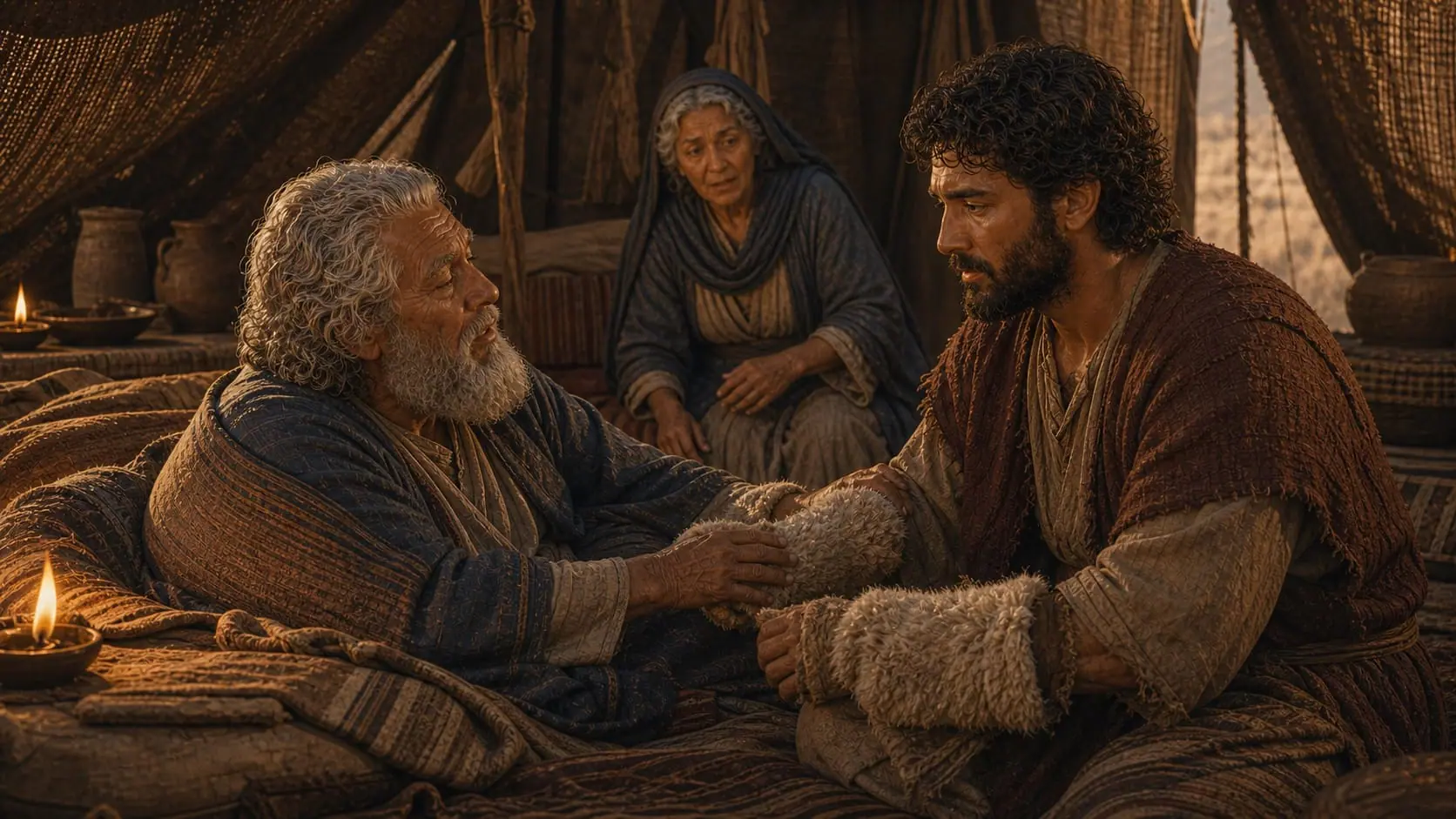
When Isaac was old and could no longer see, he asked Esau to hunt game, prepare his favorite food, and receive a blessing. Rebekah overheard. She prepared food from two young goats and told Jacob to take it to Isaac before Esau returned.
Rebekah dressed Jacob in Esau’s clothes and covered his smooth hands and neck with goat skins. Jacob repeatedly claimed to be Esau. Isaac recognized Jacob’s voice but was persuaded by the hairy hands, the clothing’s smell, and the food. He gave Jacob a blessing of abundance and leadership. Genesis 27:1–29
Jacob went near to Isaac his father. He felt him, and said, ‘The voice is Jacob’s voice, but the hands are the hands of Esau.’ He didn’t recognize him, because his hands were hairy, like his brother Esau’s hands. So he blessed him.
Esau discovers the stolen blessing
Esau arrived soon after Jacob left. When Isaac realized what had happened, he trembled violently. Esau cried bitterly and begged for a blessing of his own. Isaac confirmed that Jacob had come by deceit and that the blessing given to him would stand.
Esau received a separate pronouncement, but he hated Jacob and planned to kill him after Isaac’s death. Rebekah learned of the plan and told Jacob to flee to her brother Laban in Haran until Esau’s anger subsided. She expected him to stay only “a few days.” Genesis 27:30–45
Before Jacob left, Isaac knowingly blessed him again and sent him to Laban’s family to find a wife, rather than marry a Canaanite woman. This blessing was not obtained in disguise. Genesis 28:1–5
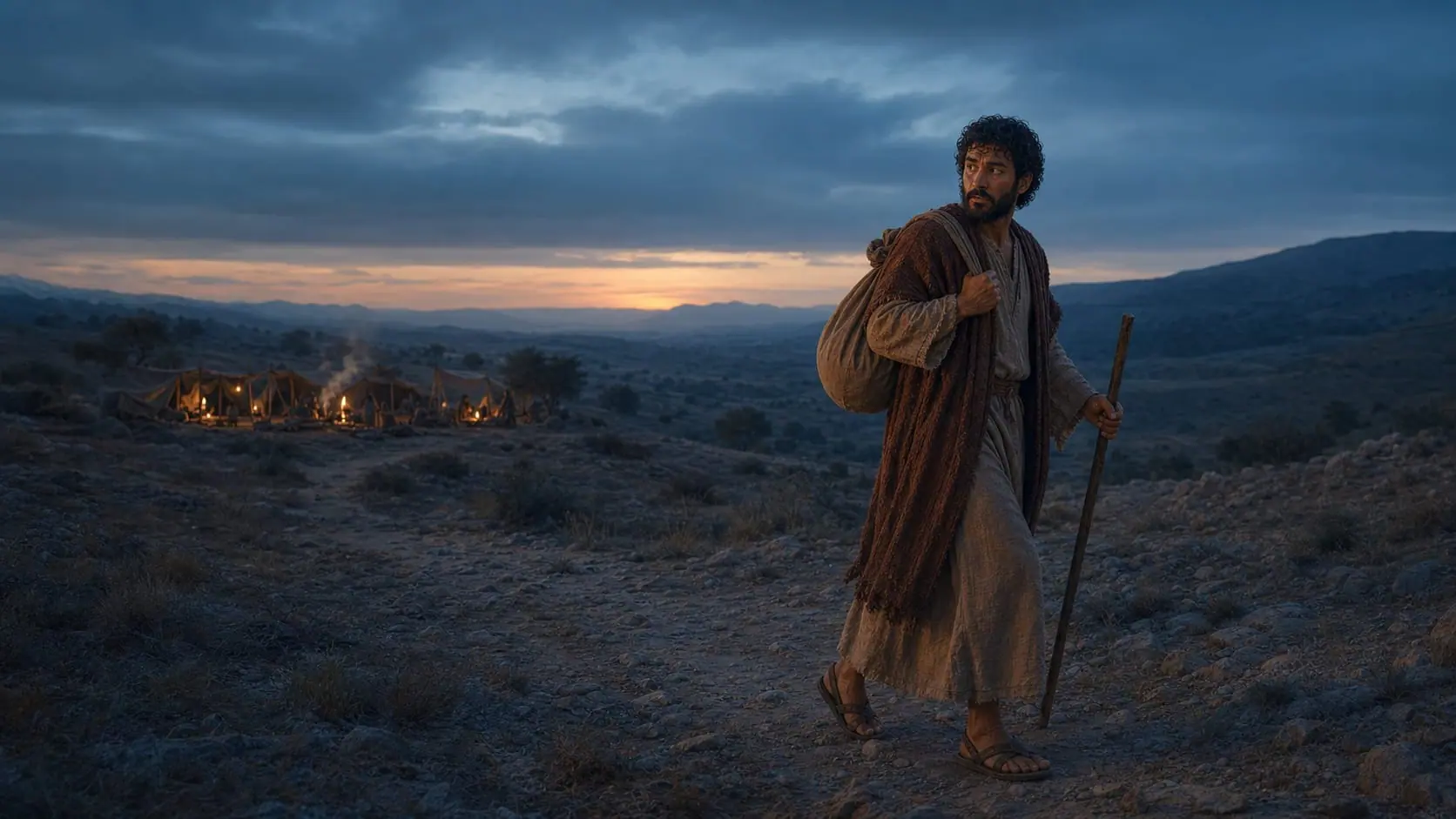
Twenty years with Laban
On the journey, God appeared to Jacob in a dream at Bethel and promised to bring him back to the land. In Laban’s household, Jacob worked seven years to marry Rachel, but Laban gave him Leah first. Rachel’s wedding followed Leah’s bridal week; the additional seven years of service came after that wedding. Genesis 28:10–22; 29:15–30
His family and flocks grew, but his relationship with Laban became strained. God told him to return to his relatives. Jacob later counted twenty years in Laban’s household: fourteen for the two marriages and six for the flocks. Genesis 30:25–43; 31:1–18, 41
Jacob returns afraid of Esau
Jacob built a family and household while living with Laban. When he finally returned toward Canaan, messengers reported that Esau was approaching with four hundred men. Jacob was greatly afraid. He divided his camp, prayed for deliverance, and sent large groups of animals ahead as gifts.
That night, Jacob wrestled with a man until daybreak and received the name Israel. He called the place Peniel, saying he had seen God face to face, and walked away limping. Read more about Jacob’s encounter and new name. Genesis 32:3–32
Please deliver me from the hand of my brother, from the hand of Esau; for I fear him, lest he come and strike me and the mothers with the children.
Jacob and Esau reconcile
Jacob moved ahead of his family and bowed to the ground seven times as he approached Esau. He had hoped that the gifts would lead Esau to accept him, but he did not yet know how his brother would respond.
Esau ran—not to attack, but to embrace Jacob. He fell on Jacob’s neck, kissed him, and both men wept. Esau at first refused the gifts because he already had enough, then accepted at Jacob’s urging. The brothers traveled separately afterward, and later came together again to bury Isaac. Genesis 33:1–17; 35:29
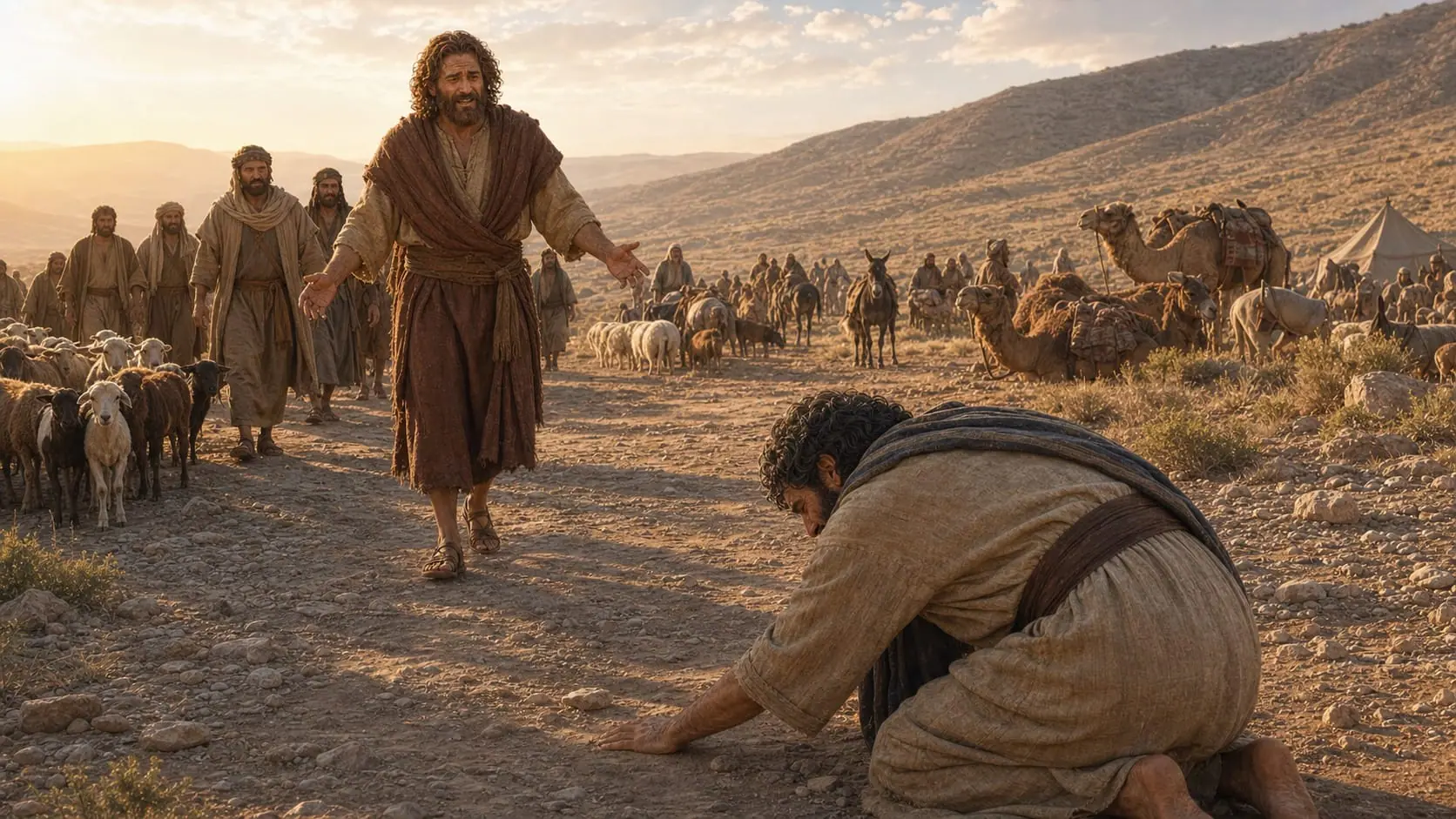
He himself passed over in front of them, and bowed himself to the ground seven times, until he came near to his brother. Esau ran to meet him, embraced him, fell on his neck, kissed him, and they wept.
A common mix-up
Did Jacob Steal Esau’s Birthright?
Genesis describes two distinct events. In Genesis 25, Esau knowingly swore an oath and sold his birthright to Jacob for bread and lentil stew. Jacob demanded the birthright before giving him food, and the narrator says Esau despised it.
In Genesis 27, Jacob and Rebekah used disguise and direct lies so Jacob could take the blessing Isaac intended for Esau. Esau later grouped both losses together in his complaint, but the sale and the deception happened on separate occasions. Genesis 25:29–34; 27:35–36
What Scripture says—and does not say
Why Did Rebekah Favor Jacob?
Genesis simply says, “Rebekah loved Jacob.” It also records that she had received Yahweh’s oracle before the twins were born: the elder would serve the younger. Readers often connect the two facts, but the chapter never explicitly says the oracle caused her preference.
Rebekah later planned the disguise that allowed Jacob to approach Isaac as Esau. Genesis records God’s promise about the younger son, but it does not record God telling Rebekah to deceive her husband.Genesis 25:23, 28; 27:5–17