BibleGamesHub

Bible Verses About Healing

Read 30 Bible passages about healing, with context for sickness, prayer, broken hearts and the hope of restoration.

Start with These Healing Verses

These five passages introduce different kinds of healing. Read their context notes, then explore the remaining passages below.

James 5:14–15

WEB

James invites sick believers to receive prayer and care from the church’s elders.

Read passage
Preview passage
Is any among you sick? Let him call for the elders of the assembly, and let them pray over him, anointing him with oil in the name of the Lord; and the prayer of faith will heal him who is sick, and the Lord will raise him up. If he has committed sins, he will be forgiven.

Context: James tells a sick believer to call the church’s elders for prayer and anointing with oil, and speaks confidently of the Lord raising the sick person up. The words “if he has committed sins” are conditional; they do not say every illness results from personal sin.

Isaiah 53:5

WEB

The servant’s suffering brings peace and healing within a passage about bearing sin.

Read passage
Preview passage
But he was pierced for our transgressions. He was crushed for our iniquities. The punishment that brought our peace was on him; and by his wounds we are healed.

Context: The servant suffers for others’ sins. First Peter 2:24 applies his wounds to Christ bearing sins so that believers may live righteously; Matthew 8:16–17 also connects Isaiah 53:4 with Jesus’ physical healings. Neither passage gives each reader a timetable for recovery.

Psalm 103:2–4

WEB

David’s song remembers forgiveness, healing and rescue alongside human frailty.

Read passage
Preview passage
Praise Yahweh, my soul, and don’t forget all his benefits, who forgives all your sins, who heals all your diseases, who redeems your life from destruction, who crowns you with loving kindness and tender mercies,

Context: This psalm, headed “By David,” praises God for forgiveness, healing and rescue. It also remembers that people are dust and their lives pass like grass (verses 14–16). Read its praise alongside that acknowledgment of mortality, not as a promise of an illness-free life.

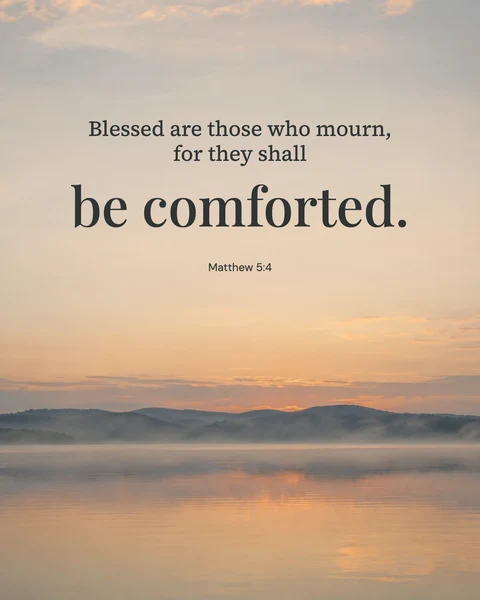
Bible verse wallpapers for healing and comfort

Keep a reminder of God’s nearness, comfort, and mercy. Choose a design to personalize, download, or share.

Browse all wallpapers

Healing in Scripture

What does the Bible say about healing?

The Bible speaks about physical recovery, wounded hearts, forgiveness, restored communities, peace, endurance, and the final renewal of creation. Not every passage uses “healing” in the same way, so context matters.

For example, Mark 5:25–34 tells of Jesus healing a woman with years of bleeding. Jeremiah 33:1–9 promises restoration for Jerusalem, Judah and Israel. Revelation 21:1–4 looks ahead to a new creation without death or pain. Reading the audience and setting keeps these different promises from being flattened into one claim.

01Pray02Seek wisdom03Receive care04Wait05Hope06Support

Strength while you wait

Bible Verses About Strength and Healing

These passages speak to weakness, waiting, endurance, and the sustaining presence of God without pretending every answer is immediate.

Isaiah 41:10

WEB

God promises Israel his strengthening presence amid fear and opposition.

Read passage
Preview passage
Don’t you be afraid, for I am with you. Don’t be dismayed, for I am your God. I will strengthen you. Yes, I will help you. Yes, I will uphold you with the right hand of my righteousness.

Context: God addresses Israel, identified as Jacob and Abraham’s offspring in verses 8–9. His promise of presence and help answers their fear of enemies; this verse does not specifically promise a cure for illness.

Isaiah 40:29–31

WEB

The tireless Creator gives strength to weary people who wait for him.

Read passage
Preview passage
He gives power to the weak. He increases the strength of him who has no might. Even the youths faint and get weary, and the young men utterly fall; but those who wait for Yahweh will renew their strength. They will mount up with wings like eagles. They will run, and not be weary. They will walk, and not faint.

Context: Jacob and Israel have complained that God overlooks their cause (verse 27). Isaiah answers by describing the tireless Creator who gives strength to the weary. Waiting for Yahweh, rather than youthful stamina, is the passage’s focus.

2 Corinthians 12:9

WEB

Paul receives sustaining grace rather than the removal of his unnamed thorn.

Read passage
Preview passage
He has said to me, “My grace is sufficient for you, for my power is made perfect in weakness.” Most gladly therefore I will rather glory in my weaknesses, that the power of Christ may rest on me.

Context: Paul has asked the Lord three times to remove a “thorn in the flesh.” The answer promises sufficient grace, not the removal he requested. The passage does not identify the thorn, so it should not be assigned a particular medical diagnosis.

Romans 8:26

WEB

The Spirit helps believers pray while they await the redemption of the body.

Read passage
Preview passage
In the same way, the Spirit also helps our weaknesses, for we don’t know how to pray as we ought. But the Spirit himself makes intercession for us with groanings which can’t be uttered.

Context: Paul has described creation and believers groaning while awaiting the redemption of the body. In that unfinished waiting, the Spirit intercedes for believers who do not know how to pray; verse 27 connects this intercession with God’s will.

Prayer, compassion, and community

Bible Verses About Healing the Sick

Read about Jesus healing the sick, a personal prayer for health, and Israel’s experience at Marah. These passages have different audiences and settings.

Exodus 15:26

WEB

At Marah, God addresses Israel with a conditional promise after the bitter water is made sweet.

Read passage
Preview passage
He said, “If you will diligently listen to Yahweh your God’s voice, and will do that which is right in his eyes, and will pay attention to his commandments, and keep all his statutes, I will put none of the diseases on you which I have put on the Egyptians; for I am Yahweh who heals you.”

Context: After the Red Sea crossing, Israel reaches Marah, where bitter water is made sweet. God’s conditional promise addresses this people and recalls the diseases brought on Egypt. It is not a general formula for preventing illness today.

Mark 5:34

WEB

Jesus sends a woman in peace after her twelve years of bleeding are healed.

Read passage
Preview passage
He said to her, “Daughter, your faith has made you well. Go in peace, and be cured of your disease.”

Context: A woman with twelve years of bleeding has touched Jesus’ clothes and been healed. She comes forward trembling and tells him what happened; he calls her “Daughter” and sends her away in peace. This is a particular encounter, not a test to impose on another sick person.

3 John 1:2

WEB

The elder’s greeting to Gaius includes a personal prayer for health and wellbeing.

Read passage
Preview passage
Beloved, I pray that you may prosper in all things and be healthy, even as your soul prospers.

Context: The writer introduces himself as “the elder” and addresses Gaius. Traditionally attributed to John, the letter opens with a prayer for Gaius’s wellbeing and health, followed by joy over his faithful life. This greeting is not a universal promise of health or wealth.

A sickbed, a cry for help, a song of thanks

Psalms About Illness and Recovery

Psalm 6 pleads for help, Psalm 41 describes illness and betrayal, and Psalm 30 gives thanks for deliverance. Read each whole prayer rather than expecting every experience to follow the same course.

Restoration for the inner life

Bible Verses for Emotional and Spiritual Healing

These passages address broken hearts, repentance and the restoration of God’s people. Healing a city, forgiving sin and comforting a grieving person are not interchangeable meanings.

Luke 4:18

WEB

In Nazareth, Jesus reads Isaiah’s announcement of good news, release and restoration.

Read passage
Preview passage
“The Spirit of the Lord is on me, because he has anointed me to preach good news to the poor. He has sent me to heal the broken hearted, to proclaim release to the captives, recovering of sight to the blind, to deliver those who are crushed,

Context: Jesus reads Isaiah in the synagogue at Nazareth and declares the Scripture fulfilled in their hearing. His reading continues in verse 19. The WEB wording here includes “heal the broken hearted”; some other translations omit that phrase because of differences in the manuscripts they follow.

Isaiah 57:18–19

WEB

Healing and peace accompany God’s call back from rebellion to contrite trust.

Read passage
Preview passage
I have seen his ways, and will heal him. I will lead him also, and restore comforts to him and to his mourners. I create the fruit of the lips: Peace, peace, to him who is far off and to him who is near,” says Yahweh; “and I will heal them.”

Context: God promises to revive the humble and contrite after confronting covetousness and rebellion. Healing, guidance and peace belong to that restoration. The chapter closes by denying peace to the wicked, so the promise should not be detached from its call away from sin.

Jeremiah 30:17

WEB

Zion’s wounds become an image for the restoration of Israel and Judah.

Read passage
Preview passage
For I will restore health to you, and I will heal you of your wounds,” says Yahweh, “because they have called you an outcast, saying, ‘It is Zion, whom no man seeks after.’”

Context: The “you” is Zion. Jeremiah 30 promises restoration for Israel and Judah after judgment and captivity, including rebuilding the city. Its language of wounds and healing concerns the restoration of a people, not a personal guarantee of physical recovery.

Jeremiah 33:6

WEB

An imprisoned Jeremiah hears a promise of restoration for devastated Jerusalem.

Read passage
Preview passage
behold, I will bring it health and healing, and I will cure them; and I will reveal to them abundance of peace and truth.

Context: Jeremiah receives this word while still imprisoned in the court of the guard. Amid Jerusalem’s devastation, God promises to restore Judah and Israel and cleanse their sins. “It” refers to the city; the promise concerns communal restoration, not an individual medical prognosis.

Hosea 6:1

WEB

A call to return to God introduces a passage that challenges fleeting devotion.

Read passage
Preview passage
“Come! Let’s return to Yahweh; for he has torn us to pieces, and he will heal us; he has injured us, and he will bind up our wounds.

Context: An invitation to return follows God’s judgment on Ephraim and Judah. Read on to verses 4–6: God challenges their fleeting love and desires mercy rather than sacrifice. The opening words alone do not prove lasting repentance or promise recovery within two or three days.

Peace in painful seasons

Bible Verses for Healing and Comfort

Comfort in Scripture often means God walking with people through pain while holding out present peace and future hope.

John 14:27

WEB

Jesus gives his disciples peace while preparing them for his departure.

Read passage
Preview passage
Peace I leave with you. My peace I give to you; not as the world gives, I give to you. Don’t let your heart be troubled, neither let it be fearful.

Context: In his farewell teaching, Jesus tells the disciples he is going to the Father and promises the Holy Spirit. His gift of peace accompanies those words about departure; it does not mean the disciples will face no danger or grief.

Matthew 11:28–30

WEB

Burdened people are invited to receive rest by learning from a gentle teacher.

Read passage
Preview passage
“Come to me, all you who labor and are heavily burdened, and I will give you rest. Take my yoke upon you and learn from me, for I am gentle and humble in heart; and you will find rest for your souls. For my yoke is easy, and my burden is light.”

Context: Jesus invites burdened people to come to him, take his yoke and learn from him. The rest he describes belongs to following this gentle teacher; it is not a medical promise that physical symptoms will disappear.

Philippians 4:6–7

WEB

Paul joins prayer and thanksgiving with God’s peace guarding the church in Christ.

Read passage
Preview passage
In nothing be anxious, but in everything, by prayer and petition with thanksgiving, let your requests be made known to God. And the peace of God, which surpasses all understanding, will guard your hearts and your thoughts in Christ Jesus.

Context: Writing to the Philippian church, Paul urges prayer and thanksgiving after calling for unity and gentleness. He describes God’s peace guarding believers in Christ; he is not diagnosing an anxiety disorder or saying treatment shows weak faith.

Psalm 23:4

WEB

The shepherd’s presence brings comfort within the dangerous valley.

Read passage
Preview passage
Even though I walk through the valley of the shadow of death, I will fear no evil, for you are with me. Your rod and your staff, they comfort me.

Context: The speaker pictures Yahweh as a shepherd whose rod and staff bring comfort even in the shadow of death. The psalm moves through the valley and into hospitality in the presence of enemies, rather than describing a route that avoids all danger.

Revelation 21:4

WEB

The vision of new creation looks ahead to the end of death, grief and pain.

Read passage
Preview passage
He will wipe away every tear from their eyes. Death will be no more; neither will there be mourning, nor crying, nor pain any more. The first things have passed away.”

Context: John has seen a new heaven, a new earth and the New Jerusalem. A voice announces God dwelling with his people and the end of death and pain. This is the hope of the new creation, not a deadline for recovery in the present.

Prayers for painful seasons

Psalms for Healing

These psalms move through weakness, waiting, honest cries for help, gratitude, and confidence in God’s care.

A verse for this moment

What kind of healing are you seeking?

Choose what feels closest to the situation. We’ll suggest three passages to read slowly and in context.

Right now…

Pray Scripture with honesty

How to Pray Healing Scriptures

Prayer does not need to force certainty or hide pain. Use the verse as a doorway into an honest conversation with God.

  1. 01
    Read the passage in context

    Notice who is speaking, what kind of healing is in view, and what happens before and after the verse.

  2. 02
    Name the need honestly

    Tell God what hurts without trying to sound certain, strong, or composed.

  3. 03
    Ask for healing and wisdom

    Pray for restoration while also asking for wise care, endurance, peace, and the next faithful step.

  4. 04
    Invite trusted people

    James 5 places prayer for sickness within community; you do not have to carry the need alone.

  5. 05
    Return without pressure

    Keep coming back to Scripture without turning delayed healing into guilt or a verdict on someone’s faith.

One passage each day

A 7-Day Scripture Reading Plan

This optional schedule is for reading, not a prediction of recovery. Read the surrounding passage and use it to guide a prayer; take more time whenever you need it.
Day 1Jeremiah 17:14Jeremiah asks for healing and rescue while opponents challenge God’s word.Read passage →Day 2Psalm 147:3God’s care for broken hearts belongs to a song about gathering and restoring his people.Read passage →Day 3James 5:14–15James invites sick believers to receive prayer and care from the church’s elders.Read passage →Day 4Isaiah 41:10God promises Israel his strengthening presence amid fear and opposition.Read passage →Day 5Philippians 4:6–7Paul joins prayer and thanksgiving with God’s peace guarding the church in Christ.Read passage →Day 6Psalm 23:4The shepherd’s presence brings comfort within the dangerous valley.Read passage →Day 7Revelation 21:4The vision of new creation looks ahead to the end of death, grief and pain.Read passage →

Make it memorable

Practice a healing verse

Fill in one missing word from a passage you have read. Choose another card to practice a different verse here. The separate Memory Game has its own library; it does not automatically open the verse selected on this page.

Explore the Bible Memory Game
Fill the missing wordJeremiah 17:14

_____ me, O Yahweh, and I will be healed. Save me, and I will be saved; for you are my praise.

Jeremiah asks Yahweh to heal and save him as opponents challenge whether God’s word will come true (verses 15–18). This is the prophet’s plea for rescue, not a description of a named illness. Read the passage (WEB)

Type the one missing word. Capitalization does not matter.

5 quick questions

Healing Verse Quiz

1 / 5

Whom does Jeremiah ask to heal and save him?

An example prayer, not a Scripture quotation

A Short Prayer for Healing

God, you see what hurts in body, mind, heart, and spirit. Bring healing according to your wisdom and mercy. Give strength for today, peace in uncertainty, wise people and care for the road ahead, and freedom from shame or fear. Hold me close while I wait, and renew my hope in your presence. Amen.

Questions & context

Bible Verses About Healing FAQ

Where should I start reading Bible verses about healing?

Jeremiah 17:14 offers a direct prayer for healing and rescue. For prayer with a sick person, read James 5:13–16; for a broken heart, start with Psalm 147. Read the surrounding passage too: a personal prayer, a command to the church and a song of praise serve different purposes.

What Psalm should I read for healing?

Psalms 6, 30, 41, 73, 103, and 147 all speak to weakness, healing, sustaining care, or a wounded heart. Reading the whole psalm preserves the honesty and movement of the prayer.

What does the Bible say about healing the sick?

Jesus heals sick people in passages such as Matthew 14:14 and Mark 5:25–34. James 5:14–16 instructs sick believers to call the elders for prayer and anointing with oil, and calls the community to confession and prayer. These texts give reasons to pray and care for others, not to shame someone who remains ill.

Can I pray healing Scriptures for someone else?

Yes. Scripture includes prayers, acts of compassion, and community care offered for other people. Ask for the person’s needs with humility and avoid speaking as though you control the outcome.

Does healing always happen immediately?

No. Mark 5 describes an immediate healing, but 2 Timothy 4:20 says Trophimus was left at Miletus sick. In 2 Corinthians 12:7–10, Paul receives an answer about grace rather than removal of his unnamed thorn. Revelation 21:4 places the final end of death and pain in the new creation. These are distinct situations, not one recovery schedule.

Does seeking medical help show a lack of faith?

Seeking qualified medical or mental-health care is compatible with prayer. This page offers Scripture for reading and reflection, not a diagnosis or treatment plan. Do not use its reading activities as a reason to delay care or replace prescribed treatment. Discuss treatment decisions with a qualified health professional.

Does sickness mean someone lacks faith?

Illness alone is not evidence of weak faith. In John 9:1–3, Jesus rejects the disciples’ suggestion that the man’s blindness from birth was caused by his sin or his parents’ sin. James 5:15 says “if” the sick person has sinned; it does not identify personal sin as the cause of every illness.

Which Bible translation is used here?

The Scripture passages use the public-domain World English Bible (WEB). Context notes, quiz explanations and the short prayer are our own writing, not additional verses. Some selections begin or end within a longer sentence or speech; follow the reference link to read the surrounding passage.