BibleGamesHub
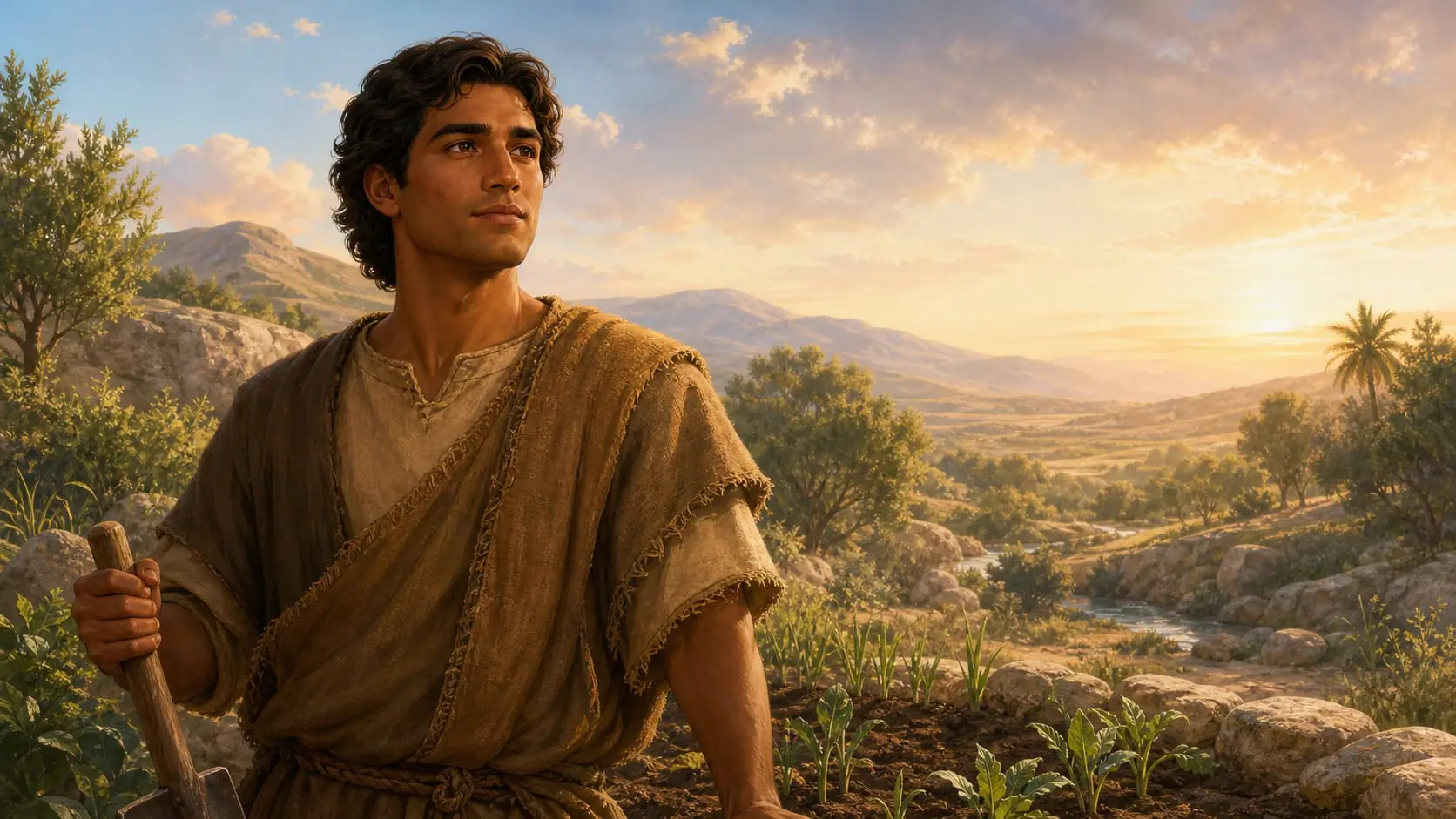
Illustrated portrait of Adam tending the ground in an early landscape

Bible Character Profile · Genesis 1–5

Adam in the Bible

Meet the first man named in Genesis—the husband of Eve, father of a growing family, and a figure later biblical writers compare with Christ.
Old TestamentPrimeval HistoryFirst Man
Main passagesGenesis 1–5
WifeEve
Named sonsCain, Abel, Seth
Recorded lifespan930 years

The quick answer

Who was Adam in the Bible?

Adam is the first human named in Genesis. Genesis 2 portrays God forming him from the ground, giving him life, placing him in Eden, and entrusting him with responsibility. Adam became Eve’s husband and the father of Cain, Abel, Seth, and other sons and daughters. Genesis records his lifespan as 930 years. Later biblical writers include Adam in genealogies and contrast the consequences connected with Adam with the life offered through Christ.

Why he matters

Why is Adam important in the Bible?

01

The first man in Genesis

Adam stands at the beginning of the Bible’s account of human life, vocation, relationship, and moral responsibility.

02

The start of a family line

Genesis moves from Adam and Eve into a widening genealogy that shapes the primeval history and continues through Scripture.

03

A figure contrasted with Christ

Romans and 1 Corinthians revisit Adam to explain sin, death, resurrection, and the life associated with Christ.

Name and wordplay

What does the name Adam mean?

The Hebrew word adam can refer to a human being or humankind, and Genesis also uses Adam as the man’s name. The narrative places it beside adamah, the word for ground: the human is formed from the ground and later returns to it. That literary connection is clearer than reducing Adam’s name to one simple English gloss.

אָדָםadamhuman / Adam
אֲדָמָהadamahground

A life in four stages

Adam’s life from the ground to a genealogy

Genesis gives only a few windows into Adam’s long life. Read together, they trace a movement from entrusted responsibility to family life, consequence, and a genealogy that continues beyond him.

01

Genesis 2:7–17

Formed from the ground and given responsibility

Genesis presents Adam as a living human formed from the ground and animated by God’s breath. He is placed in Eden to cultivate and keep it, allowed to eat freely from the garden, and given one clear boundary. His life begins with gift, place, work, and responsibility rather than with a detailed childhood or ancestry.
02

Genesis 2:18–3:24

Husband of Eve and a life outside Eden

Adam recognizes Eve as his corresponding partner, and the two become the first married couple in the Genesis account. After they cross the boundary God gave them, Adam points away from his own responsibility. The event changes their relationship to God, one another, work, the ground, and mortality.
Read the complete Adam and Eve story
03

Genesis 4:1–25

Father of a growing and wounded family

Outside Eden, Adam and Eve become parents. Genesis names Cain and Abel, records Abel’s death at Cain’s hand, and later names Seth. The family line continues, but its first recorded generation also shows how quickly violence enters human relationships.
Read the complete Cain and Abel story
04

Genesis 5:1–5

A genealogy that continues beyond Adam

Adam is 130 when Seth is born. Genesis says he then lives 800 more years, has other sons and daughters, and dies at 930. The account gives no description of Adam’s burial and very little about his later inner life; its attention moves to the generations that follow him.
930years

The direct answer

How old was Adam when he died?

Genesis 5:5 says Adam lived 930 years. It also says he was 130 when Seth was born and lived another 800 years. The Bible does not say how old Adam appeared when he was created, how old he was when he left Eden, or where he was buried.

Behavior before labels

Adam’s character: responsibility, choice, and consequence

Genesis records actions more often than inner motives. These observations stay close to what Adam does and avoid turning a few scenes into a modern personality diagnosis.

EntrustedGenesis 2:15–17

Given meaningful responsibility

Adam is placed in the garden to cultivate and keep it and receives a direct command about its trees.

This establishes responsibility in the narrative; it does not reveal a modern personality type.
RelationalGenesis 2:19–23

Recognizes companionship and kinship

After naming the animals, Adam recognizes the woman as one who corresponds to him—“bone of my bones.”

The scene shows recognition and relationship without supplying a full psychological profile.
AccountableGenesis 3:11–12

Fails to own his choice

When questioned, Adam points to the woman and to the fact that God gave her to him.

This is a clear act of blame shifting; Adam should not be reduced to this one moment alone.
MortalGenesis 3:17–19; 4:1, 25; 5:3–5

Lives with consequence and continues a family

Adam works the ground outside Eden, becomes a father, and eventually dies after a recorded life of 930 years.

Genesis records actions and outcomes but says little about Adam’s later thoughts or spiritual growth.

Family and relationships

Adam’s family in Genesis

Genesis names three sons and explicitly says there were other sons and daughters. It does not give a complete child count or name the daughters.

AdamandEve
Son

Cain

The first son named in Genesis and the brother who kills Abel.

Son

Abel

A keeper of sheep whose offering is regarded favorably.

Son

Seth

Born when Adam is 130; Genesis follows the family line through him.

Family

Other children

Genesis says Adam had other sons and daughters but does not name them.

Follow the events

Read the stories Adam appears in

Read the claim carefully

What Scripture says—and does not say—about Adam

Text

Adam lived 930 years.

Genesis gives both the total and the age breakdown around Seth’s birth.

Genesis 5:3–5
Text

Adam had sons and daughters beyond the three named sons.

Cain, Abel, and Seth are named; the other children are not.

Genesis 4:1–2, 25; 5:4
Not stated

The Bible does not give Adam’s height, skin color, or apparent age at creation.

Art and retellings must imagine these features; they are not recoverable from Genesis.

Genesis 1–5
Tradition

Later traditions propose places for Adam’s burial.

Genesis records Adam’s death but does not identify his grave.

Genesis 5:5

The Genesis story also never calls the forbidden fruit an apple. That question belongs to the complete Adam and Eve story, where the tree, serpent, and departure from Eden are treated in context.

Beyond Genesis

How later Scripture remembers Adam

Adam’s page in the Bible does not close with Genesis 5. Genealogies, prophets, the Gospels, and New Testament letters return to him for different purposes.

Genealogy

A beginning point

1 Chronicles opens its genealogy with Adam. Luke’s genealogy of Jesus moves backward through the generations until it reaches Adam.

1 Chronicles 1:1 · Luke 3:38
Prophetic reference

A debated comparison

Hosea 6:7 may read “like Adam” or “at Adam,” depending on translation and interpretation. The uncertainty should be acknowledged.

Hosea 6:7
Adam and Christ

Sin, death, and life

Romans contrasts the trespass and death associated with Adam with the gift and life associated with Jesus Christ.

Romans 5:12–21
First and last

The last Adam

Paul calls Adam “the first man” and Christ “the last Adam” while discussing resurrection and the kinds of life each represents.

1 Corinthians 15:21–22, 45–49
First manAdam“a living soul”
Last AdamChrist“a life-giving spirit”

“Second Adam” is a common theological label, but 1 Corinthians 15:45 directly uses the phrase “the last Adam.” Read the wider argument before turning the comparison into a slogan.

Reflection grounded in the text

What can we learn from Adam?

01

Responsibility makes choice meaningful

Adam receives freedom, meaningful work, and a boundary together. Genesis does not separate privilege from responsibility. Genesis 2:15–17

02

Blame cannot remove consequence

Adam’s answer points away from himself, but the narrative still addresses his own action and its consequences. Genesis 3:11–19

03

One life can be read inside a larger story

Later Scripture returns to Adam not merely to repeat Genesis, but to explain humanity, mortality, and the life Christians confess in Christ. Romans 5:12–21

Read the passages

Key Bible passages about Adam

Character check · Five questions

How well do you know Adam—not just Eden?

These questions follow Adam’s age, family, genealogy, and later biblical legacy. Every answer includes a passage to check.
1

How long does Genesis say Adam lived?

2

Which son was born when Adam was 130 years old?

3

What does Genesis say beyond Adam’s three named sons?

4

Which Gospel genealogy traces Jesus’ line back to Adam?

5

Which New Testament letter calls Christ “the last Adam”?

0 of 5 answered

Keep going—each answer opens its reference.Try the full Bible Characters Quiz

Questions readers ask

Adam in the Bible FAQ

Who was Adam in the Bible?

Adam is the first human named in Genesis. God formed him from the ground, gave him life, placed him in Eden, and gave him responsibility there. Adam became Eve’s husband and the father of Cain, Abel, Seth, and other sons and daughters.

What does the name Adam mean?

The Hebrew word adam can refer to a human being or humankind and also functions as the name Adam. Genesis uses wordplay between adam and adamah, the ground from which the man is formed. It is better to preserve that connection than reduce the name to one overly simple English definition.

How old was Adam when he died?

Genesis 5:5 says Adam lived 930 years. Genesis also says he was 130 when Seth was born and lived another 800 years after that.

How old was Adam when God created him?

The Bible does not give Adam a numerical age at his creation. Genesis presents him as a man able to receive responsibility, speak, work, and enter a marriage, but it does not say how old he appeared to be.

Who were Adam’s children?

Genesis names Cain, Abel, and Seth. It also says Adam had other sons and daughters without giving their names or a total number, so the Bible does not provide a complete list of his children.

Did Adam and Eve have daughters?

Yes. Genesis 5:4 explicitly says Adam had sons and daughters after Seth’s birth, although it does not name those daughters.

Who were Adam’s parents?

Genesis does not give Adam human parents. It describes God forming Adam from the dust of the ground and breathing into him the breath of life.

Where was Adam buried?

The Bible does not identify Adam’s burial place. Locations proposed by later traditions should not be presented as details stated in Genesis.

How tall was Adam?

The Bible never states Adam’s height. Specific measurements come from later speculation or tradition, not from the biblical text.

Why is Jesus called the last Adam?

In 1 Corinthians 15, Paul contrasts the first man Adam, associated with natural human life and death, with Christ, “the last Adam,” who gives life. “Second Adam” is a common theological summary, while “last Adam” is the phrase used directly in 1 Corinthians 15:45.

Continue exploring

Follow Adam’s family into the next story

Read how the first brothers bring offerings, face warning, and make choices that reshape the family outside Eden.

Read Cain and Abel →