%20scale(.87)'%3e%3cg%20transform='rotate(-3%2032%2034)'%3e%3cpath%20d='M10.5%2019.5c7.65-2.35%2014.8-.45%2021.5%205.7%206.7-6.15%2013.85-8.05%2021.5-5.7v27.2c-7.65-2.15-14.8-.45-21.5%205.1-6.7-5.55-13.85-7.25-21.5-5.1V19.5Z'%20fill='%23fff'%20stroke='%23171528'%20stroke-width='4.5'%20stroke-linejoin='round'/%3e%3cpath%20d='M32%2025.2v26.6'%20stroke='%23171528'%20stroke-width='4'%20stroke-linecap='round'/%3e%3cpath%20d='M17.5%2034.5h9M22%2030v9'%20stroke='%23171528'%20stroke-width='3.75'%20stroke-linecap='round'/%3e%3ccircle%20cx='41.5'%20cy='32.5'%20r='2.5'%20fill='%23171528'/%3e%3ccircle%20cx='46.5'%20cy='38'%20r='2.5'%20fill='%23171528'/%3e%3c/g%3e%3c/g%3e%3c/svg%3e)
The quick answer
Who was Levi in the Bible?
Levi was Jacob and Leah’s third son, a brother of Simeon and Dinah, and the ancestor of the tribe of Levi. He is remembered personally for joining Simeon in the violent attack on Shechem. His three sons—Gershon, Kohath, and Merari—became the principal Levitical clan ancestors, and Exodus records that Levi lived 137 years.
Levi at a glance
Mother, sons, tribe, and priesthood
Who was Levi’s mother?
Leah was Levi’s mother, and Jacob was his father. Levi was their third son.
Genesis 29:31–34Who were Levi’s sons?
Gershon, Kohath, and Merari became the ancestors of the three main Levitical clans.
Genesis 46:11; Exodus 6:16What was the tribe of Levi?
Levi’s descendants were set apart for sanctuary service and received cities among Israel rather than one continuous territory.
Numbers 3:5–13; Joshua 21Were all Levites priests?
No. God appointed Aaron and his sons as priests. Other Levites assisted them at the tabernacle.
Exodus 28:1; Numbers 3:5–10One name, several biblical men
Who else is named Levi in the Bible?
Jacob’s son Levi lived long before the tax collector Jesus called. Luke’s genealogy also includes two men named Levi. They are different people.
Levi, son of Jacob
Leah’s third son, Simeon’s partner in Genesis 34, and ancestor of the tribe of Levi.
Genesis 29:34Levi, son of Alphaeus
A New Testament tax collector called by Jesus, commonly identified with Matthew.
Mark 2:14; Matthew 9:9Levis in Luke’s genealogy
Luke names two different ancestors called Levi in Jesus’ genealogy.
Luke 3:24, 29“Levi” does not always mean “Levite”
Mark gives the tax collector’s name and father, but does not identify his tribe.
Mark 2:14Why he matters
Why is Levi important in the Bible?
His violence receives lasting judgment
Genesis presents the wrong against Dinah and also condemns Levi and Simeon’s deceitful, collective retaliation.
His three sons begin major clans
Gershon, Kohath, and Merari become the family lines through which Levitical service is organized.
His tribe serves throughout Israel
Later Levites carry sanctuary responsibilities and live in cities dispersed among the tribes.
A name connected with joining
What does the name Levi mean?
Levi is commonly understood as “joined” or “attached.” In Genesis 29:34, Leah hopes that Jacob will become attached to her because she has borne him three sons. The name echoes the Hebrew verb lavah in her words. Hebrew lexicons note uncertainty about the name’s original derivation, while recognizing this connection in Genesis.
Five turning points
Levi’s life from Paddan Aram to Egypt
Genesis follows Levi from Leah’s household to the attack at Shechem and the family’s move to Egypt. Exodus adds the names of his descendants and his lifespan.
Genesis 29:34
Born as Jacob and Leah’s third son
Genesis 34:1–31
Acts with Simeon after Dinah is violated
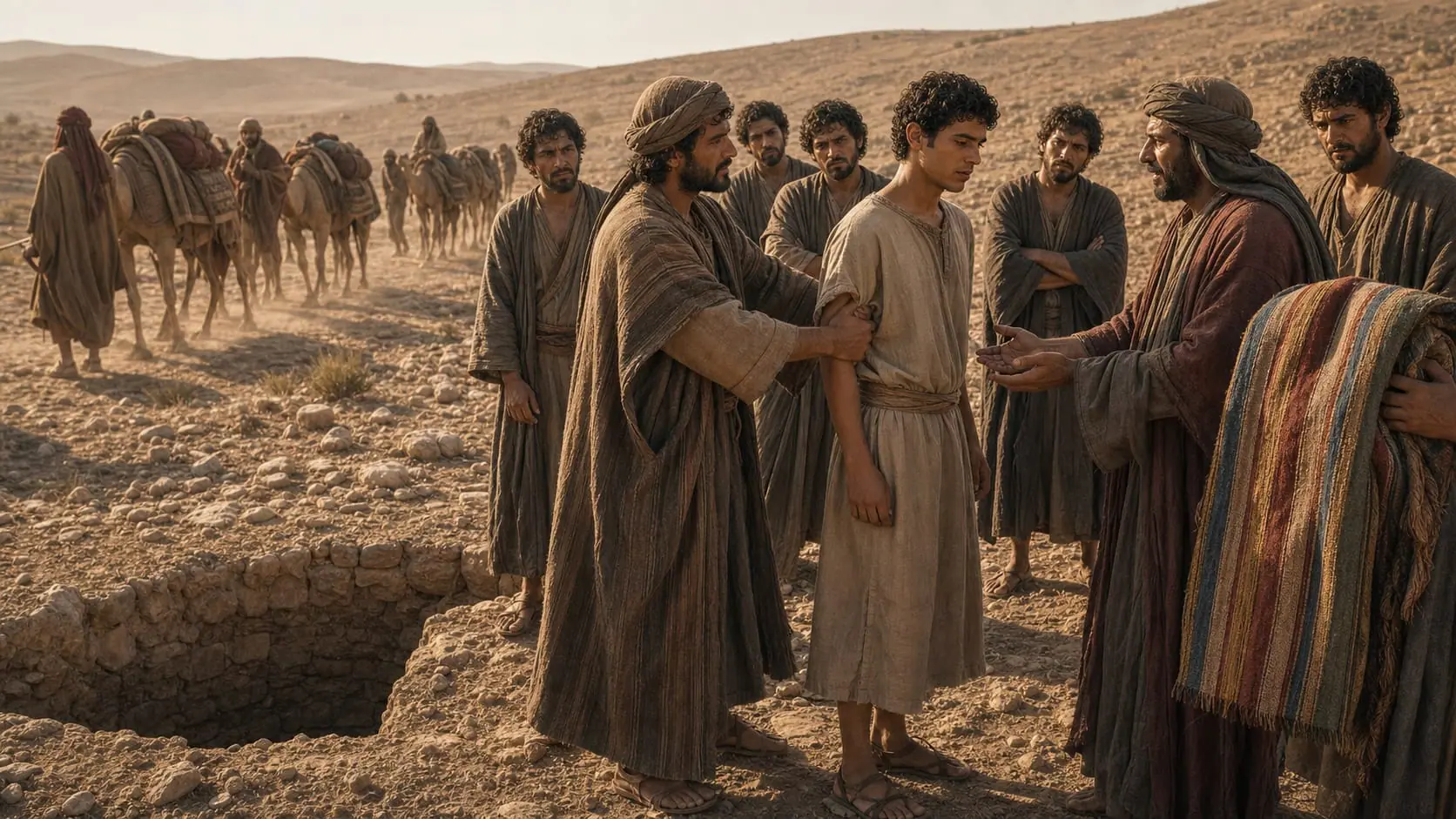
Genesis 37:12–36
Belongs to the family that betrays Joseph
Genesis 46:8–11
Moves to Egypt with three named sons
Genesis 49:5–7; Exodus 6:16
Receives Jacob’s judgment and lives 137 years
Levi’s family tree
Parents, siblings, and children
Levi belongs to Leah’s branch of Jacob’s household. His family line later includes Moses, Aaron, and Miriam.
Reuben, Simeon, Judah, Issachar, Zebulun & Dinah
These children also belong to Jacob and Leah.
Joseph, Benjamin, Dan, Naphtali, Gad & Asher
Rachel, Bilhah, and Zilpah are the mothers of Jacob’s other six sons.
Gershon, Kohath & Merari
The three sons become the ancestors of the principal Levitical clan families.
Jochebed
Numbers calls her Levi’s daughter; she becomes the mother of Aaron, Moses, and Miriam.
Levi’s clearest personal action
What did Levi and Simeon do after Dinah was violated?
Hamor asks for Dinah to marry his son Shechem, who has violated her. Jacob’s sons answer deceitfully, requiring the city’s males to be circumcised. On the third day, while the men are in pain, Simeon and Levi kill the city’s males, including Hamor and Shechem, and bring Dinah out of Shechem’s house. Jacob’s sons then plunder the city and take its women and children captive.
Genesis condemns Shechem’s act
The narrative condemns what Shechem did to Dinah; it does not blame her for going out to visit the local women.
Genesis 34:1–7Circumcision becomes a weapon
The proposed agreement conceals a plan to exploit the city’s vulnerability.
Genesis 34:13–24Levi and Simeon lead the killing
The two brothers kill all the males, while Jacob’s sons take captives and plunder.
Genesis 34:25–29Their fierce anger is condemned
Jacob rebukes the danger immediately and later curses their anger and cruelty.
Genesis 34:30; 49:5–7The family behind the later tribe
Who were Levi’s sons and daughter?
Levi’s sons were Gershon, Kohath, and Merari. Numbers also directly calls Jochebed a daughter of Levi, born to Levi in Egypt. Scripture names the relationships but does not name Levi’s wife.
Ancestor of the Gershonites
His clan later cares for tabernacle curtains, coverings, and related hangings.
Numbers 3:21–26Ancestor of Moses and Aaron
Kohath’s line includes Amram, Jochebed’s husband, and their children Miriam, Aaron, and Moses.
Exodus 6:18–20; Numbers 26:59Ancestor of the Merarites
His clan later carries structural parts of the tabernacle and its courtyard.
Numbers 3:33–37Levi’s daughter, born in Egypt
She is the mother of Aaron, Moses, and Miriam. Exodus identifies her as the sister of her husband Amram’s father—Amram’s aunt.
Numbers 26:59; Exodus 6:18–20A lifespan stated in Exodus
How old was Levi when he died?
Levi lived 137 years. Exodus 6:16 gives his lifespan, but no cause of death or individual burial account. Acts 7:15–16 speaks collectively of the ancestors’ deaths in Egypt and burial at Shechem; it does not name Levi separately. Exodus 6:16; Acts 7:15–16
Violence and its consequences
What did Jacob say about Levi and Simeon?
In Genesis 49:5–7, Jacob condemns the brothers’ killing and their cruelty to cattle. He refuses to join their council, curses their fierce anger and cruel wrath, and declares that they will be divided and scattered in Israel.
Shared conduct binds them
“Simeon and Levi are brothers” introduces their partnership in violence.
Genesis 49:5Jacob rejects their council
He refuses to be associated with the brothers’ violence.
Genesis 49:6Their anger is cursed
Jacob calls their anger fierce and their wrath cruel.
Genesis 49:7Division and scattering
Their descendants will not hold one undivided territorial position in Israel.
Genesis 49:7Old Testament patriarch vs New Testament tax collector
Is Levi the same person as Matthew?
Jacob’s son Levi is not Matthew. They are separated by many centuries. Mark 2:14 names a tax collector Levi, son of Alphaeus. Matthew 9:9 describes the same kind of encounter at a tax booth but names the man Matthew. These parallel accounts are why the New Testament Levi is commonly identified with Matthew.
Jacob and Leah’s son
The patriarch belongs to the Genesis family that enters Egypt.
Genesis 29:34; 46:11A tax collector called by Jesus
Mark identifies him as Levi son of Alphaeus.
Mark 2:14Matthew names the tax collector Matthew
The close narrative parallel supports the common identification of the two New Testament names.
Matthew 9:9No verse describes a renaming
Neither account says that Jesus changed Levi’s name to Matthew.
Mark 2:14; Matthew 9:9Follow the people and passages
From Levi’s actions to his descendants
Read Dinah’s account to understand the violence for which Jacob rebukes Levi and Simeon. Much later, Levi’s descendants include Moses and Aaron; their calling does not erase the earlier account of their ancestor.
Simeon in the Bible
Explore the brother paired with Levi at Shechem and in Jacob’s final judgment.
Meet Simeon →Complete narrativeJoseph Bible Story
Read the brothers’ betrayal, Egyptian journeys, tests, and reunion as one continuous story.
Read Joseph’s story →Mother’s profileLeah in the Bible
Explore Levi’s mother, her marriage, children, burial, and legacy.
Meet Leah →Father’s profileJacob in the Bible
Explore Israel’s names, wives, twelve sons, age, death, and burial.
Meet Jacob →