%20scale(.87)'%3e%3cg%20transform='rotate(-3%2032%2034)'%3e%3cpath%20d='M10.5%2019.5c7.65-2.35%2014.8-.45%2021.5%205.7%206.7-6.15%2013.85-8.05%2021.5-5.7v27.2c-7.65-2.15-14.8-.45-21.5%205.1-6.7-5.55-13.85-7.25-21.5-5.1V19.5Z'%20fill='%23fff'%20stroke='%23171528'%20stroke-width='4.5'%20stroke-linejoin='round'/%3e%3cpath%20d='M32%2025.2v26.6'%20stroke='%23171528'%20stroke-width='4'%20stroke-linecap='round'/%3e%3cpath%20d='M17.5%2034.5h9M22%2030v9'%20stroke='%23171528'%20stroke-width='3.75'%20stroke-linecap='round'/%3e%3ccircle%20cx='41.5'%20cy='32.5'%20r='2.5'%20fill='%23171528'/%3e%3ccircle%20cx='46.5'%20cy='38'%20r='2.5'%20fill='%23171528'/%3e%3c/g%3e%3c/g%3e%3c/svg%3e)
The quick answer
Who was Asher in the Bible?
Asher was Jacob’s eighth son and the second son born to Zilpah, Leah’s servant. Leah connected his name with happiness. Asher moved to Egypt with four sons—Imnah, Ishvah, Ishvi, and Beriah—and a daughter named Serah, and he became the ancestor of the tribe of Asher.
A name connected with happiness
What does the name Asher mean?
Asher is a Hebrew name associated with happiness or good fortune. At his birth Leah says, “Happy am I, for the daughters will call me happy.” She then names him Asher (Genesis 30:13, WEB). The Hebrew lexicon entry for Asher gives the sense “happy one.” The familiar meaning “blessed” reflects this happiness wordplay, not a promise of wealth to everyone who bears the name.
The man and the tribe
Asher, the tribe of Asher, and Asherah
In Genesis, Asher is one of Jacob’s sons. Later books also use his name for the tribe descended from him. Asherah is a different name, associated with worship that Israel was forbidden to practice.
Asher, son of Jacob
Zilpah’s second son, Gad’s full brother, and father of the family named in the journey to Egypt.
Genesis 30:13; 46:17The tribe of Asher
Asher’s descendants receive a northwestern allotment and continue into New Testament memory.
Joshua 19:24–31; Luke 2:36Asherah
Asherah appears in passages about idolatrous worship and its sacred objects, not as another name for Jacob’s son.
Deuteronomy 16:21; 1 Kings 18:19Why he matters
Why is Asher important in the Bible?
His name preserves Leah’s happiness
Asher’s birth is framed by Leah’s declaration that other women will recognize her happiness.
His daughter Serah is named
Genesis lists Serah alongside her four brothers and two nephews; Numbers and Chronicles name her again.
His tribe reaches the New Testament
Luke identifies Anna by Asher’s tribe when she sees and speaks about the infant Jesus.
Birth, migration, and blessing
Asher’s life from Paddan Aram to Egypt
Genesis follows Asher from his birth in Jacob’s household to the family’s move to Egypt. It names his children but records no speech by him or individual action in Joseph’s sale.
Genesis 30:9–13
Born as Jacob and Zilpah’s second son
Genesis 35:23–26
Counted among Jacob’s twelve sons
Genesis 37:12–36
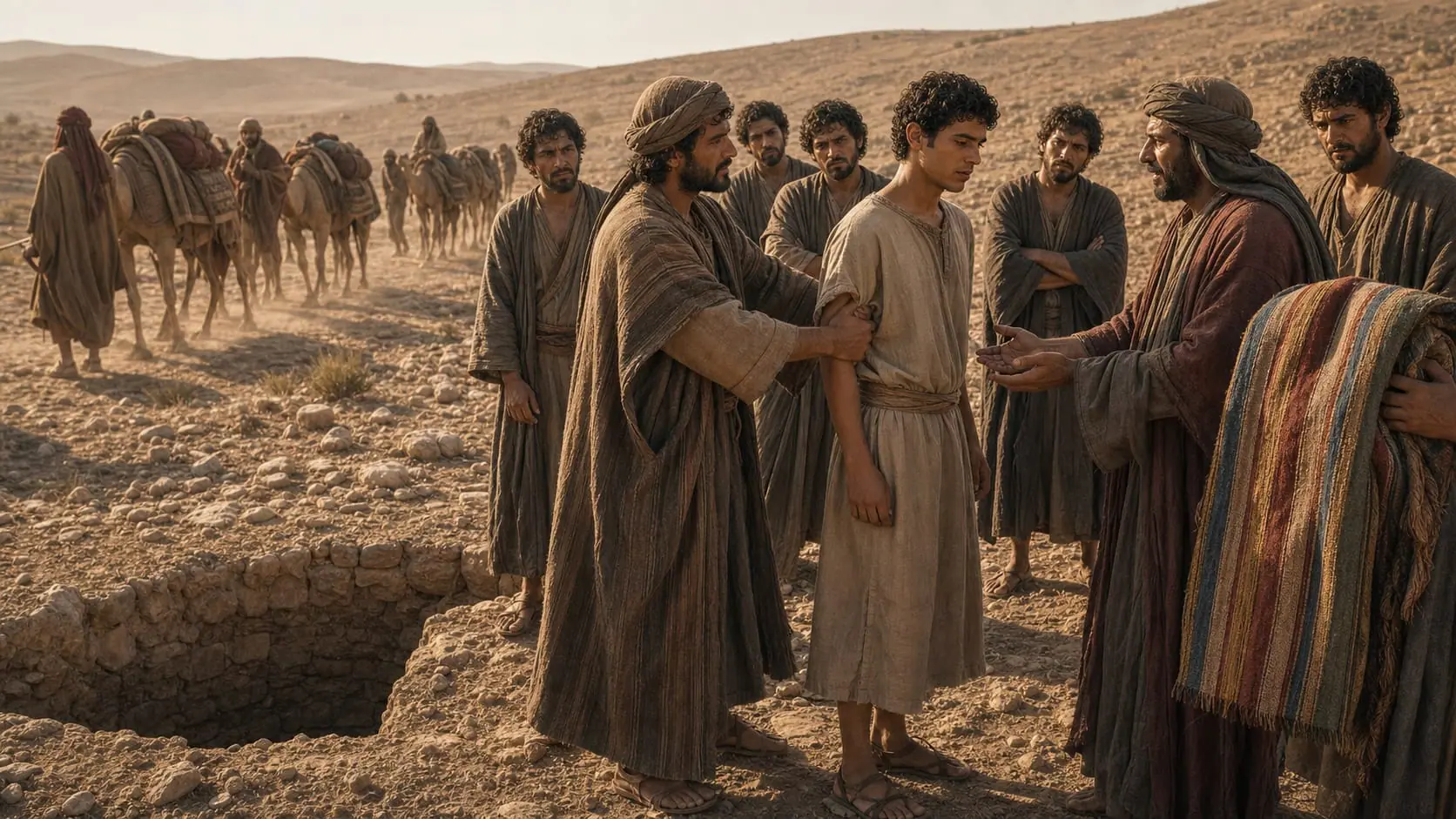
Belongs to Joseph’s family of brothers
Genesis 46:8, 17
Moves to Egypt with five named children
Genesis 49:20
Jacob blesses Asher
Asher’s family tree
Parents, brothers, sons, and daughter
Asher is born through Zilpah within Leah’s household. His full brother is Gad, while his other brothers share Jacob as father.
Gad
Gad is Zilpah’s first son and Asher’s only full brother.
Reuben, Simeon, Levi, Judah, Dan, Naphtali, Issachar, Zebulun, Joseph & Benjamin
Leah, Bilhah, and Rachel are the mothers of Jacob’s other ten sons.
Imnah, Ishvah, Ishvi & Beriah
Beriah’s sons Heber and Malchiel are also named among the family entering Egypt.
Serah
Scripture names her three times but does not narrate her age, marriage, or actions.
Biological mother and household context
Who was Asher’s mother?
Zilpah was Asher’s biological mother. Laban had given Zilpah to Leah as a servant (Genesis 29:24). When Leah stopped bearing children, she gave Zilpah to Jacob as a wife (Genesis 30:9). Zilpah bore Gad and Asher, while Leah named both boys.
Asher’s biological mother
Genesis directly says that Leah’s servant Zilpah bore a second son to Jacob.
Genesis 30:9–13The speaker who names Asher
Leah declares her happiness and anticipates that women will call her happy.
Genesis 30:13Asher’s full brother
The two brothers share Jacob and Zilpah as parents.
Genesis 30:10–13Zilpah’s later life
Scripture does not record her age, death, burial, or further personal speech.
Do not fill the silence with traditionFour sons, one daughter, two grandsons
Who were Asher’s children?
Genesis names Imnah, Ishvah, Ishvi, Beriah, and their sister Serah. Beriah’s sons Heber and Malchiel are also listed. The family gives rise to several clans, although later genealogies arrange the names differently.
Ancestor of the Imnites
Imnah appears first in Genesis and heads a clan in Numbers.
Genesis 46:17; Numbers 26:44Two similarly named sons
Both appear in Genesis, while the later census names an Ishvite clan but not an Ishvahite clan.
Genesis 46:17; Numbers 26:44Father of Heber and Malchiel
Beriah and his two sons contribute three of the later clan names.
Genesis 46:17; Numbers 26:45Asher’s named daughter
The Bible preserves her name but none of the elaborate episodes told about her in later tradition.
Genesis 46:17; Numbers 26:46No personal lifespan is recorded
How old was Asher when he died?
Asher’s age and cause of death are not given. Exodus 1:6 reports that Joseph and all his brothers died, without individual accounts. Acts 7:15–16 speaks collectively of the ancestors’ deaths and burial at Shechem, but does not name Asher separately. Genesis 46:17 names his children and two grandsons; his wife is not named.
Rich food and royal delicacies
What was Jacob’s blessing to Asher?
Jacob’s saying about Asher is only one verse long: Asher’s food will be rich, and he will produce royal delicacies. The language looks toward the abundance associated with Asher’s descendants rather than narrating a personal achievement from Asher’s life.
A picture of agricultural abundance
The saying anticipates a productive inheritance capable of supplying excellent food.
Genesis 49:20Food suitable for a king
Asher’s produce is described by quality as well as quantity.
Genesis 49:20The verse looks toward descendants
Genesis does not record Asher himself farming, cooking, trading, or serving a royal court.
Keep person and tribe distinctLater symbols are not the verse itself
Specific foods or tribal emblems may illustrate the blessing but should not replace its direct wording.
Text before traditionFavor, oil, security, and lasting strength
What was Moses’ blessing to Asher?
Generations after Asher’s lifetime, Moses blesses the tribe that bears his name. Deuteronomy 33:24–25 joins images of blessing, favor, oil, and lasting strength. English translations differ on the opening line and on the iron-and-bronze image.
Children or favored sons
The WEB and KJV speak of being blessed with children; the NIV has “Most blessed of sons.” All three then speak of acceptance or favor among his brothers.
Deuteronomy 33:24His foot is dipped in oil
The image naturally suggests abundance, especially the olive produce associated with the region.
Deuteronomy 33:24Bars or shoes
The WEB describes iron and bronze bars; the KJV has shoes of iron and brass. The NIV makes the security image explicit with gate bolts.
Deuteronomy 33:25Strength for the days
The WEB ends: “As your days, so your strength will be.” This belongs to the blessing of Asher’s tribe, not a guarantee of lifelong health for every individual.
Deuteronomy 33:25, WEBCompare the opening line and the iron-and-bronze image across translations.
Follow the people and passages
Asher among Jacob’s children
Asher is one of the sons who enter Egypt with Jacob’s household. Read Joseph’s story for the famine that brings them there, or use the family tree to see Asher’s relationship to Gad and his other brothers.
Joseph Bible Story
Read why Jacob’s household moves to Egypt and how the brothers are reconciled.
Read Joseph’s story →Father’s profileJacob in the Bible
Explore Israel’s wives, servants, twelve sons, daughter, blessings, age, death, and burial.
Meet Jacob →Household contextLeah in the Bible
See why Leah gives Zilpah to Jacob and how she names Gad and Asher.
Meet Leah →Half-brother’s profileJoseph in the Bible
Meet the brother whose rise in Egypt brings Asher’s family into the land.
Meet Joseph →