%20scale(.87)'%3e%3cg%20transform='rotate(-3%2032%2034)'%3e%3cpath%20d='M10.5%2019.5c7.65-2.35%2014.8-.45%2021.5%205.7%206.7-6.15%2013.85-8.05%2021.5-5.7v27.2c-7.65-2.15-14.8-.45-21.5%205.1-6.7-5.55-13.85-7.25-21.5-5.1V19.5Z'%20fill='%23fff'%20stroke='%23171528'%20stroke-width='4.5'%20stroke-linejoin='round'/%3e%3cpath%20d='M32%2025.2v26.6'%20stroke='%23171528'%20stroke-width='4'%20stroke-linecap='round'/%3e%3cpath%20d='M17.5%2034.5h9M22%2030v9'%20stroke='%23171528'%20stroke-width='3.75'%20stroke-linecap='round'/%3e%3ccircle%20cx='41.5'%20cy='32.5'%20r='2.5'%20fill='%23171528'/%3e%3ccircle%20cx='46.5'%20cy='38'%20r='2.5'%20fill='%23171528'/%3e%3c/g%3e%3c/g%3e%3c/svg%3e)
The quick answer
What happened in the Lazarus Bible story?
Lazarus of Bethany became sick and died while Jesus was away. Jesus remained where he was for two days, then traveled to Bethany and found that Lazarus had already been in the tomb for four days. Martha confessed her faith, Mary came grieving, and Jesus wept with those who mourned.
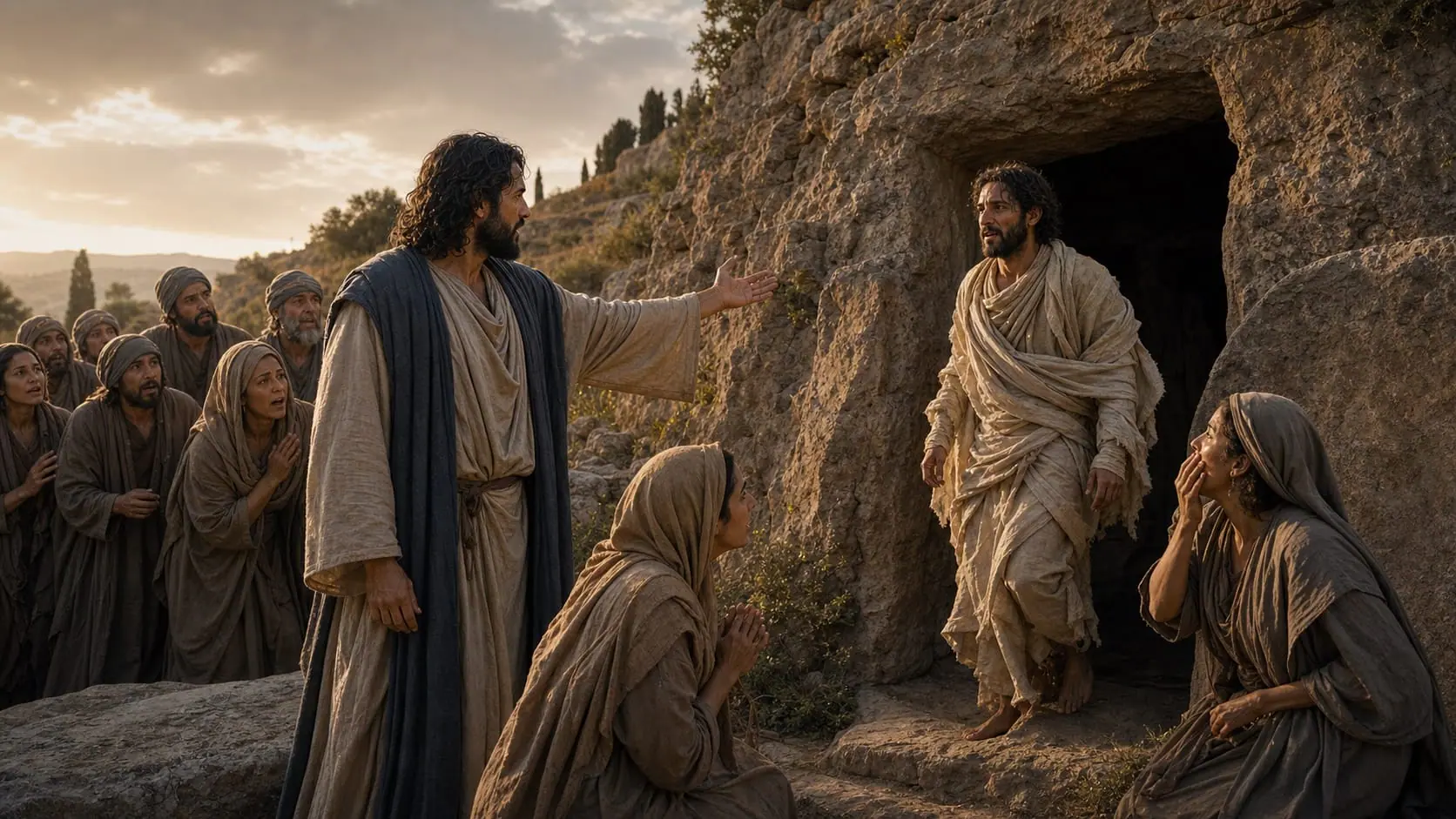
At the rock-cut tomb, Jesus ordered the stone removed, prayed to the Father, and called Lazarus by name. Lazarus came out alive, still wrapped in burial cloths. Many witnesses believed, but the sign also intensified the opposition that would lead toward Jesus’ death.
A family Jesus loved
Who Was Lazarus in the Bible?
Lazarus lived in Bethany with his sisters Martha and Mary. John says Jesus loved all three. Their village was near Jerusalem, and many people came to comfort the sisters after Lazarus died (John 11:1–5, 18–19).
He should not be confused with the poor man named Lazarus in Jesus’ account of the rich man and Lazarus (Luke 16:19–31). John does not identify them as the same person. Mary of Bethany, Lazarus’ sister, should likewise not be confused with Mary Magdalene; John identifies her as the Mary who anointed Jesus’ feet, an event narrated in John 12:1–3.
The full story
Jesus Raises Lazarus: The Bible Story
Mary and Martha send a message to Jesus
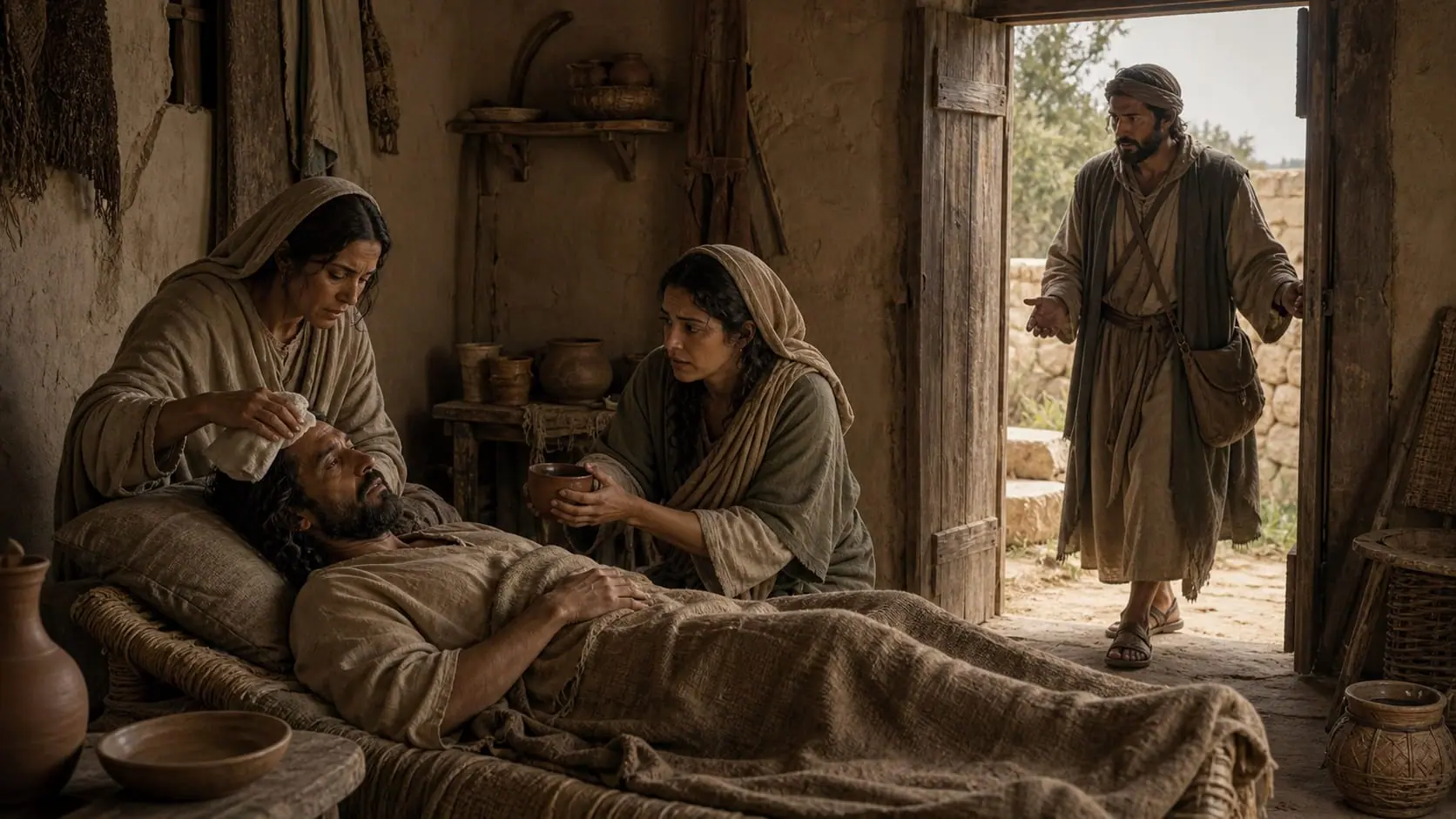
Lazarus was sick in Bethany. His sisters sent Jesus a brief message: the man he loved was sick. John records their message, but does not describe the messenger or the journey taken to reach Jesus.
Jesus said the sickness would serve God’s glory and the glorification of God’s Son. John immediately emphasizes that Jesus loved Martha, Mary, and Lazarus. The delay that follows is therefore presented alongside love, not as its absence. John 11:1–5
Jesus remains for two days
After receiving the news, Jesus remained in the place where he was for two days. He then told the disciples they would return to Judea. They remembered the recent danger there, but Jesus spoke of Lazarus as sleeping and said he was going to awaken him.
The disciples thought Jesus meant ordinary sleep, so he told them plainly that Lazarus had died. Jesus said he was glad he had not been there for their sake, so that they might believe. Thomas then urged his fellow disciples to go too, even if it meant dying with Jesus. John records his words without explaining all that he was feeling. John 11:6–16
When therefore he heard that he was sick, he stayed two days in the place where he was.
Martha meets Jesus outside Bethany
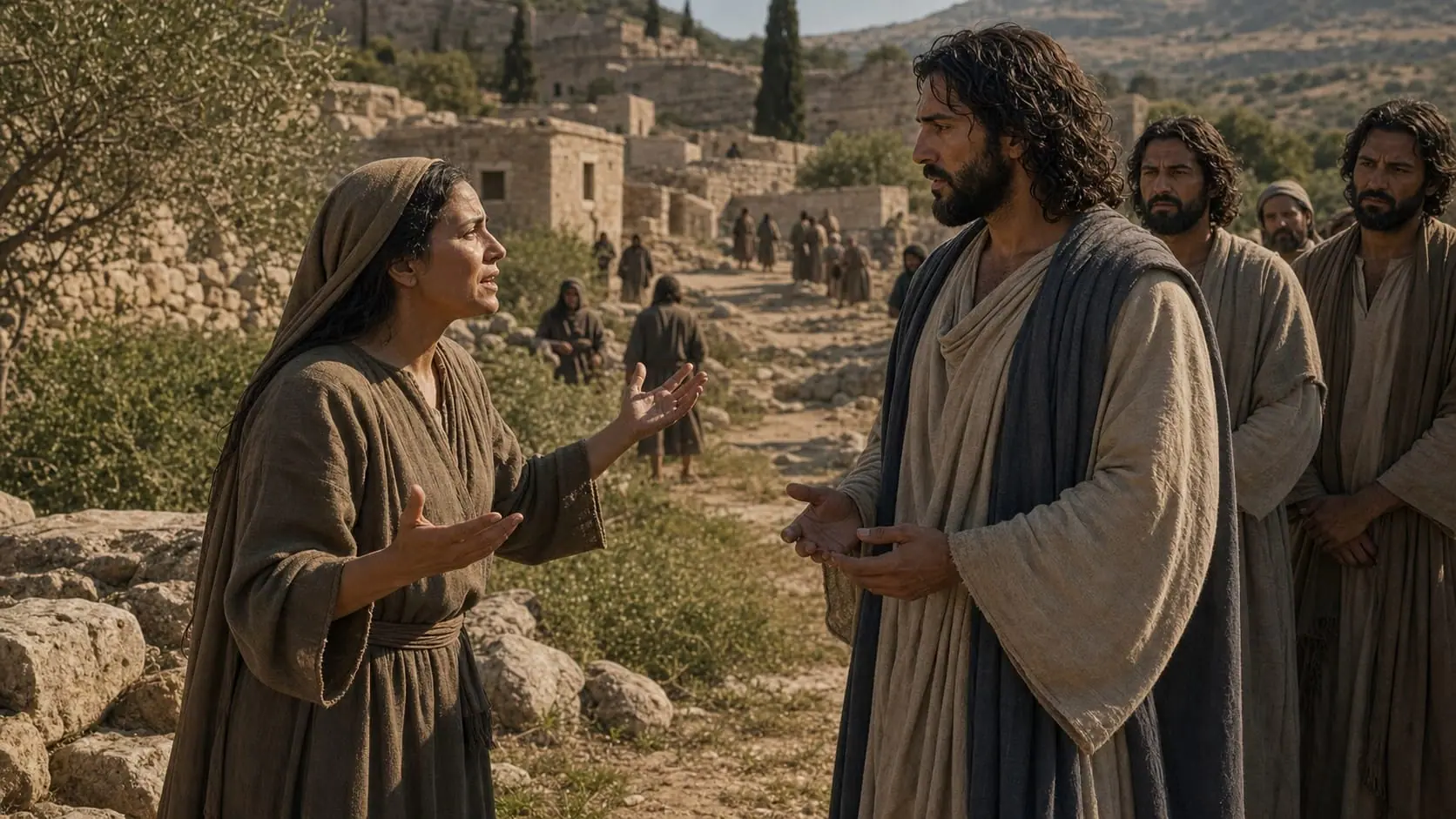
When Jesus approached Bethany, Lazarus had already been in the tomb for four days. Martha went out to meet him while Mary remained at home. Martha said her brother would not have died if Jesus had been there, yet she still expressed confidence in God.
Jesus told her that Lazarus would rise again. Martha affirmed the Jewish hope of resurrection on the last day. Jesus then turned that future hope toward himself and asked whether she believed. Martha confessed that he was the Christ, God’s Son, who was coming into the world. John 11:17–27
Jesus said to her, “I am the resurrection and the life. He who believes in me will still live, even if he dies. Whoever lives and believes in me will never die. Do you believe this?” She said to him, “Yes, Lord. I have come to believe that you are the Christ, God’s Son, he who comes into the world.”
Mary comes grieving, and Jesus weeps
Martha quietly called Mary, telling her that the Teacher had arrived. Mary rose quickly and went to Jesus. The mourners followed, assuming she was going to the tomb. She fell at Jesus’ feet and repeated Martha’s lament: if he had been there, Lazarus would not have died.
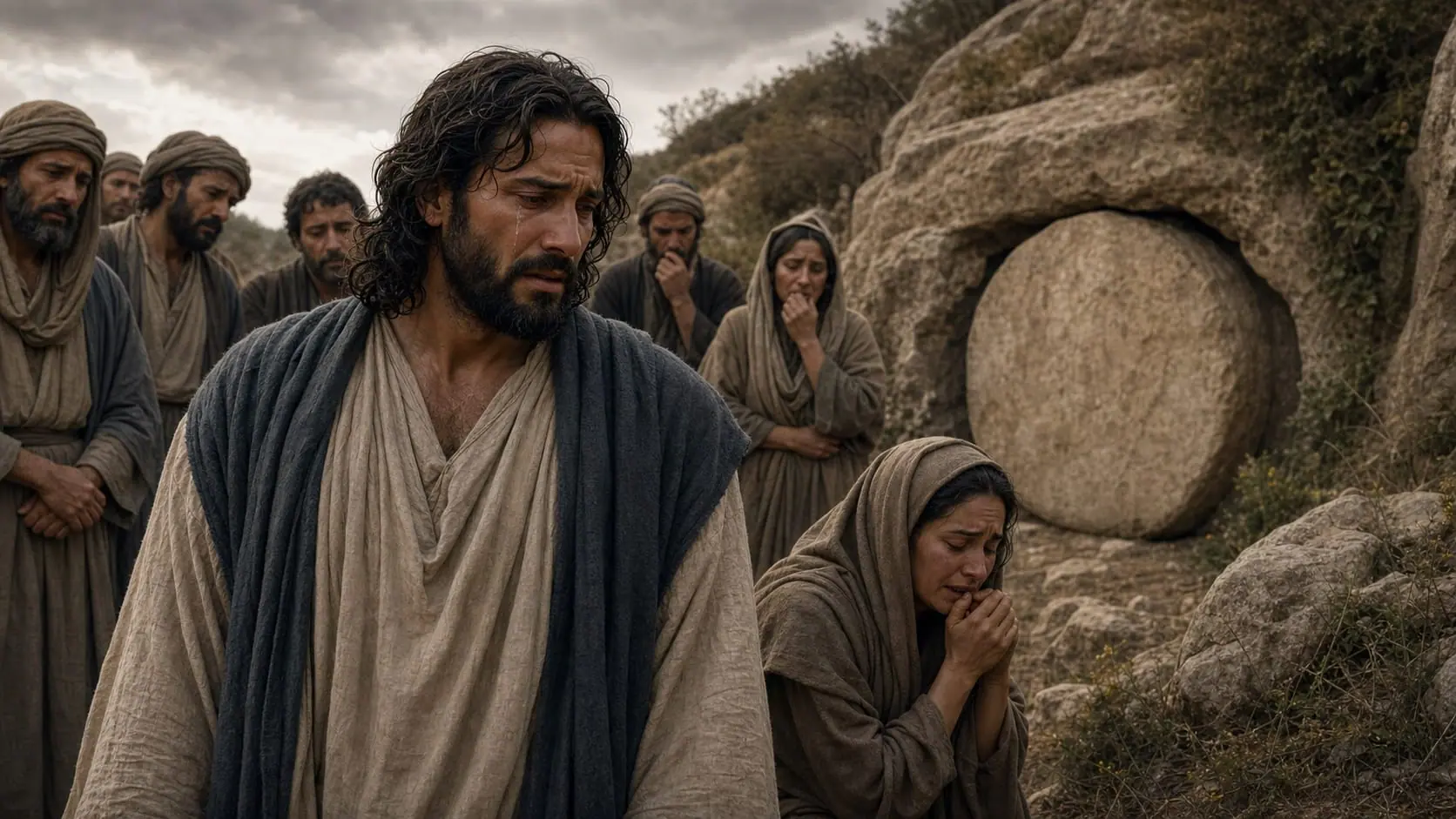
When Jesus saw Mary and the others weeping, he was deeply moved and troubled. He asked where Lazarus had been laid. On the way to the tomb, Jesus wept. The crowd saw his love, although some also questioned why the man who opened blind eyes had not prevented this death. John 11:28–37
Jesus wept.
The stone is removed
The tomb was a cave with a stone lying against it. Jesus commanded the people to remove the stone. Martha objected that after four days there would be an odor. Jesus reminded her that belief would see God’s glory.
Once the stone was removed, Jesus looked upward and thanked the Father for hearing him. He explained that he prayed aloud for the surrounding crowd, so they might believe the Father had sent him. The sign was public and deliberately directed beyond amazement toward faith. John 11:38–42
“Lazarus, come out!”
Jesus called in a loud voice, addressing Lazarus by name. The dead man came out. His hands and feet were still bound with linen strips, and a cloth covered his face. Jesus told those standing nearby to free him and let him go.
The story does not report what Lazarus experienced while dead, nor does it record a speech from him after he emerged. John keeps the focus on Jesus’ command, the life restored, and the response of the witnesses. John 11:43–44
When he had said this, he cried with a loud voice, “Lazarus, come out!” He who was dead came out, bound hand and foot with wrappings, and his face was wrapped around with a cloth. Jesus said to them, “Free him, and let him go.”
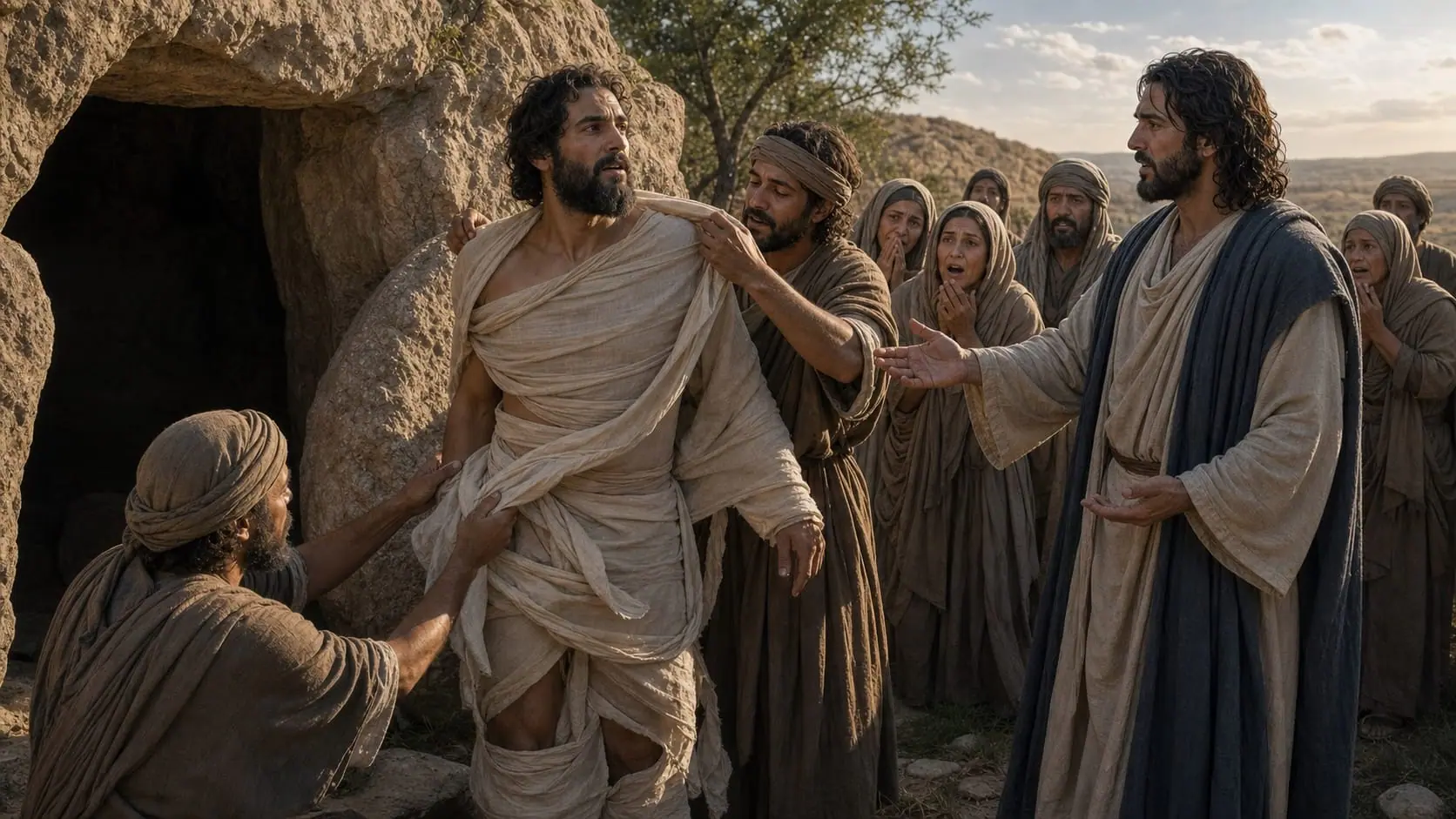
The raising of Lazarus changes the road ahead
Many of the Jewish mourners who saw what Jesus did believed in him. Some reported it to the Pharisees. At a council, the chief priests and Pharisees feared that the Romans would take away their place and nation if everyone believed in Jesus. Caiaphas argued that one man should die for the people; John explains his words as a prophecy about Jesus’ death. From that day, they planned to kill Jesus. These leaders’ actions are not attributed to the Jewish people as a whole.
John 12 later places Lazarus at a supper with Jesus. Crowds came not only to see Jesus but also Lazarus, and the chief priests planned to kill Lazarus because many were believing through him. The narrative then moves toward the Last Supper, the Crucifixion, and the Resurrection of Jesus. John 11:45–57; 12:1–11
John 11:35 in context
Why Did Jesus Weep?
Jesus’ tears come after he sees Mary and the mourners weeping and before he calls Lazarus from the tomb. John describes him as deeply moved and troubled. His knowledge of the coming miracle does not make grief unreal or human loss insignificant.
The people watching said his tears showed his affection for Lazarus (John 11:36). John does not give one explanation for every emotion in the scene. The two words “Jesus wept” are traditionally known as the shortest verse in the King James Version, but they matter here because they show Jesus grieving before he calls Lazarus out.
Two details that are often confused
How Long Was Lazarus Dead?
Lazarus had been dead four days. John 11:17 says he had been in the tomb for four days when Jesus arrived. In John 11:39, Martha also says he had been dead four days and warns that there will be a stench. The passage does not give an exact hour of death.
Jesus did not simply “wait four days.” He remained where he was for two days after the message arrived, then traveled to Judea. By the time he reached Bethany, the burial had already lasted four days. John does not mention a belief that a soul remained near the body for three days, so that later claim should not be treated as the Gospel’s explanation.
The claim at the center of the sign
“I Am the Resurrection and the Life” Meaning
Martha already believed in a resurrection on the last day. Jesus did not reject that future hope; he located its source in himself. His words make resurrection more than an event on a timeline: life is bound to who Jesus is and to trusting him.
Raising Lazarus demonstrates Jesus’ authority over death. Christians generally understand Lazarus as returning to mortal life, though John does not record his later death. Romans 6:9 makes a further claim about Jesus’ own resurrection: the risen Christ dies no more. Lazarus’ return and Jesus’ resurrection are connected, but they are not identical.
This sign is not a promise that every believer will be restored to health or raised immediately when someone prays. Jesus’ words to Martha hold together the reality of physical death and the promise of life in him (John 11:25–26).
Continue with Bible verses about healing and recovery or Bible verses about hope in hard times, then test more moments from Jesus’ life in Jesus Trivia.